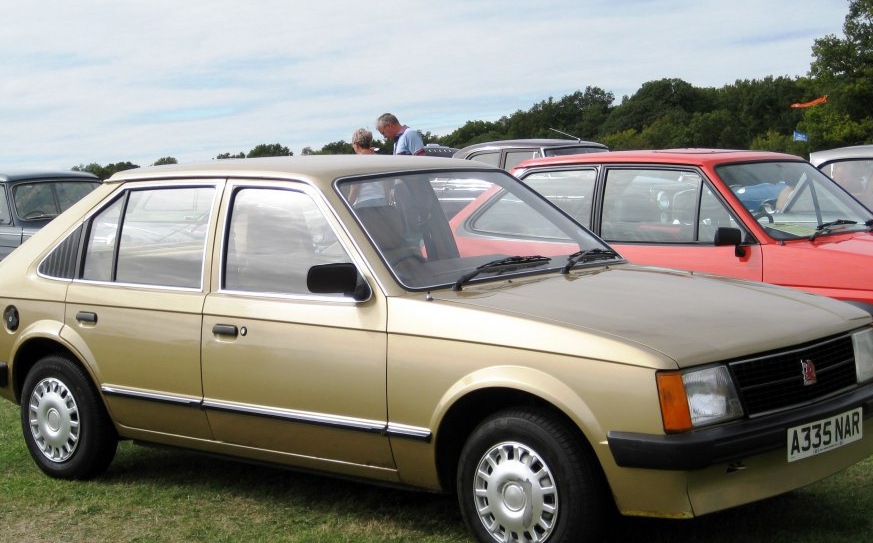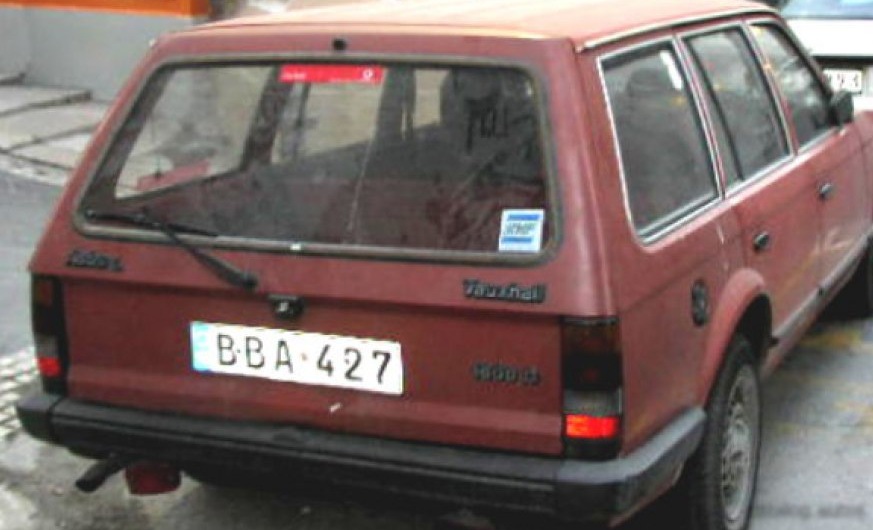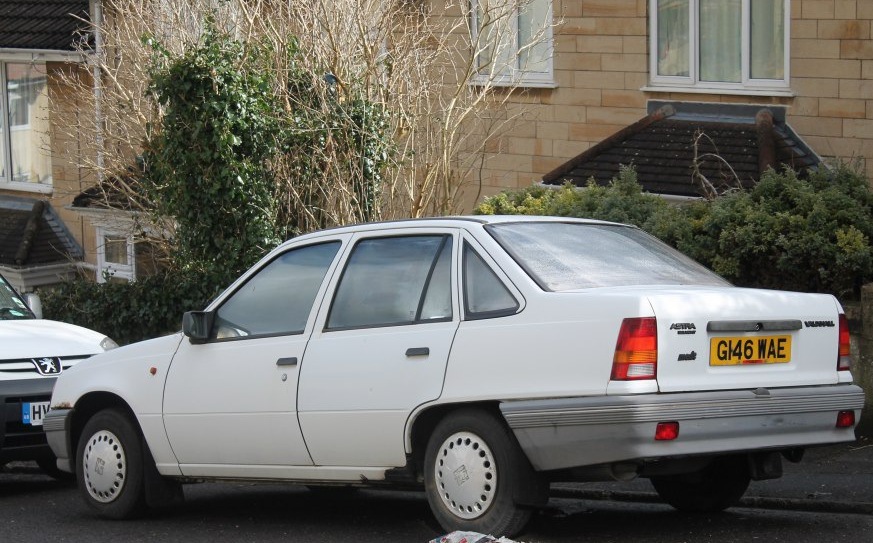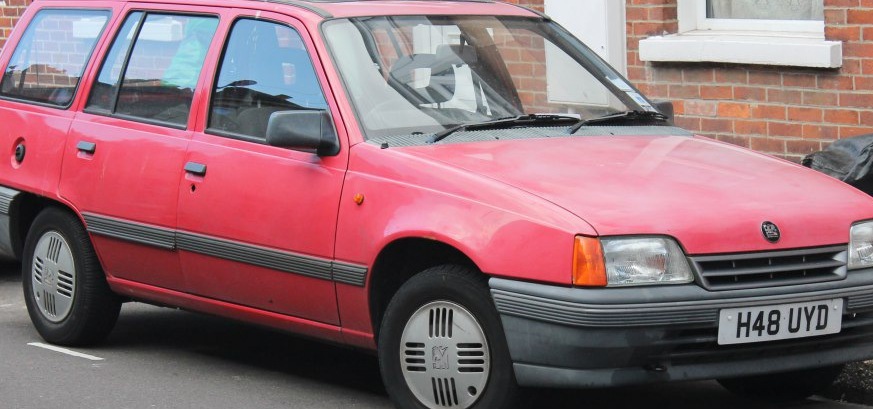
The Vauxhall Astra Mk II Estate 1.6 S, produced between 1984 and 1991, represented a practical and affordable option within the broader Astra Mk II range. Positioned as a mid-range trim level, it offered a balance between economy, space, and usability for families and those requiring a versatile vehicle. The Mk II Astra, launched in 1984, was a significant step forward for Vauxhall, building upon the success of the original Astra (Mk I) and utilizing the GM T-platform, known internally as the 1HX0. The estate (station wagon) variant, in particular, was popular in the UK and Europe, catering to a demand for load-carrying capacity without sacrificing the comfort of a family car.
Technical Specifications
| Brand | Vauxhall |
| Model | Astra |
| Generation | Astra Mk II Estate |
| Type (Engine) | 1.6 S (82 Hp) |
| Start of production | 1984 |
| End of production | 1991 |
| Powertrain Architecture | Internal Combustion engine |
| Body type | Station wagon (estate) |
| Seats | 5 |
| Doors | 5 |
| Fuel Type | Petrol (Gasoline) |
| Power | 82 Hp |
| Power per litre | 51.3 Hp/l |
| Torque | 130 Nm @ 2600 rpm |
| Torque (lb.-ft.) | 95.88 lb.-ft. @ 2600 rpm |
| Engine layout | Front, Transverse |
| Engine Model/Code | 16SV |
| Engine displacement | 1598 cm3 |
| Engine displacement (cu. in.) | 97.52 cu. in. |
| Number of cylinders | 4 |
| Engine configuration | Inline |
| Cylinder Bore | 79 mm |
| Cylinder Bore (in.) | 3.11 in. |
| Piston Stroke | 81.5 mm |
| Piston Stroke (in.) | 3.21 in. |
| Compression ratio | 10:1 |
| Number of valves per cylinder | 2 |
| Fuel injection system | Carburettor |
| Engine aspiration | Naturally aspirated engine |
| Engine oil capacity | 3.5 l |
| Engine oil capacity (US qt) | 3.7 US qt |
| Engine oil capacity (UK qt) | 3.08 UK qt |
| Coolant | 6.2 l |
| Coolant (US qt) | 6.55 US qt |
| Coolant (UK qt) | 5.46 UK qt |
| Trunk (boot) space – minimum | 470 l |
| Trunk (boot) space – minimum (cu. ft.) | 16.6 cu. ft. |
| Trunk (boot) space – maximum | 1520 l |
| Trunk (boot) space – maximum (cu. ft.) | 53.68 cu. ft. |
| Length | 4228 mm |
| Length (in.) | 166.46 in. |
| Width | 1666 mm |
| Width (in.) | 65.59 in. |
| Height | 1430 mm |
| Height (in.) | 56.3 in. |
| Wheelbase | 2520 mm |
| Wheelbase (in.) | 99.21 in. |
| Front track | 1400 mm |
| Front track (in.) | 55.12 in. |
| Rear (Back) track | 1405 mm |
| Rear (Back) track (in.) | 55.31 in. |
| Ride height (ground clearance) | 140 mm |
| Ride height (ground clearance) (in.) | 5.51 in. |
| Drivetrain Architecture | The Internal combustion engine (ICE) drives the front wheels of the vehicle. |
| Drive wheel | Front wheel drive |
| Number of gears | 5 |
| Type of gearbox | Manual transmission |
Powertrain & Engine Architecture
The 1.6 S variant was powered by Vauxhall’s 16SV engine, a 1598cc inline-four cylinder unit. This engine featured a relatively simple design, utilizing a single overhead camshaft (SOHC) and two valves per cylinder. Crucially, it employed a carburettor fuel delivery system – a common feature for vehicles of this era – rather than fuel injection. This carburettor setup, while less precise than injection, contributed to the engine’s affordability and relative ease of maintenance. The 16SV produced 82 horsepower and 130 Nm (95.88 lb-ft) of torque at 2600 rpm. The engine was transversely mounted, driving the front wheels. The five-speed manual transmission was the standard offering for this trim, providing a reasonable balance between performance and fuel economy.
Driving Characteristics
The 1.6 S Estate, with its 82 hp, wasn’t designed for outright speed. Acceleration was modest, taking around 13-14 seconds to reach 60 mph. However, it offered sufficient power for everyday driving and comfortable cruising on motorways. The five-speed gearbox allowed for relatively efficient highway speeds, and the torque curve provided adequate pulling power for overtaking maneuvers. Compared to the more powerful 1.8 and 2.0-litre versions of the Astra Mk II, the 1.6 S felt noticeably less responsive. However, it was generally considered more fuel-efficient and less demanding on the engine, making it a popular choice for drivers prioritizing practicality over performance. The manual transmission provided a more engaging driving experience than the optional three-speed automatic available on some Astra models.
Equipment & Trim Levels
The 1.6 S trim level offered a reasonable level of equipment for its price point. Standard features typically included cloth upholstery, a basic stereo system, and manual windows and door locks. The dashboard layout was functional and straightforward, with clearly labelled controls. Optional extras included a sunroof, upgraded stereo systems, and central locking. The interior trim was generally durable and designed for family use, although it lacked the refinement of higher-spec Astra models. The estate body style itself added to the practicality, with a spacious boot offering 470 litres of space with the rear seats up, expanding to 1520 litres with them folded down.
Chassis & Braking
The Astra Mk II Estate utilized a MacPherson strut front suspension and a twist-beam rear suspension. This setup provided a comfortable ride, although it wasn’t particularly sporty. The 1.6 S typically featured drum brakes on the rear wheels and disc brakes on the front, providing adequate stopping power for its weight class. Stabilizer bars were fitted to both the front and rear axles to reduce body roll during cornering. The steering was rack and pinion, offering reasonable precision and feedback. The suspension was tuned for comfort rather than handling, making it well-suited for long journeys and everyday driving.
Market Reception & Comparison
The Vauxhall Astra Mk II Estate 1.6 S was generally well-received by critics as a practical and affordable family car. It was praised for its spacious interior, comfortable ride, and reasonable fuel economy. However, it was also criticized for its lack of performance and somewhat dated interior design. Compared to other estate cars in its class, such as the Ford Sierra Estate and the Volkswagen Passat Estate, the Astra offered a competitive price and a good level of practicality. The 1.6 S variant was often seen as a sensible choice for buyers who didn’t require the extra performance of the larger-engined models.
Legacy
The Vauxhall Astra Mk II Estate 1.6 S remains a relatively common sight on UK roads today, testament to its durability and affordability. The 16SV engine, while not particularly sophisticated, proved to be reliable and relatively easy to maintain. However, age-related issues such as rust and wear and tear on suspension components are common. Parts availability is generally good, although some trim-specific items can be difficult to find. In the used car market, the 1.6 S Estate is valued for its practicality and affordability, making it a popular choice for first-time car owners and those seeking a reliable and inexpensive workhorse. It represents a significant era in British automotive history, embodying the practical and affordable family car ethos of the 1980s.