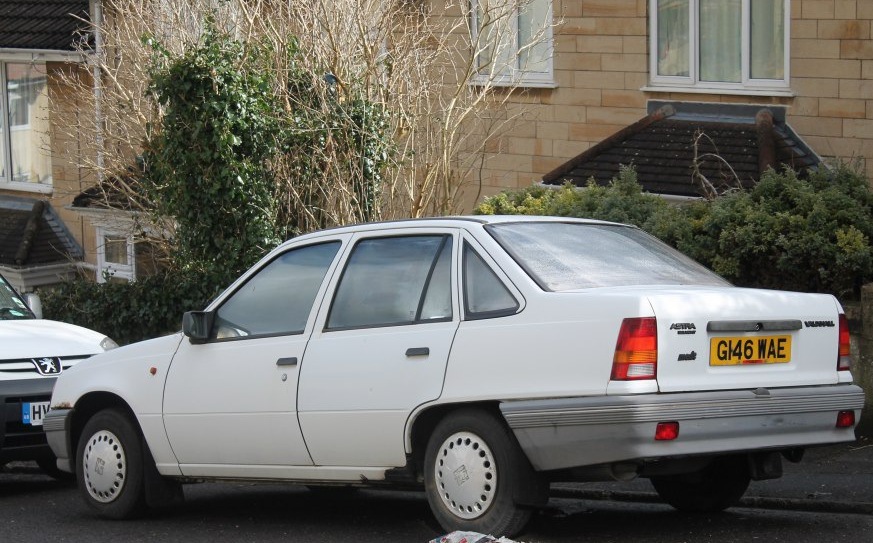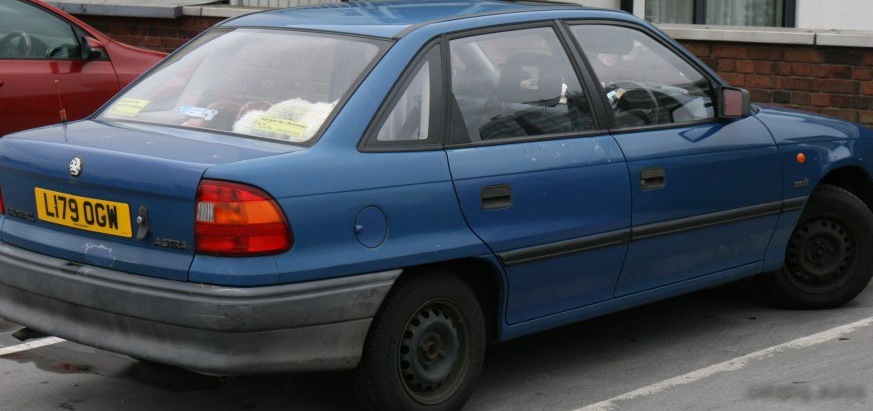
The Vauxhall Astra Mk III 1.4i, producing 82 horsepower, was a mainstay of the British automotive market from 1992 to 1994. Positioned as the entry-level trim within the Mk III Astra range (designated the 1HX0/A3 platform), it offered affordable family transportation. This variant catered to buyers prioritizing economy and practicality over outright performance. It represented a significant update over the Mk II Astra, boasting improved aerodynamics, a more refined interior, and updated engine technology. The 1.4i served as the gateway into the Mk III Astra lineup, appealing to first-time car buyers, families on a budget, and those seeking a reliable and economical daily driver.
Technical Specifications
| Brand | Vauxhall |
| Model | Astra |
| Generation | Astra Mk III |
| Type (Engine) | 1.4i (82 Hp) |
| Start of production | 1992 |
| End of production | 1994 |
| Powertrain Architecture | Internal Combustion engine |
| Body type | Sedan |
| Seats | 5 |
| Doors | 4 |
| Fuel consumption (combined) | 7.4 l/100 km |
| Fuel consumption (US mpg) | 31.8 |
| Fuel consumption (UK mpg) | 38.2 |
| Fuel consumption (km/l) | 13.5 |
| Fuel Type | Petrol (Gasoline) |
| Acceleration 0 – 100 km/h | 13 sec |
| Acceleration 0 – 62 mph | 13 sec |
| Acceleration 0 – 60 mph | 12.4 sec |
| Maximum speed | 175 km/h (108.74 mph) |
| Weight-to-power ratio | 12 kg/Hp |
| Weight-to-torque ratio | 8.7 kg/Nm |
| Power | 82 Hp @ 5800 rpm |
| Power per litre | 59 Hp/l |
| Torque | 113 Nm @ 3400 rpm (83.34 lb.-ft. @ 3400 rpm) |
| Engine layout | Front, Transverse |
| Engine Model/Code | C14SE |
| Engine displacement | 1389 cm3 (84.76 cu. in.) |
| Number of cylinders | 4 |
| Engine configuration | Inline |
| Number of valves per cylinder | 4 |
| Fuel injection system | Multi-port manifold injection |
| Engine aspiration | Naturally aspirated |
| Engine oil capacity | 3.5 l (3.7 US qt | 3.08 UK qt) |
| Coolant capacity | 5.8 l (6.13 US qt | 5.1 UK qt) |
| Kerb Weight | 980 kg (2160.53 lbs) |
| Max. weight | 1475 kg (3251.82 lbs) |
| Max load | 495 kg (1091.29 lbs) |
| Trunk (boot) space – minimum | 501 l (17.69 cu. ft.) |
| Trunk (boot) space – maximum | 1200 l (42.38 cu. ft.) |
| Fuel tank capacity | 52 l (13.74 US gal | 11.44 UK gal) |
| Length | 4239 mm (166.89 in) |
| Width | 1689 mm (66.5 in) |
| Height | 1389 mm (54.69 in) |
| Wheelbase | 2520 mm (99.21 in) |
| Front track | 1420 mm (55.91 in) |
| Rear track | 1420 mm (55.91 in) |
| Ride height (ground clearance) | 135 mm (5.31 in) |
| Drag coefficient (Cd) | 0.31 |
| Drivetrain Architecture | The Internal combustion engine (ICE) drives the front wheels. |
| Drive wheel | Front wheel drive |
| Number of gears | 5 |
| Gearbox type | Manual transmission |
| Front brakes | Ventilated discs |
| Rear brakes | Drum |
| Tires size | 185/60 R14 |
| Wheel rims size | 14 |
Powertrain & Engine Architecture
The heart of the Astra Mk III 1.4i was the C14SE engine, a 1.4-liter (1389cc) inline-four cylinder unit. This engine featured a single overhead camshaft (SOHC) design with four valves per cylinder. It utilized a Bosch Mono-Jetronic fuel injection system, a relatively simple but effective system for its time. The Mono-Jetronic system delivered fuel through a single injector positioned in the throttle body, offering a balance between cost and efficiency. The engine produced 82 horsepower at 5800 rpm and 113 Nm (83.34 lb-ft) of torque at 3400 rpm. The engine was transversely mounted, driving the front wheels. The standard transmission was a five-speed manual gearbox, although a four-speed automatic transmission was also available, albeit less common. The automatic option, while offering convenience, noticeably impacted acceleration and fuel economy.
Driving Characteristics
The 1.4i Astra Mk III offered modest performance. Acceleration from 0-60 mph took around 12.4 seconds, and top speed was approximately 108.74 mph. The engine felt somewhat strained when pushed hard, particularly when fully loaded or tackling inclines. The five-speed manual gearbox allowed drivers to keep the engine in its optimal power band, but the automatic transmission resulted in sluggish responses and frequent downshifts. Handling was typical for a front-wheel-drive hatchback of the era – safe and predictable, but not particularly engaging. The suspension was tuned for comfort, providing a reasonably smooth ride on most road surfaces.
Equipment & Trim Levels
The 1.4i typically came with a basic level of equipment. Standard features included central locking, power steering, and an adjustable steering column. Interior upholstery was typically cloth, and the dashboard featured a simple, functional design. Optional extras included electric windows, a sunroof, and upgraded audio systems. The trim level was generally considered the base model, with higher trims like the 1.6i and 1.8i offering more luxurious appointments and additional features. The 1.4i was often chosen by buyers who prioritized affordability and practicality over creature comforts.
Chassis & Braking
The Astra Mk III utilized a MacPherson strut front suspension and a torsion beam rear suspension. The front brakes were ventilated discs, providing adequate stopping power, while the rear brakes were drums. This configuration was common for vehicles in this weight class during the early 1990s. Stabilizer bars were fitted to both the front and rear axles, helping to reduce body roll during cornering. The chassis was relatively lightweight, contributing to the car’s fuel efficiency and handling characteristics.
Market Reception & Comparison
The Astra Mk III 1.4i was generally well-received as an affordable and reliable family car. Critics praised its fuel economy and practicality, but noted its lack of outright performance. Compared to the higher-output 1.6i and 1.8i models, the 1.4i offered significantly less power and acceleration. However, it was more economical to run and generally cheaper to insure. The 1.4i also compared favorably to rivals such as the Ford Escort and Renault 19 in terms of value for money. The automatic transmission version, while convenient, was often criticized for its sluggish performance and reduced fuel economy.
Legacy
The C14SE engine, while not known for its high performance, proved to be a relatively durable and reliable unit. Astra Mk III 1.4i models are now considered classic cars, and well-maintained examples are sought after by enthusiasts and collectors. The powertrain is generally considered to be relatively easy to maintain, with parts readily available. However, like any older vehicle, rust can be a significant issue, particularly in areas exposed to harsh weather conditions. Today, the Astra Mk III 1.4i represents a nostalgic reminder of a simpler era in automotive history, offering a blend of affordability, practicality, and retro charm.