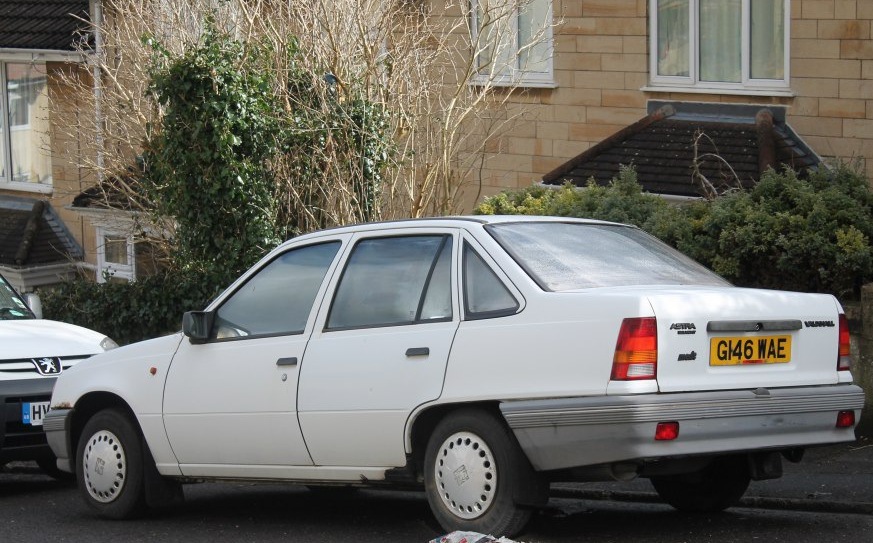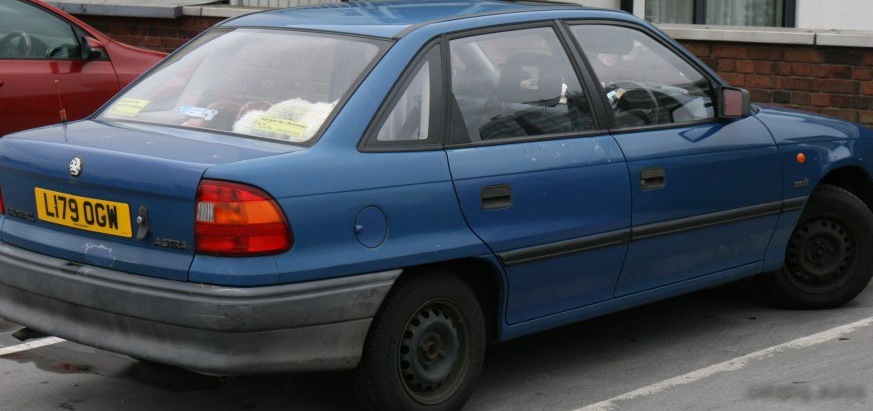
The Vauxhall Astra Mk III 1.4i Automatic, produced between 1992 and 1994, represented an entry-level offering within the broader Mk III Astra range (1991-1998). Positioned as a comfortable and economical choice, this variant catered to buyers prioritizing ease of use over outright performance. It was a key part of Vauxhall’s strategy to offer a diverse lineup within the competitive C-segment family car market in the United Kingdom and Europe. The Mk III Astra, built on the T-platform (internally designated as 1HX0/A3), was a significant step forward for Vauxhall, offering improved styling, safety, and refinement compared to its predecessor.
Technical Specifications
| Brand | Vauxhall |
| Model | Astra |
| Generation | Astra Mk III |
| Type (Engine) | 1.4i (82 Hp) Automatic |
| Start of production | 1992 |
| End of production | 1994 |
| Powertrain Architecture | Internal Combustion engine |
| Body type | Sedan |
| Seats | 5 |
| Doors | 4 |
| Fuel consumption (combined) | 7.4 l/100 km |
| Fuel consumption (US mpg) | 31.8 |
| Fuel consumption (UK mpg) | 38.2 |
| Fuel consumption (km/l) | 13.5 |
| Fuel Type | Petrol (Gasoline) |
| Acceleration 0 – 100 km/h | 14 sec |
| Acceleration 0 – 62 mph | 14 sec |
| Acceleration 0 – 60 mph | 13.3 sec |
| Maximum speed | 171 km/h (106.25 mph) |
| Weight-to-power ratio | 12.1 kg/Hp |
| Power per tonne | 82.8 Hp/tonne |
| Weight-to-torque ratio | 8.8 kg/Nm |
| Torque per tonne | 114.1 Nm/tonne |
| Power | 82 Hp @ 5800 rpm |
| Power per litre | 59 Hp/l |
| Torque | 113 Nm @ 3400 rpm (83.34 lb.-ft. @ 3400 rpm) |
| Engine layout | Front, Transverse |
| Engine Model/Code | C14SE |
| Engine displacement | 1389 cm3 (84.76 cu. in.) |
| Number of cylinders | 4 |
| Engine configuration | Inline |
| Number of valves per cylinder | 4 |
| Fuel injection system | Multi-port manifold injection |
| Engine aspiration | Naturally aspirated |
| Engine oil capacity | 3.5 l (3.7 US qt | 3.08 UK qt) |
| Coolant capacity | 5.8 l (6.13 US qt | 5.1 UK qt) |
| Kerb Weight | 990 kg (2182.58 lbs) |
| Max. weight | 1475 kg (3251.82 lbs) |
| Max load | 485 kg (1069.24 lbs) |
| Trunk (boot) space – minimum | 501 l (17.69 cu. ft.) |
| Trunk (boot) space – maximum | 1200 l (42.38 cu. ft.) |
| Fuel tank capacity | 52 l (13.74 US gal | 11.44 UK gal) |
| Length | 4239 mm (166.89 in) |
| Width | 1689 mm (66.5 in) |
| Height | 1389 mm (54.69 in) |
| Wheelbase | 2520 mm (99.21 in) |
| Front track | 1420 mm (55.91 in) |
| Rear track | 1420 mm (55.91 in) |
| Ride height (ground clearance) | 135 mm (5.31 in) |
| Drag coefficient (Cd) | 0.31 |
| Drivetrain Architecture | ICE to Front Wheels |
| Drive wheel | Front wheel drive |
| Number of gears | 4 |
| Gearbox type | automatic transmission |
| Front brakes | Ventilated discs |
| Rear brakes | Drum |
| Tires size | 185/60 R14 |
| Wheel rims size | 14 |
Powertrain & Engine Architecture
The heart of the Astra Mk III 1.4i Automatic was the C14SE engine, a 1.4-liter (1389cc) inline-four cylinder petrol engine. This engine featured a cast iron block and an aluminum cylinder head, employing a multi-port fuel injection system for improved efficiency and drivability. The C14SE produced 82 horsepower at 5800 rpm and 113 Nm (83.34 lb-ft) of torque at 3400 rpm. The engine’s valvetrain consisted of two valves per cylinder, operated by a single overhead camshaft. Paired with this engine was a four-speed automatic transmission, offering smooth, if not particularly sporty, gear changes. This transmission was a common GM unit used across various models at the time, known for its reliability but not its responsiveness.
Driving Characteristics
The 1.4i Automatic Astra offered a comfortable, but unhurried, driving experience. Acceleration from 0-60 mph took around 13.3 seconds, and top speed was limited to 106.25 mph. The automatic transmission, while convenient, did sap some of the engine’s power, resulting in a noticeable difference in performance compared to the five-speed manual version. Gear ratios were optimized for fuel economy rather than outright acceleration. The car felt most at home during relaxed cruising, where the automatic transmission allowed for effortless progress. Compared to the more powerful 1.6L and 2.0L variants, the 1.4i Automatic lacked the punch needed for spirited driving or frequent overtaking.
Equipment & Trim Levels
The 1.4i Automatic typically came with a fairly basic level of equipment, reflecting its position as an entry-level model. Standard features generally included central locking, power steering, and an adjustable steering column. Interior upholstery was typically cloth, and the dashboard featured a simple, functional design. Optional extras included electric windows, a sunroof, and upgraded audio systems. Trim levels varied slightly depending on the market, but generally, the 1.4i Automatic was positioned below the more well-equipped 1.6L and 2.0L models.
Chassis & Braking
The Astra Mk III utilized a MacPherson strut front suspension and a torsion beam rear suspension. The 1.4i Automatic, being the lighter variant, often featured a slightly softer suspension setup compared to the higher-powered models. Braking was handled by ventilated discs on the front wheels and drum brakes on the rear. The braking system was adequate for everyday use, but lacked the stopping power of the disc brakes found on some of the higher-spec models. Stabilizer bars were fitted front and rear, contributing to reduced body roll during cornering.
Market Reception & Comparison
The Astra Mk III 1.4i Automatic was generally well-received as a practical and affordable family car. Critics praised its comfortable ride and fuel efficiency, but noted its lack of performance. Compared to the 1.6L and 2.0L variants, the 1.4i Automatic offered significantly lower running costs but at the expense of driving enjoyment. The 1.9 TDI diesel version, while more expensive to purchase, offered superior fuel economy and torque, appealing to drivers covering high mileages. The 1.4i Automatic was often seen as a sensible choice for urban commuters and those prioritizing ease of use over sporty handling.
Legacy
The C14SE engine, while not known for its high performance, proved to be a relatively reliable unit. The four-speed automatic transmission, while dated by modern standards, also demonstrated reasonable durability. Today, the Astra Mk III 1.4i Automatic is a relatively affordable classic car, appealing to those seeking a simple, reliable, and inexpensive mode of transport. Parts availability is generally good, and maintenance costs are relatively low. However, potential buyers should be aware of the possibility of age-related issues, such as corrosion and wear and tear on suspension components. The car represents a snapshot of early 1990s family car design and technology, offering a nostalgic driving experience for enthusiasts.