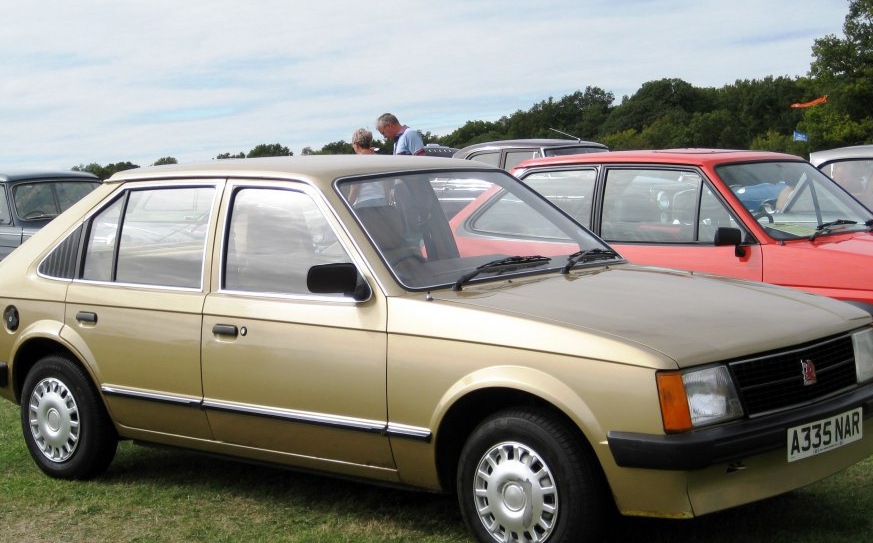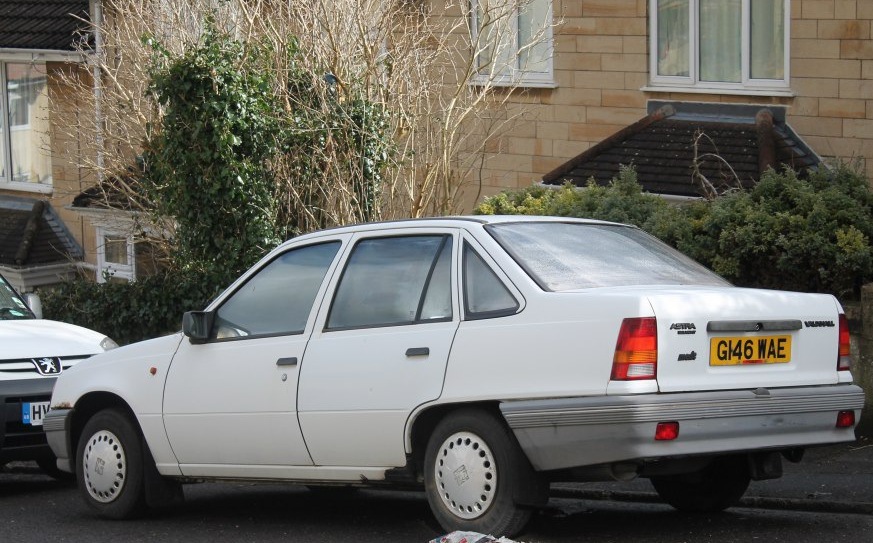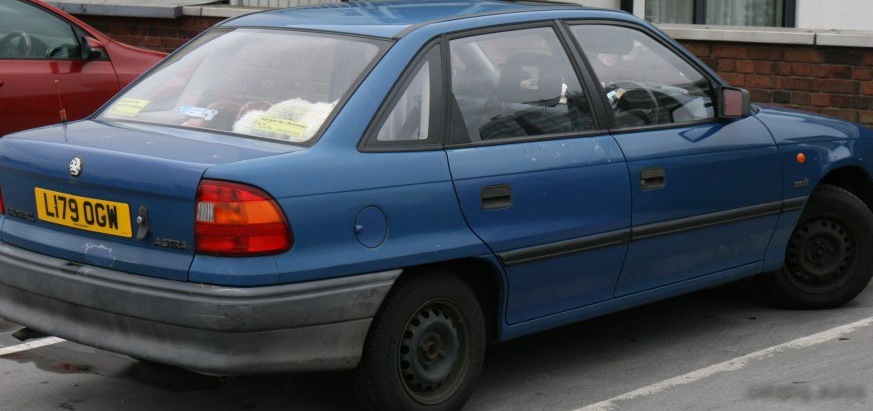
The Vauxhall Astra Mk III 1.6i 16V, produced between 1994 and 1998, represented a significant step forward for Vauxhall in the competitive C-segment family car market. Part of the Astra Mk III (G) generation, which utilized the GM2900 platform – known internally as the 1HX0 – this variant offered a balance between performance and affordability. Positioned as a mid-range offering within the Mk III lineup, it aimed to appeal to buyers seeking a more spirited driving experience than the base 1.4L models, without the higher price tag of the more powerful 1.8L or GSi versions. The 1.6i 16V was primarily sold in the United Kingdom and other European markets, serving as a key volume seller for Vauxhall.
Technical Specifications
| Brand | Vauxhall |
| Model | Astra |
| Generation | Astra Mk III |
| Type (Engine) | 1.6i 16V (100 Hp) |
| Start of production | 1994 |
| End of production | 1998 |
| Powertrain Architecture | Internal Combustion engine |
| Body type | Sedan |
| Seats | 5 |
| Doors | 4 |
| Fuel consumption (urban) | 10.7 l/100 km (22 US mpg, 26.4 UK mpg, 9.3 km/l) |
| Fuel consumption (extra urban) | 6.1 l/100 km (38.6 US mpg, 46.3 UK mpg, 16.4 km/l) |
| Fuel consumption (combined) | 7.8 l/100 km (30.2 US mpg, 36.2 UK mpg, 12.8 km/l) |
| CO2 emissions | 214 g/km |
| Fuel Type | Petrol (Gasoline) |
| Acceleration 0 – 100 km/h | 11.5 sec |
| Acceleration 0 – 62 mph | 11.5 sec |
| Acceleration 0 – 60 mph | 10.9 sec |
| Maximum speed | 190 km/h (118.06 mph) |
| Weight-to-power ratio | 10.4 kg/Hp, 96.2 Hp/tonne |
| Weight-to-torque ratio | 7.7 kg/Nm, 129.8 Nm/tonne |
| Power | 100 Hp @ 6200 rpm |
| Power per litre | 62.6 Hp/l |
| Torque | 135 Nm @ 3400 rpm (99.57 lb.-ft. @ 3400 rpm) |
| Engine layout | Front, Transverse |
| Engine Model/Code | X16XEL |
| Engine displacement | 1598 cm3 (97.52 cu. in.) |
| Number of cylinders | 4 |
| Engine configuration | Inline |
| Fuel injection system | Multi-port manifold injection |
| Engine aspiration | Naturally aspirated engine |
| Engine oil capacity | 3.25 l (3.43 US qt, 2.86 UK qt) |
| Coolant capacity | 5.9 l (6.23 US qt, 5.19 UK qt) |
| Kerb Weight | 1040 kg (2292.81 lbs) |
| Max. weight | 1550 kg (3417.17 lbs) |
| Max load | 510 kg (1124.36 lbs) |
| Trunk (boot) space – minimum | 501 l (17.69 cu. ft.) |
| Trunk (boot) space – maximum | 1200 l (42.38 cu. ft.) |
| Fuel tank capacity | 52 l (13.74 US gal, 11.44 UK gal) |
| Length | 4239 mm (166.89 in) |
| Width | 1689 mm (66.5 in) |
| Height | 1410 mm (55.51 in) |
| Wheelbase | 2520 mm (99.21 in) |
| Front track | 1420 mm (55.91 in) |
| Rear track | 1420 mm (55.91 in) |
| Ride height (ground clearance) | 135 mm (5.31 in) |
| Drag coefficient (Cd) | 0.31 |
| Drivetrain Architecture | The Internal combustion engine (ICE) drives the front wheels of the vehicle. |
| Drive wheel | Front wheel drive |
| Number of gears and type of gearbox | 5 gears, manual transmission |
| Front brakes | Ventilated discs |
| Rear brakes | Drum |
| Steering type | Steering rack and pinion |
| Power steering | Hydraulic Steering |
| Tires size | 175/65 R14 |
| Wheel rims size | 14 |
Powertrain & Engine Architecture
The heart of the Astra Mk III 1.6i 16V is the X16XEL engine, a 1.6-liter inline-four cylinder powerplant. This engine is a member of Vauxhall/Opel’s ‘Ecotec’ family, known for its relatively lightweight construction and focus on fuel efficiency. The X16XEL features a cast iron block with an aluminum cylinder head, incorporating dual overhead camshafts (DOHC) and four valves per cylinder – hence the “16V” designation. Fuel delivery is managed by a Bosch Motronic multi-port fuel injection system, providing precise control over the air-fuel mixture. The engine produces 100 horsepower at 6200 rpm and 135 Nm (99.57 lb-ft) of torque at 3400 rpm. The standard transmission for this variant was a five-speed manual gearbox, offering a reasonably direct and engaging driving experience. While an automatic transmission was available, it was less common and typically resulted in a slight performance decrease.
Driving Characteristics
The 1.6i 16V Astra Mk III offered a noticeable improvement in performance over the base 1.4L models. Acceleration from 0-60 mph took around 10.9 seconds, and it could achieve a top speed of approximately 118 mph. While not a sports car, the 1.6L engine provided sufficient power for everyday driving and overtaking maneuvers. The five-speed manual transmission allowed drivers to keep the engine in its optimal power band, enhancing responsiveness. Compared to the more powerful 1.8L and GSi models, the 1.6i 16V felt less urgent, but it offered a better balance between performance and fuel economy. The gear ratios were well-suited for cruising on motorways, while still providing adequate acceleration in urban environments.
Equipment & Trim Levels
The 1.6i 16V typically came equipped with features such as central locking, power steering, and an adjustable steering column. Interior upholstery was usually cloth, with a relatively simple dashboard layout. Optional extras included electric windows, a sunroof, and upgraded audio systems. Trim levels varied depending on the market, but generally, the 1.6i 16V sat in the middle of the range, offering a step up in comfort and features compared to the base models, without the sporty pretensions of the GSi.
Chassis & Braking
The Astra Mk III utilized a MacPherson strut front suspension and a torsion beam rear suspension. The 1.6i 16V models typically featured ventilated disc brakes on the front wheels and drum brakes on the rear. This braking setup was adequate for the car’s weight and performance, but lacked the stopping power of the larger brakes found on the GSi models. The suspension provided a comfortable ride, although it could feel somewhat soft in corners. Stabilizer bars were fitted to both the front and rear axles to reduce body roll.
Market Reception & Comparison
The Astra Mk III 1.6i 16V was generally well-received by automotive critics as a practical and affordable family car. It offered a good balance between performance, fuel economy, and comfort. Compared to rivals such as the Ford Escort and Peugeot 306, the Astra Mk III was considered to be a competitive offering. Fuel economy was respectable for its time, averaging around 30.2 US mpg on the combined cycle. Reliability was generally good, although some owners reported issues with the cooling system and electrical components. The 1.6i 16V offered a more engaging driving experience than the base 1.4L models, but it lacked the outright performance of the 1.8L and GSi variants.
Legacy
The Vauxhall Astra Mk III 1.6i 16V remains a relatively common sight on UK roads today, testament to its durability and affordability. The X16XEL engine is known for its reliability, although regular maintenance is essential to prevent issues such as oil leaks and timing chain wear. Parts availability is generally good, making it a relatively easy car to maintain and repair. In the used car market, the 1.6i 16V represents a good value proposition for buyers seeking a classic family car with reasonable running costs. While it may not offer the performance or prestige of some of its rivals, it remains a practical and enjoyable car to drive.