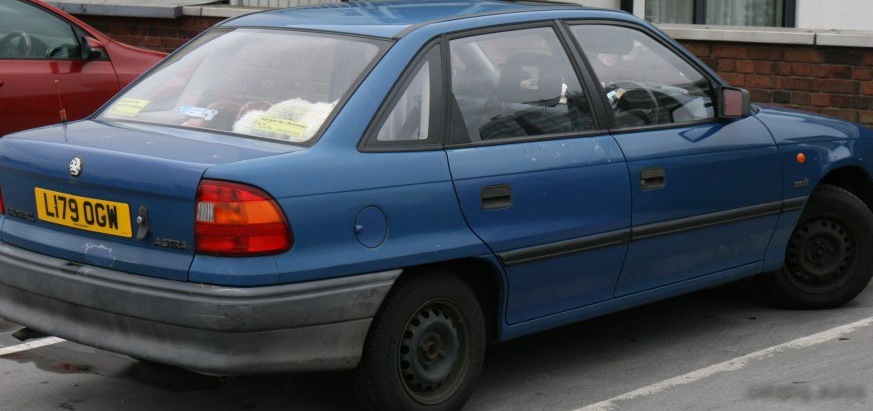
The Vauxhall Astra Mk III 1.6i 16V Automatic, produced between 1994 and 1998, represented a key offering in the third generation of Vauxhall’s popular compact family car. Positioned as a mid-range trim level, it aimed to provide a balance between performance, comfort, and affordability within the Mk III Astra lineup, which was based on the 1HX0/A3 platform shared with Opel and, later, Fiat. This variant catered to buyers seeking the refinement of a 16-valve engine paired with the convenience of an automatic transmission, though it came at a slight performance compromise compared to its manual counterparts.
Technical Specifications
| Brand | Vauxhall |
| Model | Astra |
| Generation | Astra Mk III |
| Type (Engine) | 1.6i 16V (100 Hp) Automatic |
| Start of production | 1994 |
| End of production | 1998 |
| Powertrain Architecture | Internal Combustion engine |
| Body type | Sedan |
| Seats | 5 |
| Doors | 4 |
| Fuel consumption (urban) | 12.7 l/100 km (18.5 US mpg, 22.2 UK mpg, 7.9 km/l) |
| Fuel consumption (extra urban) | 6.9 l/100 km (34.1 US mpg, 40.9 UK mpg, 14.5 km/l) |
| Fuel consumption (combined) | 9 l/100 km (26.1 US mpg, 31.4 UK mpg, 11.1 km/l) |
| Fuel Type | Petrol (Gasoline) |
| Acceleration 0 – 100 km/h | 13.5 sec |
| Acceleration 0 – 62 mph | 13.5 sec |
| Acceleration 0 – 60 mph | 12.8 sec |
| Maximum speed | 172 km/h (106.88 mph) |
| Weight-to-power ratio | 10.6 kg/Hp, 94.3 Hp/tonne |
| Weight-to-torque ratio | 7.9 kg/Nm, 127.4 Nm/tonne |
| Power | 100 Hp @ 6200 rpm |
| Power per litre | 62.6 Hp/l |
| Torque | 135 Nm @ 3400 rpm (99.57 lb.-ft. @ 3400 rpm) |
| Engine layout | Front, Transverse |
| Engine Model/Code | X16XEL |
| Engine displacement | 1598 cm3 (97.52 cu. in.) |
| Number of cylinders | 4 |
| Engine configuration | Inline |
| Fuel injection system | Multi-port manifold injection |
| Engine aspiration | Naturally aspirated engine |
| Engine oil capacity | 3.25 l (3.43 US qt, 2.86 UK qt) |
| Coolant capacity | 5.9 l (6.23 US qt, 5.19 UK qt) |
| Kerb Weight | 1060 kg (2336.9 lbs) |
| Max. weight | 1570 kg (3461.26 lbs) |
| Max load | 510 kg (1124.36 lbs) |
| Trunk (boot) space – minimum | 501 l (17.69 cu. ft.) |
| Trunk (boot) space – maximum | 1200 l (42.38 cu. ft.) |
| Fuel tank capacity | 52 l (13.74 US gal, 11.44 UK gal) |
| Length | 4239 mm (166.89 in) |
| Width | 1689 mm (66.5 in) |
| Height | 1410 mm (55.51 in) |
| Wheelbase | 2520 mm (99.21 in) |
| Front track | 1420 mm (55.91 in) |
| Rear (Back) track | 1420 mm (55.91 in) |
| Ride height (ground clearance) | 135 mm (5.31 in) |
| Drag coefficient (Cd) | 0.31 |
| Drivetrain Architecture | The Internal combustion engine (ICE) drives the front wheels of the vehicle. |
| Drive wheel | Front wheel drive |
| Number of gears and type of gearbox | 4 gears, automatic transmission |
| Front brakes | Ventilated discs |
| Rear brakes | Drum |
| Steering type | Steering rack and pinion |
| Power steering | Hydraulic Steering |
| Tires size | 175/65 R14 |
| Wheel rims size | 14 |
Powertrain & Engine Architecture
The heart of the Astra Mk III 1.6i 16V Automatic is the X16XEL engine, a 1.6-liter inline-four cylinder powerplant. This engine, a product of Vauxhall/Opel’s engineering, featured a cast iron block and an aluminum cylinder head with dual overhead camshafts (DOHC) operating four valves per cylinder – hence the “16V” designation. The X16XEL utilized Bosch Motronic multi-port fuel injection, providing precise fuel delivery for improved efficiency and performance. The engine’s 100 horsepower output at 6200 rpm and 135 Nm (99.57 lb-ft) of torque at 3400 rpm were respectable for its displacement and intended market segment. The automatic transmission was a four-speed unit, designed to offer smooth gear changes and ease of driving, particularly in urban environments. While reliable, this transmission wasn’t known for its sportiness or quick shifts.
Driving Characteristics
The 1.6i 16V Automatic offered a comfortable, if not particularly exhilarating, driving experience. Acceleration from 0-60 mph took around 12.8 seconds, and top speed was approximately 106.88 mph. Compared to the five-speed manual version of the same engine, the automatic suffered a slight performance penalty due to the inherent power losses within the torque converter and the less aggressive gear ratios. The automatic transmission prioritized smooth cruising over spirited driving. The gear ratios were tuned for fuel economy and relaxed acceleration, making it well-suited for everyday commuting and long journeys. However, drivers seeking a more engaging experience would find the manual transmission a preferable option.
Equipment & Trim Levels
The 1.6i 16V Automatic typically came equipped with features considered standard for a mid-range vehicle in the mid-1990s. These included central locking, power steering, electric front windows, and an adjustable steering column. Interior upholstery was generally cloth, with options for upgraded materials available. Optional extras could include air conditioning, a sunroof, and an upgraded stereo system. The dashboard layout was functional and straightforward, prioritizing usability over stylistic flair. Trim levels varied slightly depending on the specific market, but generally, this variant offered a good balance of features for the price.
Chassis & Braking
The Astra Mk III utilized a MacPherson strut front suspension and a torsion beam rear suspension. This setup provided a reasonable compromise between ride comfort and handling. The front brakes were ventilated discs, offering adequate stopping power, while the rear brakes were drums, a cost-saving measure common in this class of vehicle. Stabilizer bars were fitted to both the front and rear axles to reduce body roll during cornering. The chassis was designed to provide a stable and predictable driving experience, prioritizing safety and comfort over outright sportiness.
Market Reception & Comparison
The Astra Mk III 1.6i 16V Automatic was generally well-received by automotive critics as a practical and reliable family car. However, it wasn’t considered a standout performer in its class. Critics noted that the automatic transmission dulled the engine’s performance somewhat, and the ride could be a bit firm on rough roads. Compared to the more powerful 2.0-liter 16V and GSi models, the 1.6i Automatic offered less excitement but significantly better fuel economy. Against diesel-powered rivals like the 1.7 TDI, it offered more refinement but lacked the low-end torque and fuel efficiency of the diesel engine.
Legacy
The X16XEL engine, when properly maintained, proved to be a durable and reliable unit. The four-speed automatic transmission, while not the most advanced, also demonstrated reasonable longevity. Today, the Astra Mk III 1.6i 16V Automatic can be found in the used car market at affordable prices. It represents a relatively inexpensive entry point into classic European motoring. However, potential buyers should be aware of the age-related issues common to vehicles of this era, such as corrosion and wear and tear on suspension components. Parts availability is generally good, but finding specific trim pieces can sometimes be challenging. Despite its age, the Astra Mk III 1.6i 16V Automatic remains a popular choice for enthusiasts and those seeking a practical and affordable classic car.