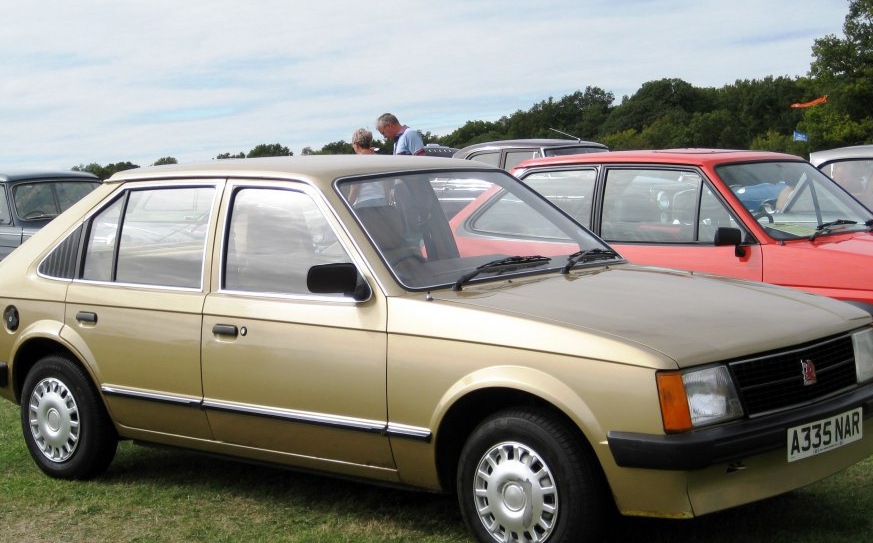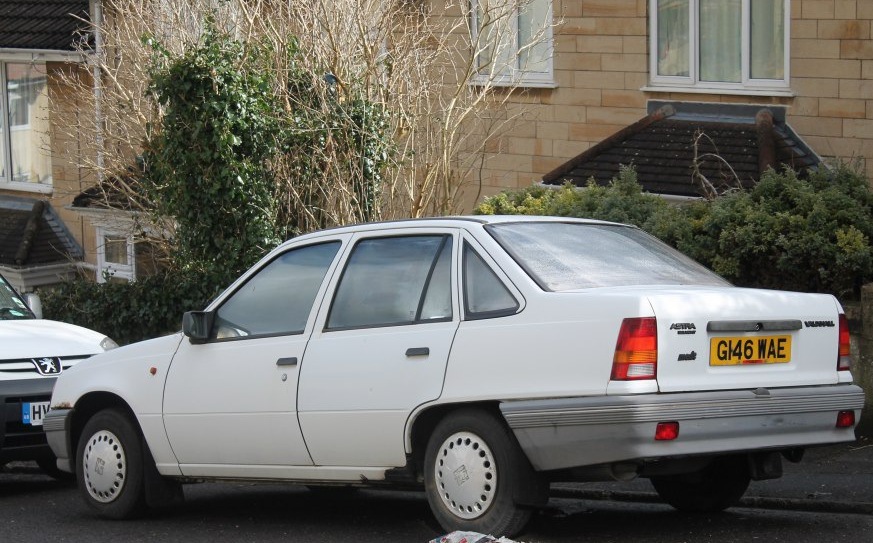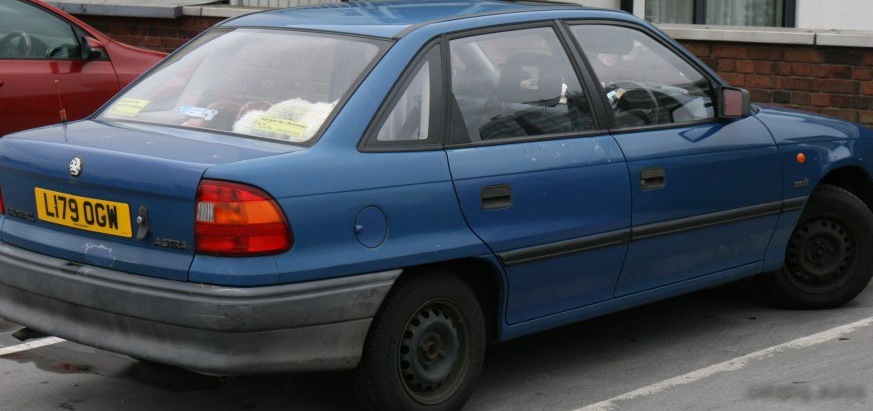
The Vauxhall Astra Mk III 1.6i Automatic, produced between 1996 and 1998, represented an entry-level offering within the broader Mk III Astra range (1991-1998). Positioned as a comfortable and economical family sedan, it catered to buyers prioritizing ease of use over outright performance. This variant utilized the C16NZ engine paired with a four-speed automatic transmission, making it a popular choice for those seeking a no-fuss driving experience. The Mk III Astra, built upon the GM T platform (internally known as the 1HX0), was a significant model for Vauxhall, solidifying its position in the competitive European compact car segment.
Technical Specifications
| Brand | Vauxhall |
| Model | Astra |
| Generation | Astra Mk III |
| Type (Engine) | 1.6i (75 Hp) Automatic |
| Start of production | 1996 |
| End of production | 1998 |
| Powertrain Architecture | Internal Combustion engine |
| Body type | Sedan |
| Seats | 5 |
| Doors | 4 |
| Fuel consumption (urban) | 11.7 l/100 km (20.1 US mpg, 24.1 UK mpg, 8.5 km/l) |
| Fuel consumption (extra urban) | 6.5 l/100 km (36.2 US mpg, 43.5 UK mpg, 15.4 km/l) |
| Fuel consumption (combined) | 8.4 l/100 km (28 US mpg, 33.6 UK mpg, 11.9 km/l) |
| Fuel Type | Petrol (Gasoline) |
| Acceleration 0 – 100 km/h | 16.5 sec |
| Acceleration 0 – 62 mph | 16.5 sec |
| Acceleration 0 – 60 mph | 15.7 sec |
| Maximum speed | 159 km/h (98.8 mph) |
| Weight-to-power ratio | 13.3 kg/Hp, 75 Hp/tonne |
| Weight-to-torque ratio | 7.8 kg/Nm, 128 Nm/tonne |
| Power | 75 Hp @ 5200 rpm |
| Power per litre | 46.9 Hp/l |
| Torque | 128 Nm @ 2600 rpm (94.41 lb.-ft. @ 2600 rpm) |
| Engine layout | Front, Transverse |
| Engine Model/Code | C16NZ |
| Engine displacement | 1598 cm3 (97.52 cu. in.) |
| Number of cylinders | 4 |
| Engine configuration | Inline |
| Fuel injection system | Multi-port manifold injection |
| Engine aspiration | Naturally aspirated |
| Engine oil capacity | 3.5 l (3.7 US qt, 3.08 UK qt) |
| Coolant capacity | 5.6 l (5.92 US qt, 4.93 UK qt) |
| Kerb Weight | 1000 kg (2204.62 lbs) |
| Max. weight | 1535 kg (3384.1 lbs) |
| Max load | 535 kg (1179.47 lbs) |
| Trunk (boot) space – minimum | 501 l (17.69 cu. ft.) |
| Trunk (boot) space – maximum | 1200 l (42.38 cu. ft.) |
| Fuel tank capacity | 52 l (13.74 US gal, 11.44 UK gal) |
| Length | 4239 mm (166.89 in) |
| Width | 1689 mm (66.5 in) |
| Height | 1410 mm (55.51 in) |
| Wheelbase | 2520 mm (99.21 in) |
| Front track | 1420 mm (55.91 in) |
| Rear track | 1420 mm (55.91 in) |
| Ride height (ground clearance) | 135 mm (5.31 in) |
| Drag coefficient (Cd) | 0.31 |
| Drivetrain Architecture | Front wheel drive |
| Number of gears | 4 |
| Gearbox type | Automatic transmission |
| Front brakes | Ventilated discs |
| Rear brakes | Drum |
| Steering type | Steering rack and pinion |
| Power steering | Hydraulic |
| Tires size | 175/70 R13 |
| Wheel rims size | 13 |
Powertrain & Engine Architecture
The heart of the Astra Mk III 1.6i Automatic was the C16NZ engine, a 1.6-liter inline-four cylinder petrol engine. This engine was a mainstay of Vauxhall/Opel’s lineup during the 1990s, known for its relative simplicity and durability. It featured a single overhead camshaft (SOHC) valvetrain with two valves per cylinder. Fuel delivery was handled by a Bosch multi-port fuel injection system, providing adequate, though not exceptional, performance. The C16NZ produced 75 horsepower at 5200 rpm and 128 Nm (94.41 lb-ft) of torque at 2600 rpm. The four-speed automatic transmission, while offering convenience, was a relatively basic unit, lacking the sophistication of more modern automatic gearboxes. It featured a traditional torque converter and hydraulic control system.
Driving Characteristics
The 1.6i Automatic Astra offered a comfortable, if uninspiring, driving experience. Acceleration was leisurely, taking around 16.5 seconds to reach 60 mph. The automatic transmission, while smooth in operation, contributed to a noticeable loss of power compared to the five-speed manual version. Gear ratios were optimized for fuel economy rather than performance, resulting in a somewhat sluggish response during overtaking maneuvers. The engine felt strained when pushed hard, and the lack of a higher gear meant engine speeds were relatively high at highway cruising speeds. However, for everyday commuting and urban driving, the combination proved perfectly adequate.
Equipment & Trim Levels
The 1.6i Automatic typically fell into the lower to mid-range of the Mk III Astra trim levels. Standard equipment generally included central locking, power steering, and an adjustable steering column. Interior upholstery was typically cloth, with a relatively basic dashboard layout. Optional extras included electric windows, a sunroof, and upgraded audio systems. The trim level often dictated the quality of the cloth upholstery and the presence of additional features like alloy wheels, though these were less common on the base 1.6i Automatic models.
Chassis & Braking
The Astra Mk III utilized a MacPherson strut front suspension and a torsion beam rear suspension. This setup provided a reasonable balance between ride comfort and handling. The 1.6i Automatic models typically featured ventilated disc brakes on the front wheels and drum brakes on the rear. The braking system was adequate for the car’s performance, but lacked the stopping power of higher-spec models with all-round disc brakes. Stabilizer bars were fitted to both the front and rear axles, helping to reduce body roll during cornering.
Market Reception & Comparison
The Astra Mk III 1.6i Automatic was generally well-received as a practical and affordable family car. Critics acknowledged its comfortable ride and ease of use, but often criticized its lack of performance. Compared to the more powerful 1.8-liter and 2.0-liter variants, the 1.6i Automatic offered significantly less punch. The 1.7 Diesel and 1.9 TDI models provided superior fuel economy, but at the expense of refinement. The 1.6i Automatic appealed to buyers who prioritized comfort and convenience over sporty driving dynamics.
Legacy
The C16NZ engine, while not known for its cutting-edge technology, proved to be a relatively reliable unit. With proper maintenance, these engines can still be found running smoothly today. The four-speed automatic transmission, however, is more prone to wear and tear, and can require more frequent servicing. In the used car market, the Astra Mk III 1.6i Automatic represents an affordable and accessible classic. Its simplicity and relatively low running costs make it a popular choice for first-time car owners or those seeking a dependable and inexpensive mode of transportation. While not a performance icon, the 1.6i Automatic played a vital role in establishing the Astra as a popular and trusted family car.