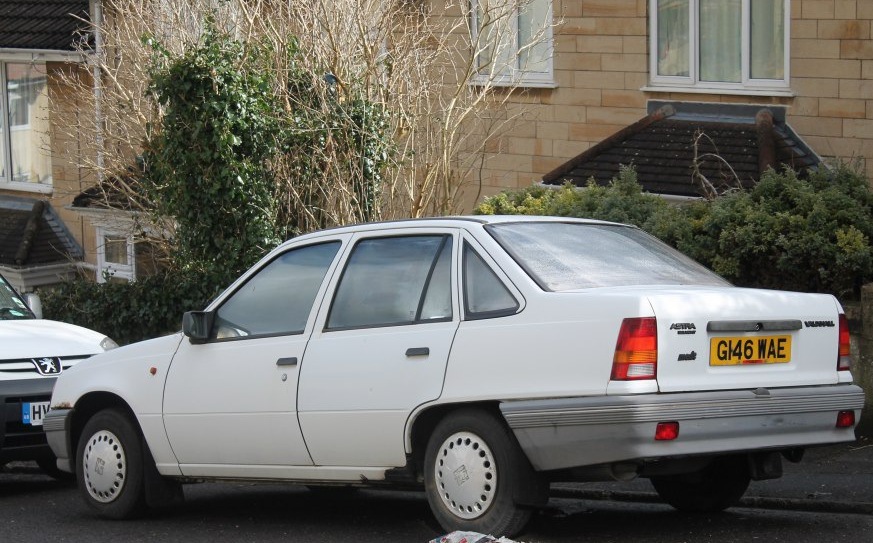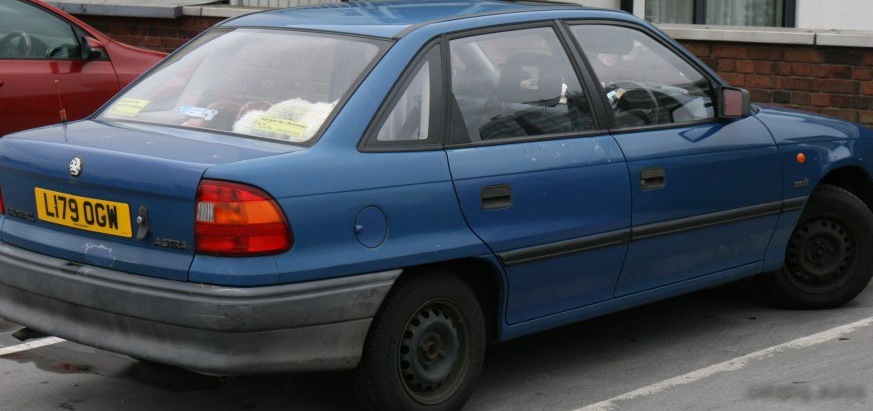
The Vauxhall Astra Mk III 1.6i Eco Automatic, produced between 1992 and 1998, represented an entry-level offering within the broader Mk III Astra range (1991-1998). Positioned as a fuel-efficient and affordable option, this variant catered to buyers prioritizing practicality and low running costs over outright performance. It was a key model for Vauxhall in the UK market, competing with rivals like the Ford Escort and Peugeot 305. The Mk III Astra, built on the T-platform (internally designated as 1HX0), was a significant step forward for Vauxhall, offering improved styling, safety features, and a more refined driving experience compared to its predecessor.
Technical Specifications
| Brand | Vauxhall |
| Model | Astra |
| Generation | Astra Mk III |
| Type (Engine) | 1.6i Eco (71 Hp) Automatic |
| Start of production | 1992 |
| End of production | 1998 |
| Powertrain Architecture | Internal Combustion engine |
| Body type | Sedan |
| Seats | 5 |
| Doors | 4 |
| Fuel consumption (combined) | 7.6 l/100 km |
| Fuel consumption (US mpg) | 30.9 US mpg |
| Fuel consumption (UK mpg) | 37.2 UK mpg |
| Fuel consumption (km/l) | 13.2 km/l |
| Fuel Type | Petrol (Gasoline) |
| Acceleration 0 – 100 km/h | 17 sec |
| Acceleration 0 – 62 mph | 17 sec |
| Acceleration 0 – 60 mph | 16.2 sec |
| Maximum speed | 163 km/h (101.28 mph) |
| Weight-to-power ratio | 14.1 kg/Hp |
| Weight-to-torque ratio | 7.8 kg/Nm |
| Power | 71 Hp @ 5000 rpm |
| Power per litre | 44.4 Hp/l |
| Torque | 128 Nm @ 2800 rpm (94.41 lb.-ft. @ 2800 rpm) |
| Engine layout | Front, Transverse |
| Engine Model/Code | X16SZ |
| Engine displacement | 1598 cm3 (97.52 cu. in.) |
| Number of cylinders | 4 |
| Engine configuration | Inline |
| Fuel injection system | Single-point injection |
| Engine aspiration | Naturally aspirated |
| Engine oil capacity | 3.5 l (3.7 US qt | 3.08 UK qt) |
| Coolant capacity | 5.6 l (5.92 US qt | 4.93 UK qt) |
| Kerb Weight | 1000 kg (2204.62 lbs) |
| Max. weight | 1515 kg (3340 lbs) |
| Max load | 515 kg (1135.38 lbs) |
| Trunk (boot) space – minimum | 501 l (17.69 cu. ft.) |
| Trunk (boot) space – maximum | 1200 l (42.38 cu. ft.) |
| Fuel tank capacity | 52 l (13.74 US gal | 11.44 UK gal) |
| Length | 4239 mm (166.89 in) |
| Width | 1689 mm (66.5 in) |
| Height | 1389 mm (54.69 in) |
| Wheelbase | 2520 mm (99.21 in) |
| Front track | 1420 mm (55.91 in) |
| Rear track | 1420 mm (55.91 in) |
| Ride height (ground clearance) | 135 mm (5.31 in) |
| Drag coefficient (Cd) | 0.31 |
| Drivetrain Architecture | Front wheel drive |
| Number of gears | 4 |
| Gearbox type | Automatic transmission |
| Front brakes | Ventilated discs |
| Rear brakes | Drum |
| Steering type | Steering rack and pinion |
| Power steering | Hydraulic |
| Tires size | 175/70 R13 |
| Wheel rims size | 13 |
Powertrain & Engine Architecture
The heart of the Astra 1.6i Eco Automatic was the X16SZ engine, a 1.6-liter inline-four cylinder unit. This engine utilized a single-point fuel injection system (throttle body injection), a relatively simple and cost-effective technology for the time. The X16SZ produced 71 horsepower at 5000 rpm and 128 Nm (94.41 lb-ft) of torque at 2800 rpm. The engine featured a two-valve per cylinder configuration and a relatively low compression ratio, prioritizing fuel economy over performance. Paired with this engine was a four-speed automatic transmission, offering smooth but not particularly quick gear changes. This transmission was chosen to provide ease of use, particularly appealing to drivers unfamiliar or uninterested in manual gearboxes.
Driving Characteristics
The 1.6i Eco Automatic’s performance was modest. Acceleration from 0-60 mph took around 16.2 seconds, and top speed was limited to 101.28 mph. The automatic transmission, while convenient, contributed to a noticeable lack of responsiveness. Gear ratios were optimized for fuel efficiency rather than spirited driving. Compared to the 1.8-liter versions of the Astra Mk III, or even the diesel models, the 1.6i Eco Automatic felt noticeably slower, especially when fully loaded or tackling inclines. The focus was on providing a comfortable and undemanding driving experience, making it well-suited for urban commuting and longer journeys where outright speed wasn’t a priority.
Equipment & Trim Levels
The 1.6i Eco Automatic typically came with a basic level of equipment. Standard features generally included central locking, power steering, and an adjustable steering column. Interior upholstery was typically cloth, and the dashboard featured a simple, functional design. Optional extras included electric windows, a sunroof, and upgraded audio systems. The trim level was generally considered the base model, offering essential features at an affordable price point. It was often chosen by buyers who prioritized value for money over luxury or advanced features.
Chassis & Braking
The Astra Mk III 1.6i Eco Automatic utilized a MacPherson strut front suspension and a torsion beam rear suspension. The braking system consisted of ventilated disc brakes on the front wheels and drum brakes on the rear. This configuration was typical for cars in this class and weight category during the 1990s. The suspension provided a comfortable ride, although it wasn’t particularly sporty. The drum brakes on the rear were adequate for normal driving conditions but lacked the stopping power of disc brakes, especially under heavy braking.
Market Reception & Comparison
The Astra 1.6i Eco Automatic received mixed reviews. Critics praised its fuel efficiency and affordability but criticized its lack of performance. Compared to the higher-spec Astra models, such as the 1.8 or 2.0-liter versions, it felt underpowered. However, it offered a significant price advantage and appealed to a different segment of the market. The diesel versions of the Astra Mk III offered better fuel economy but were generally more expensive to purchase and maintain. The 1.6i Eco Automatic struck a balance between cost, efficiency, and practicality, making it a popular choice for budget-conscious buyers.
Legacy
The X16SZ engine, while not known for its performance, proved to be relatively reliable. The four-speed automatic transmission also had a good reputation for durability. Today, Astra Mk III 1.6i Eco Automatics are relatively common in the used car market, often available at very affordable prices. However, finding well-maintained examples can be challenging, as many have suffered from neglect or high mileage. Parts availability is generally good, but some components may be becoming increasingly difficult to source. The car represents a practical and affordable classic, appealing to enthusiasts looking for a simple and reliable 1990s hatchback.