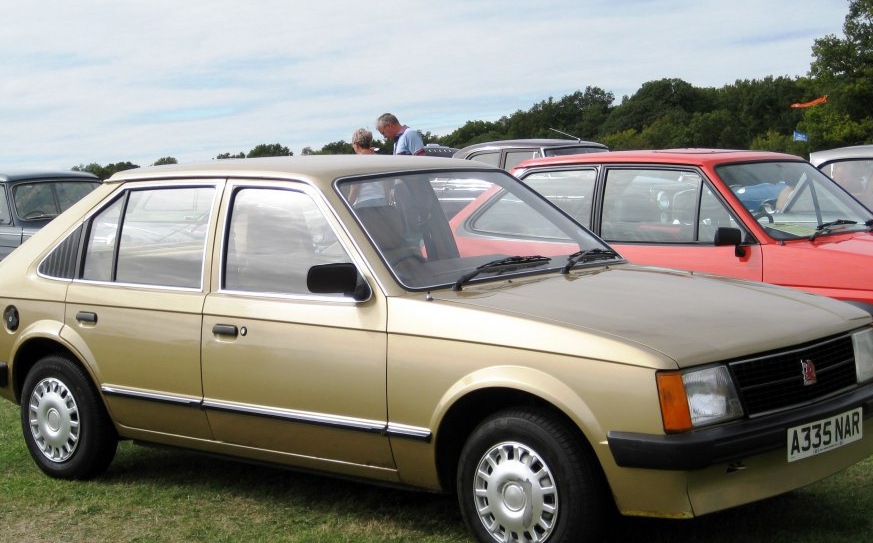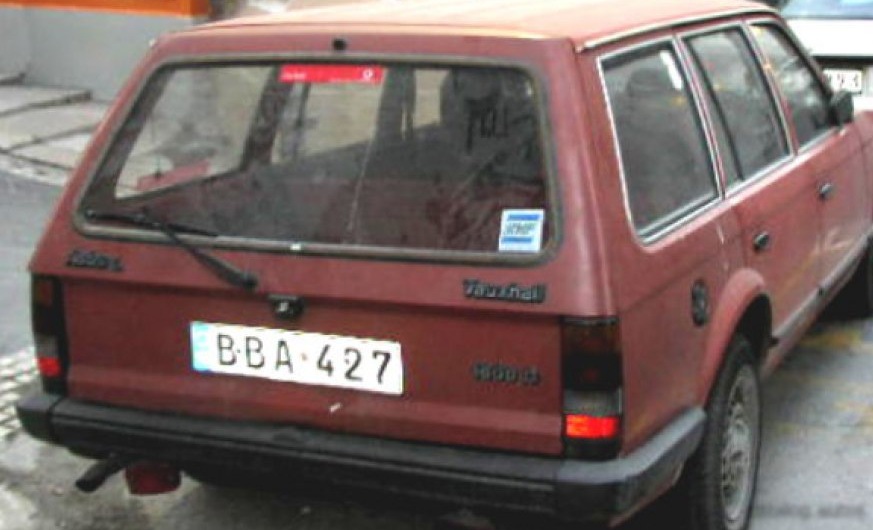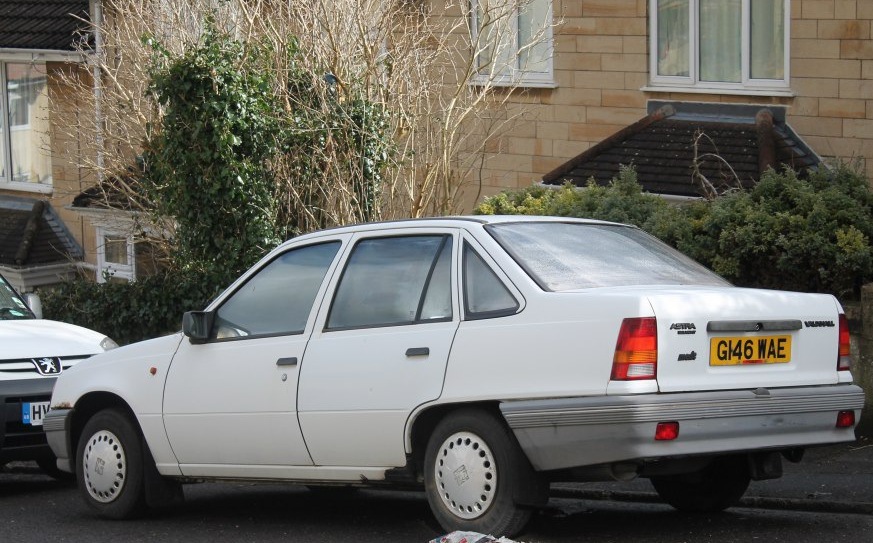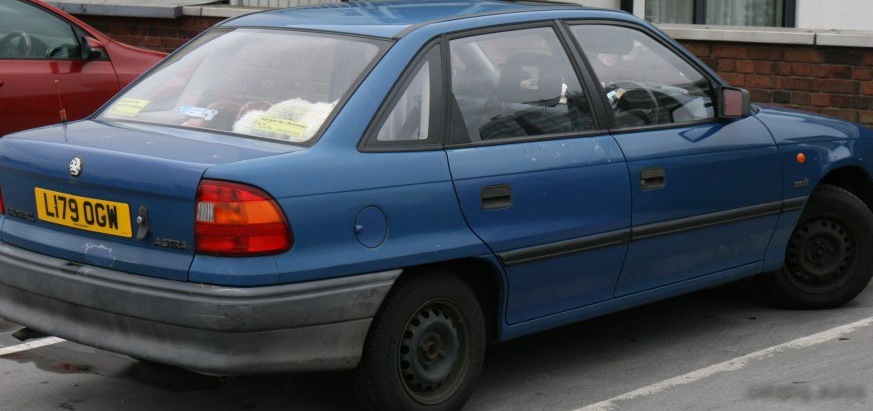
The Vauxhall Astra Mk III 1.7 D, produced between 1992 and 1994, represented the entry-level diesel offering within the Mk III Astra range (1991-1998). Positioned as a fuel-efficient and affordable option, it catered to buyers prioritizing economy over outright performance. This variant, powered by a naturally aspirated 1.7-liter diesel engine producing 60 horsepower, was primarily sold in European markets, particularly the United Kingdom where Vauxhall was a dominant brand. It formed part of the broader Astra Mk III lineup, which utilized the GM T platform, also known internally as the 1HX0, and shared components with the Opel Astra, and later, the Zafira.
Technical Specifications
| Brand | Vauxhall |
| Model | Astra |
| Generation | Astra Mk III |
| Type (Engine) | 1.7 D (60 Hp) |
| Start of production | 1992 |
| End of production | 1994 |
| Powertrain Architecture | Internal Combustion engine |
| Body type | Sedan |
| Seats | 5 |
| Doors | 4 |
| Fuel consumption (urban) | 6.7 l/100 km (35.1 US mpg, 42.2 UK mpg, 14.9 km/l) |
| Fuel consumption (extra urban) | 4.2 l/100 km (56 US mpg, 67.3 UK mpg, 23.8 km/l) |
| Fuel consumption (combined) | 5.6 l/100 km (42 US mpg, 50.4 UK mpg, 17.9 km/l) |
| CO2 emissions | 148 g/km |
| Fuel Type | Diesel |
| Acceleration 0 – 100 km/h | 18.5 sec |
| Acceleration 0 – 62 mph | 18.5 sec |
| Acceleration 0 – 60 mph | 17.6 sec |
| Maximum speed | 153 km/h (95.07 mph) |
| Weight-to-power ratio | 17.3 kg/Hp, 57.7 Hp/tonne |
| Weight-to-torque ratio | 10 kg/Nm, 100 Nm/tonne |
| Power | 60 Hp @ 4600 rpm |
| Power per litre | 35.3 Hp/l |
| Torque | 104 Nm @ 2400 rpm (76.71 lb.-ft. @ 2400 rpm) |
| Engine layout | Front, Transverse |
| Engine Model/Code | 17DR |
| Engine displacement | 1699 cm3 (103.68 cu. in.) |
| Number of cylinders | 4 |
| Engine configuration | Inline |
| Fuel injection system | Precombustion chamber injection |
| Engine oil capacity | 5 l (5.28 US qt | 4.4 UK qt) |
| Coolant capacity | 7.8 l (8.24 US qt | 6.86 UK qt) |
| Kerb Weight | 1040 kg (2292.81 lbs.) |
| Max. weight | 1535 kg (3384.1 lbs.) |
| Max load | 495 kg (1091.29 lbs.) |
| Trunk (boot) space – minimum | 501 l (17.69 cu. ft.) |
| Trunk (boot) space – maximum | 1200 l (42.38 cu. ft.) |
| Fuel tank capacity | 52 l (13.74 US gal | 11.44 UK gal) |
| Length | 4239 mm (166.89 in.) |
| Width | 1689 mm (66.5 in.) |
| Height | 1389 mm (54.69 in.) |
| Wheelbase | 2520 mm (99.21 in.) |
| Front track | 1420 mm (55.91 in.) |
| Rear track | 1420 mm (55.91 in.) |
| Ride height (ground clearance) | 135 mm (5.31 in.) |
| Drag coefficient (Cd) | 0.31 |
| Drivetrain Architecture | The Internal combustion engine (ICE) drives the front wheels of the vehicle. |
| Drive wheel | Front wheel drive |
| Number of gears and type of gearbox | 5 gears, manual transmission |
| Front brakes | Ventilated discs |
| Rear brakes | Drum |
| Steering type | Steering rack and pinion |
| Power steering | Hydraulic Steering |
| Tires size | 175/70 R13 |
| Wheel rims size | 13 |
Powertrain & Engine Architecture
The heart of the Astra Mk III 1.7 D was the 17DR engine, a 1.7-liter inline-four diesel. This engine utilized precombustion chamber injection, a common diesel technology of the era. Unlike direct injection systems, precombustion chambers housed a glow plug and a small auxiliary combustion chamber where fuel was initially ignited, then transferred to the main cylinder. This system aided cold starting and reduced engine noise, but generally resulted in lower power output and efficiency compared to later direct injection designs. The engine produced 60 horsepower at 4600 rpm and 104 Nm (77 lb-ft) of torque at 2400 rpm. The five-speed manual transmission was the only gearbox option available with this engine, prioritizing fuel economy over sporty driving. The engine was transversely mounted, a common layout for front-wheel-drive vehicles, contributing to a more compact engine bay.
Driving Characteristics
The 1.7 D Astra was not known for its performance. Acceleration was leisurely, taking around 18.5 seconds to reach 62 mph. The focus was firmly on fuel efficiency and low running costs. The five-speed manual transmission helped to maximize the limited power available, with relatively long gear ratios designed to keep the engine within its optimal torque band. Compared to the more powerful petrol (gasoline) Astra variants, such as the 1.8 or 2.0-liter models, the 1.7 D felt significantly slower. Even compared to other diesel options within the Astra range, like later direct-injection diesels, it lacked responsiveness. However, its simplicity and robust construction made it a reliable and durable powertrain.
Equipment & Trim Levels
The 1.7 D typically represented the base trim level in the Astra Mk III range. Standard equipment was relatively basic, including cloth upholstery, a simple dashboard layout, and manual windows and door locks. Power steering was often included, but air conditioning and central locking were usually optional extras. Interior trim was typically dark grey or blue. The emphasis was on providing a functional and affordable vehicle, rather than luxury or advanced features. Optional extras included a radio/cassette player, upgraded seat fabrics, and alloy wheels, though these were rarely specified on the base 1.7 D model.
Chassis & Braking
The Astra Mk III 1.7 D utilized a MacPherson strut front suspension and a torsion beam rear suspension. The rear brakes were drum brakes, a cost-saving measure common on lower-spec models. Front brakes were ventilated discs. Stabilizer bars were fitted to both the front and rear axles, helping to reduce body roll during cornering. The suspension was tuned for comfort rather than sporty handling, providing a reasonably compliant ride. The relatively light weight of the 1.7 D (around 1040 kg or 2293 lbs) helped to mitigate the effects of the low power output.
Market Reception & Comparison
The Astra Mk III 1.7 D was well-received in markets where fuel economy and affordability were paramount. Critics acknowledged its practicality and low running costs, but often criticized its lack of performance. Compared to the petrol Astra variants, the 1.7 D offered significantly better fuel economy – around 42 mpg combined – but at the expense of driving enjoyment. It was a popular choice for fleet operators and private buyers seeking a reliable and economical vehicle for everyday use. Compared to competitors like the Ford Escort Diesel and Peugeot 205 Diesel, the Astra 1.7 D offered a similar level of practicality and economy.
Legacy
The 1.7 D engine, while not particularly sophisticated, proved to be remarkably durable. Many examples are still on the road today, testament to its robust construction. However, due to its age and the availability of more modern and efficient diesel engines, the Astra Mk III 1.7 D is now primarily found as a classic or budget-friendly vehicle. Parts availability is generally good, but finding specific components may require searching specialist suppliers. The 1.7 D represents a significant step in the evolution of diesel technology, showcasing the precombustion chamber injection system that was prevalent in European diesel engines during the 1990s.