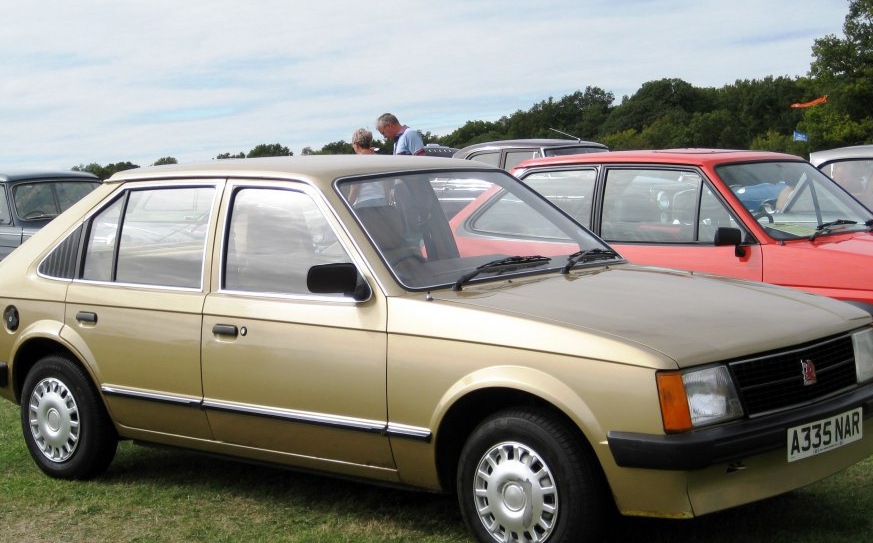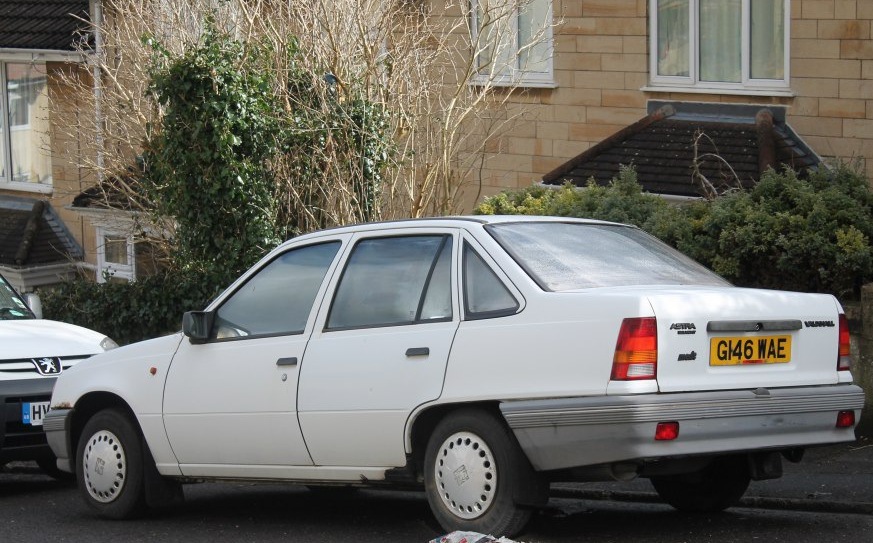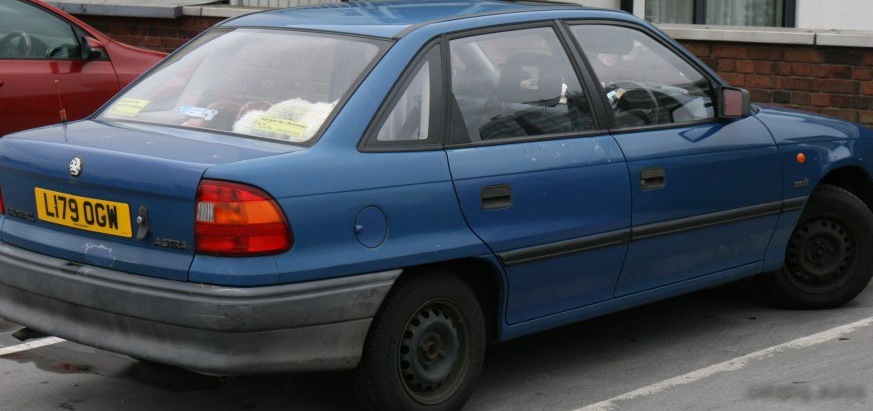
The Vauxhall Astra Mk III 1.7 TD, produced between 1994 and 1998, represented an economical and practical offering within the broader Astra Mk III (1991-1998) range. Positioned as the entry-level diesel variant, it catered to buyers prioritizing fuel efficiency and low running costs over outright performance. This model, based on the T platform (internally designated as the 1HX0), was primarily sold in European markets, including the United Kingdom where it was a common sight as a family saloon or fleet vehicle. The 1.7 TD offered a more affordable alternative to the petrol-powered Astras and the more powerful diesel options available.
Technical Specifications
| Brand | Vauxhall |
| Model | Astra |
| Generation | Astra Mk III |
| Type (Engine) | 1.7 TD (68 Hp) |
| Start of production | 1994 |
| End of production | 1998 |
| Powertrain Architecture | Internal Combustion engine |
| Body type | Sedan |
| Seats | 5 |
| Doors | 4 |
| Fuel consumption (urban) | 8.5 l/100 km (27.7 US mpg, 33.2 UK mpg, 11.8 km/l) |
| Fuel consumption (extra urban) | 5.2 l/100 km (45.2 US mpg, 54.3 UK mpg, 19.2 km/l) |
| Fuel consumption (combined) | 6.4 l/100 km (36.8 US mpg, 44.1 UK mpg, 15.6 km/l) |
| CO2 emissions | 170 g/km |
| Fuel Type | Diesel |
| Acceleration 0 – 100 km/h | 18.5 sec |
| Acceleration 0 – 62 mph | 18.5 sec |
| Acceleration 0 – 60 mph | 17.6 sec |
| Maximum speed | 164 km/h (101.9 mph) |
| Weight-to-power ratio | 15.6 kg/Hp, 64.2 Hp/tonne |
| Weight-to-torque ratio | 10.1 kg/Nm, 99.1 Nm/tonne |
| Power | 68 Hp @ 4600 rpm |
| Power per litre | 40 Hp/l |
| Torque | 105 Nm @ 2400 rpm (77.44 lb.-ft. @ 2400 rpm) |
| Engine layout | Front, Transverse |
| Engine Model/Code | X17DTL |
| Engine displacement | 1699 cm3 (103.68 cu. in.) |
| Number of cylinders | 4 |
| Engine configuration | Inline |
| Fuel injection system | Precombustion chamber injection |
| Engine aspiration | Turbocharger |
| Engine oil capacity | 4.5 l (4.76 US qt, 3.96 UK qt) |
| Coolant capacity | 6.8 l (7.19 US qt, 5.98 UK qt) |
| Kerb Weight | 1060 kg (2336.9 lbs) |
| Max. weight | 1555 kg (3428.19 lbs) |
| Max load | 495 kg (1091.29 lbs) |
| Trunk (boot) space – minimum | 501 l (17.69 cu. ft.) |
| Trunk (boot) space – maximum | 1200 l (42.38 cu. ft.) |
| Fuel tank capacity | 52 l (13.74 US gal, 11.44 UK gal) |
| Length | 4239 mm (166.89 in) |
| Width | 1689 mm (66.5 in) |
| Height | 1410 mm (55.51 in) |
| Wheelbase | 2520 mm (99.21 in) |
| Front track | 1420 mm (55.91 in) |
| Rear track | 1420 mm (55.91 in) |
| Ride height (ground clearance) | 135 mm (5.31 in) |
| Drag coefficient (Cd) | 0.31 |
| Drivetrain Architecture | The Internal combustion engine (ICE) drives the front wheels of the vehicle. |
| Drive wheel | Front wheel drive |
| Number of gears and type of gearbox | 5 gears, manual transmission |
| Front brakes | Ventilated discs |
| Rear brakes | Drum |
| Steering type | Steering rack and pinion |
| Power steering | Hydraulic Steering |
| Tires size | 175/65 R14 |
| Wheel rims size | 14 |
Powertrain & Engine Architecture
The heart of the Astra Mk III 1.7 TD was the Isuzu-derived X17DTL engine. This 1.7-liter, inline-four cylinder diesel engine utilized precombustion chamber injection, a system common in European diesels of the era. This system involved injecting fuel into a precombustion chamber connected to the main cylinder, promoting more complete combustion and reducing noise. A turbocharger was employed to boost power output to 68 horsepower at 4600 rpm and 105 Nm (77.44 lb-ft) of torque at 2400 rpm. The engine’s relatively low compression ratio and turbocharging contributed to its fuel efficiency. The engine was paired with a five-speed manual transmission, as an automatic transmission was not offered with this engine configuration.
Driving Characteristics
The 1.7 TD Astra was not designed for spirited driving. Acceleration was leisurely, taking around 18.5 seconds to reach 62 mph (100 km/h). However, the engine’s torque delivery made it reasonably capable for everyday driving and overtaking on highways. The five-speed manual transmission allowed drivers to keep the engine in its optimal power band. Compared to the more powerful petrol versions of the Astra Mk III, the 1.7 TD offered significantly less performance, but it excelled in fuel economy. The manual gearbox provided a more engaging driving experience than an automatic would have, but also required more driver involvement.
Equipment & Trim Levels
The 1.7 TD typically came with a basic level of equipment. Standard features generally included power steering, central locking, and an adjustable steering column. Interior upholstery was typically cloth, and the dashboard featured a functional, if somewhat utilitarian, design. Optional extras included electric windows, a sunroof, and upgraded audio systems. The trim level was generally considered entry-level, focusing on providing essential transportation at a low cost. It was often chosen by fleet buyers who prioritized practicality and economy over luxury features.
Chassis & Braking
The Astra Mk III 1.7 TD utilized a MacPherson strut front suspension and a torsion beam rear suspension. The front brakes were ventilated discs, providing adequate stopping power, while the rear brakes were drums, a cost-saving measure common in this class of vehicle. The suspension setup was tuned for comfort rather than sporty handling. Stabilizer bars were present, but were relatively thin compared to those found on higher-performance Astra models. The relatively light weight of the 1.7 TD helped to mitigate the limitations of the suspension and braking systems.
Market Reception & Comparison
The Astra Mk III 1.7 TD was well-received by buyers seeking an economical and reliable diesel car. Critics praised its fuel efficiency and low running costs, but noted its lack of performance. Compared to the 1.8-liter petrol versions, the 1.7 TD offered significantly better fuel economy but considerably less power. The 1.7 TD was also often compared to other small diesel saloons of the time, such as the Ford Escort and Peugeot 305, generally holding its own in terms of fuel economy and reliability. Its simplicity and robust construction contributed to its reputation for dependability.
Legacy
The X17DTL engine, while not known for its sophistication, proved to be a durable and reliable unit. Astra Mk III 1.7 TD models are now relatively rare, but those that remain are often sought after by enthusiasts looking for a simple, economical, and classic European car. The powertrain is generally considered to be long-lasting, provided it has been properly maintained. Parts availability can be a challenge, but many components are still available through specialist suppliers. The 1.7 TD Astra represents a practical and affordable option from a bygone era of automotive engineering.