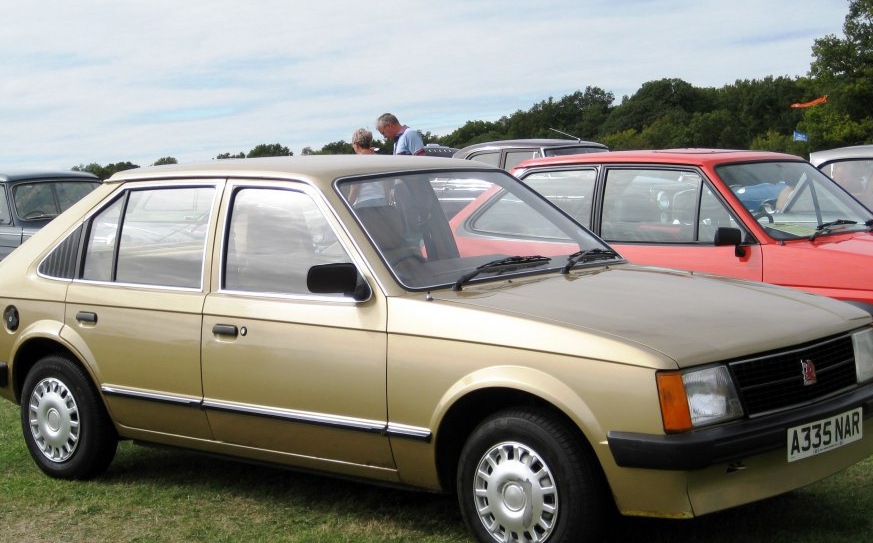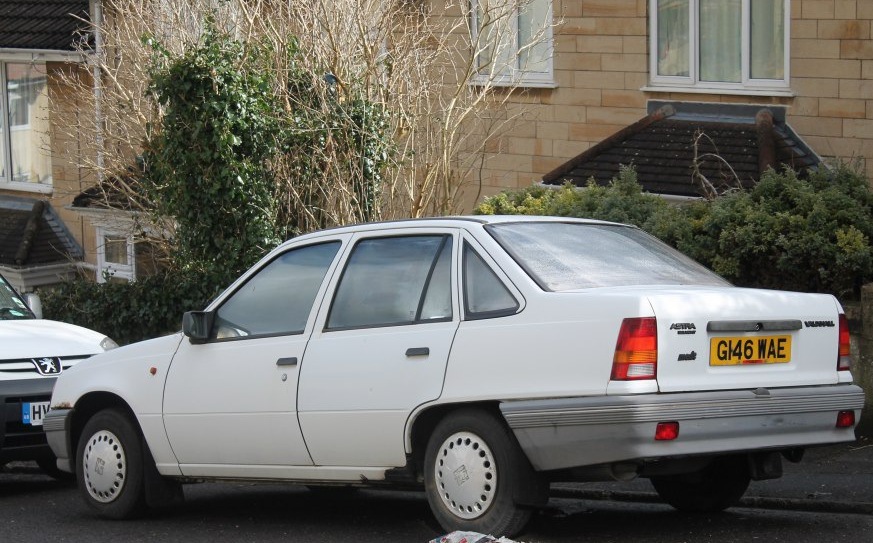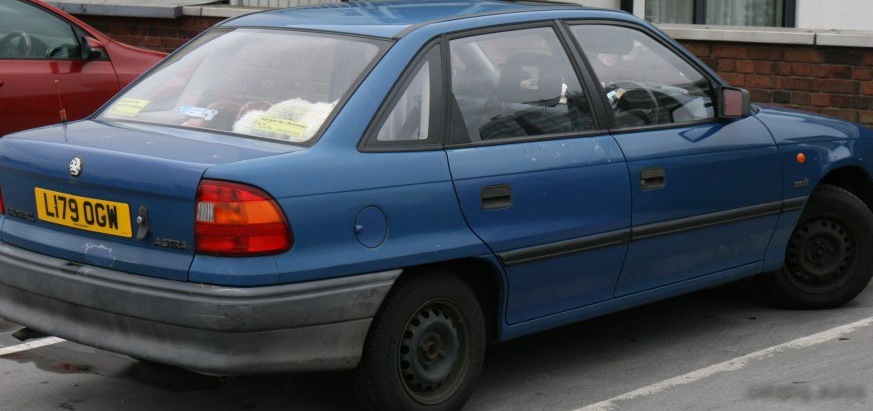
The Vauxhall Astra Mk III 1.7 TDS, produced between 1994 and 1998, represented a fuel-efficient and practical offering within the broader Astra Mk III (1991-1998) range. Positioned as an entry-level diesel variant, it catered to buyers prioritizing economy and dependability over outright performance. This model, powered by the X17DT engine, was primarily sold in European markets, including the United Kingdom where Vauxhall was a prominent brand. It formed part of the 1HX0/A3 platform generation, sharing its underpinnings with the Opel Astra, and later, the Zafira.
Technical Specifications
| Brand | Vauxhall |
| Model | Astra |
| Generation | Astra Mk III |
| Type (Engine) | 1.7 TDS (82 Hp) |
| Start of production | 1994 |
| End of production | 1998 |
| Powertrain Architecture | Internal Combustion engine |
| Body type | Sedan |
| Seats | 5 |
| Doors | 4 |
| Fuel consumption (urban) | 7.5 l/100 km (31.4 US mpg) |
| Fuel consumption (extra urban) | 4.8 l/100 km (49 US mpg) |
| Fuel consumption (combined) | 5.8 l/100 km (40.6 US mpg) |
| CO2 emissions | 154 g/km |
| Fuel Type | Diesel |
| Acceleration 0 – 100 km/h | 13.5 sec |
| Acceleration 0 – 62 mph | 13.5 sec |
| Acceleration 0 – 60 mph | 12.8 sec |
| Maximum speed | 173 km/h (107.5 mph) |
| Weight-to-power ratio | 13.4 kg/Hp |
| Weight-to-torque ratio | 6.5 kg/Nm |
| Power | 82 Hp @ 4400 rpm |
| Torque | 168 Nm @ 2400 rpm (123.91 lb.-ft. @ 2400 rpm) |
| Engine layout | Front, Transverse |
| Engine Model/Code | X17DT |
| Engine displacement | 1686 cm3 (102.89 cu. in.) |
| Number of cylinders | 4 |
| Engine configuration | Inline |
| Fuel injection system | Precombustion chamber injection |
| Engine aspiration | Turbocharger |
| Engine oil capacity | 4.5 l (4.76 US qt | 3.96 UK qt) |
| Coolant capacity | 6.8 l (7.19 US qt | 5.98 UK qt) |
| Kerb Weight | 1100 kg (2425.08 lbs.) |
| Max. weight | 1590 kg (3505.35 lbs.) |
| Max load | 490 kg (1080.27 lbs.) |
| Trunk (boot) space – minimum | 501 l (17.69 cu. ft.) |
| Trunk (boot) space – maximum | 1200 l (42.38 cu. ft.) |
| Fuel tank capacity | 52 l (13.74 US gal | 11.44 UK gal) |
| Length | 4239 mm (166.89 in.) |
| Width | 1689 mm (66.5 in.) |
| Height | 1410 mm (55.51 in.) |
| Wheelbase | 2520 mm (99.21 in.) |
| Front track | 1420 mm (55.91 in.) |
| Rear track | 1420 mm (55.91 in.) |
| Ride height (ground clearance) | 135 mm (5.31 in.) |
| Drag coefficient (Cd) | 0.31 |
| Drivetrain Architecture | Front wheel drive |
| Number of gears | 5 |
| Gearbox type | Manual transmission |
| Front brakes | Ventilated discs |
| Rear brakes | Drum |
| Steering type | Steering rack and pinion |
| Power steering | Hydraulic |
| Tires size | 175/65 R14 |
| Wheel rims size | 14 |
Powertrain & Engine Architecture
The heart of the Astra Mk III 1.7 TDS was the X17DT engine, a 1.7-liter inline-four diesel. This engine utilized precombustion chamber injection, a system common in European diesels of the era. Unlike direct injection, precombustion chambers housed a glow plug and a small combustion chamber where fuel was initially ignited, then transferred to the main cylinder. This design aided cold starting and reduced engine noise, though it generally resulted in lower peak power compared to direct injection systems. The engine was turbocharged, boosting output to 82 horsepower at 4400 rpm and 168 Nm (124 lb-ft) of torque at 2400 rpm. The five-speed manual transmission was the standard offering, providing a relatively long-legged gearing setup optimized for fuel efficiency rather than rapid acceleration. The engine’s design prioritized durability and low-end torque, making it well-suited for everyday driving and hauling loads.
Driving Characteristics
The 1.7 TDS automatic offered a decidedly unhurried driving experience. Acceleration from 0-60 mph took around 12.8 seconds, and top speed was limited to approximately 107.5 mph. The focus was on maximizing fuel economy and providing a comfortable ride. The automatic transmission, while convenient, did detract from the engine’s limited power, resulting in noticeable hesitation during overtaking maneuvers. Gear ratios were spaced to prioritize fuel efficiency, meaning the engine often operated at lower RPMs. Compared to the more powerful petrol variants (like the 1.8 or 2.0-liter engines) or even the later direct-injection diesel models, the 1.7 TDS felt significantly slower. However, its strong low-end torque made it surprisingly capable for navigating city streets and maintaining highway speeds on relatively flat terrain.
Equipment & Trim Levels
The 1.7 TDS typically occupied the base trim level within the Astra Mk III range. Standard equipment generally included central locking, power steering, and basic instrumentation. Interior upholstery was typically cloth, and the dashboard featured a functional, if somewhat spartan, design. Optional extras, such as air conditioning, electric windows, and a sunroof, were available but often added a significant cost to the vehicle. The trim level was often denoted by a badge on the rear of the car, but specific features varied depending on the market and year of production. The emphasis was on providing a practical and affordable vehicle, so luxury features were kept to a minimum.
Chassis & Braking
The Astra Mk III 1.7 TDS utilized a MacPherson strut front suspension and a torsion beam rear suspension. This setup provided a reasonable balance between ride comfort and handling. Braking was accomplished via ventilated discs on the front wheels and drum brakes on the rear. The braking system was adequate for the vehicle’s weight and performance, but lacked the stopping power of higher-spec Astra models equipped with rear disc brakes. Stabilizer bars were fitted to both the front and rear axles, helping to reduce body roll during cornering. The relatively lightweight nature of the 1.7 TDS helped to mitigate the limitations of the suspension and braking systems.
Market Reception & Comparison
The Astra Mk III 1.7 TDS was generally well-received as a practical and economical choice. Critics praised its fuel efficiency and reliability, but noted its lack of performance. Compared to the petrol-powered Astra models, the 1.7 TDS offered significantly better fuel economy, but at the expense of acceleration and refinement. Against other diesel-powered competitors, such as the Ford Escort Diesel or the Peugeot 306 HDi, the Astra 1.7 TDS offered a competitive package in terms of price and fuel consumption. However, the later introduction of direct-injection diesel engines from other manufacturers gradually eroded the Astra’s competitive advantage.
Legacy
The X17DT engine, while not known for its blistering performance, proved to be a durable and reliable unit. Many Astra Mk III 1.7 TDS models remain on the road today, a testament to their robust construction. In the used car market, these vehicles are often sought after by those looking for an affordable and dependable runabout. Maintenance is generally straightforward, and parts availability remains reasonable. However, potential buyers should be aware of the age-related issues common to all vehicles of this era, such as corrosion and wear and tear on suspension components. The 1.7 TDS represents a significant step in the development of diesel technology, paving the way for the more sophisticated and efficient diesel engines that followed.