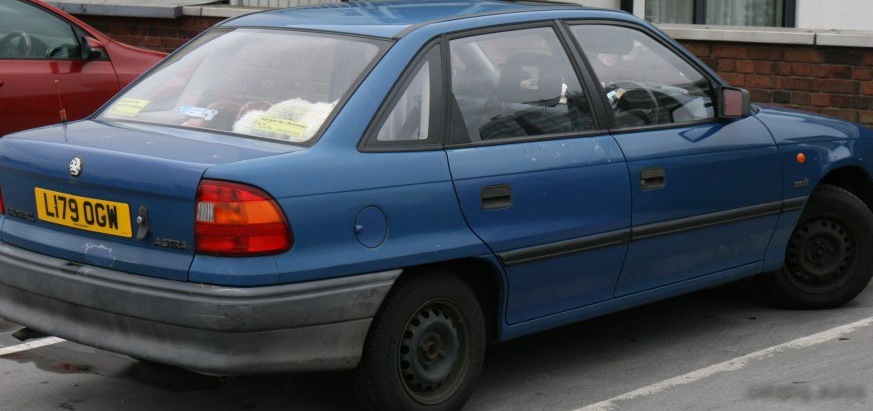
The Vauxhall Astra Mk III 1.8i 16V, produced between 1993 and 1994, represented a significant step forward for the Astra range. Positioned as a mid-range offering within the Mk III lineup (designated as the 1HX0/A3 platform), this variant aimed to balance performance with affordability. It offered a more spirited driving experience than the base models while remaining more accessible than the higher-performance versions. The Mk III Astra was a crucial model for Vauxhall in the UK market, building on the success of its predecessors and establishing a strong presence in the competitive family car segment.
Technical Specifications
| Brand | Vauxhall |
| Model | Astra |
| Generation | Astra Mk III |
| Type (Engine) | 1.8i 16V (125 Hp) |
| Start of production | 1993 |
| End of production | 1994 |
| Powertrain Architecture | Internal Combustion engine |
| Body type | Sedan |
| Seats | 5 |
| Doors | 4 |
| Fuel consumption (combined) | 7.9 l/100 km |
| Fuel consumption (US mpg) | 29.8 US mpg |
| Fuel consumption (UK mpg) | 35.8 UK mpg |
| Fuel consumption (km/l) | 12.7 km/l |
| CO2 emissions | 188 g/km |
| Fuel Type | Petrol (Gasoline) |
| Acceleration 0 – 100 km/h | 9 sec |
| Acceleration 0 – 62 mph | 9 sec |
| Acceleration 0 – 60 mph | 8.6 sec |
| Maximum speed | 204 km/h (126.76 mph) |
| Weight-to-power ratio | 8.7 kg/Hp |
| Weight-to-torque ratio | 6.5 kg/Nm |
| Power | 125 Hp @ 5600 rpm |
| Power per litre | 69.5 Hp/l |
| Torque | 168 Nm @ 4800 rpm (123.91 lb.-ft. @ 4800 rpm) |
| Engine layout | Front, Transverse |
| Engine Model/Code | C18XE |
| Engine displacement | 1799 cm3 (109.78 cu. in.) |
| Number of cylinders | 4 |
| Engine configuration | Inline |
| Number of valves per cylinder | 4 |
| Fuel injection system | Multi-port manifold injection |
| Engine aspiration | Naturally aspirated engine |
| Engine oil capacity | 4 l (4.23 US qt | 3.52 UK qt) |
| Coolant capacity | 7 l (7.4 US qt | 6.16 UK qt) |
| Kerb Weight | 1090 kg (2403.04 lbs.) |
| Max. weight | 1595 kg (3516.37 lbs.) |
| Max load | 505 kg (1113.33 lbs.) |
| Trunk (boot) space – minimum | 501 l (17.69 cu. ft.) |
| Trunk (boot) space – maximum | 1200 l (42.38 cu. ft.) |
| Fuel tank capacity | 52 l (13.74 US gal | 11.44 UK gal) |
| Length | 4239 mm (166.89 in.) |
| Width | 1689 mm (66.5 in.) |
| Height | 1389 mm (54.69 in.) |
| Wheelbase | 2520 mm (99.21 in.) |
| Front track | 1420 mm (55.91 in.) |
| Rear track | 1420 mm (55.91 in.) |
| Ride height (ground clearance) | 135 mm (5.31 in.) |
| Drag coefficient (Cd) | 0.31 |
| Drivetrain Architecture | The Internal combustion engine (ICE) drives the front wheels of the vehicle. |
| Drive wheel | Front wheel drive |
| Number of gears | 5 gears, manual transmission |
| Front brakes | Ventilated discs |
| Rear brakes | Disc |
| Steering type | Steering rack and pinion |
| Power steering | Hydraulic Steering |
| Tires size | 185/60 R14 |
| Wheel rims size | 14 |
Powertrain & Engine Architecture
The heart of the Astra Mk III 1.8i 16V was the C18XE engine, a 1.8-liter inline-four cylinder powerplant. This engine was a key component of Vauxhall/Opel’s ‘E’ family of engines, known for their reliability and relatively simple design. The ‘XE’ designation indicated a 16-valve cylinder head, providing improved breathing and higher power output compared to earlier 8-valve versions. It utilized a multi-port fuel injection system, delivering fuel directly to each intake port for precise control and efficient combustion. The engine featured a single overhead camshaft (SOHC) design, operating the four valves per cylinder. The 5-speed manual transmission was the standard offering, providing a direct connection between the engine and the front wheels. The transmission was chosen for its durability and relatively smooth shifting characteristics.
Driving Characteristics
The 1.8i 16V offered a noticeable improvement in performance over the lower-capacity Astra variants. With 125 horsepower, it provided brisk acceleration, achieving 0-60 mph in around 8.6 seconds and a top speed of 126.76 mph. While not a sports car, the 1.8L engine delivered sufficient power for comfortable cruising and overtaking maneuvers. The 5-speed manual transmission allowed drivers to keep the engine in its optimal power band. Compared to the 1.4L models, the 1.8i 16V felt significantly more responsive, particularly at higher speeds. However, it didn’t possess the outright punch of the more expensive and performance-oriented Astra GSi models. The gear ratios were well-matched for everyday driving, providing a balance between acceleration and fuel economy.
Equipment & Trim Levels
The 1.8i 16V typically came equipped with a reasonable level of standard features. These included central locking, power steering, and an adjustable steering column. Interior upholstery was typically cloth, with a relatively simple dashboard layout. Optional extras included electric windows, a sunroof, and upgraded audio systems. The trim level sat comfortably in the middle of the Astra Mk III range, offering a step up in comfort and features compared to the base models, but without the more luxurious appointments of the top-spec trims.
Chassis & Braking
The Astra Mk III utilized a MacPherson strut front suspension and a torsion beam rear suspension. This setup provided a good balance between ride comfort and handling. The 1.8i 16V models typically featured ventilated disc brakes on the front wheels and disc brakes on the rear, offering adequate stopping power for the vehicle’s weight and performance. The hydraulic power steering provided light and precise steering feel. Stabilizer bars were fitted to both the front and rear axles to reduce body roll during cornering.
Market Reception & Comparison
The Astra Mk III 1.8i 16V was generally well-received by automotive critics. It was praised for its responsive engine, comfortable ride, and practical interior. Compared to rivals like the Ford Escort and Volkswagen Golf, the Astra offered a competitive package in terms of price, performance, and features. Fuel economy was respectable for the time, averaging around 29.8 US mpg. Reliability was generally good, although some owners reported minor issues with the fuel injection system. The 1.8i 16V offered a compelling alternative to the base models, providing a noticeable performance upgrade without a significant price premium.
Legacy
The C18XE engine proved to be a durable and reliable unit, and many Astra Mk III 1.8i 16V models are still on the road today. The powertrain is known for its relative simplicity, making it easier and more affordable to maintain. In the used car market, these Astras are often sought after by enthusiasts looking for a classic 1990s hatchback. While not a particularly rare or valuable model, the 1.8i 16V represents a sweet spot in the Mk III Astra range, offering a good balance of performance, practicality, and affordability. Its enduring popularity is a testament to the quality of engineering and the overall appeal of the Astra Mk III.