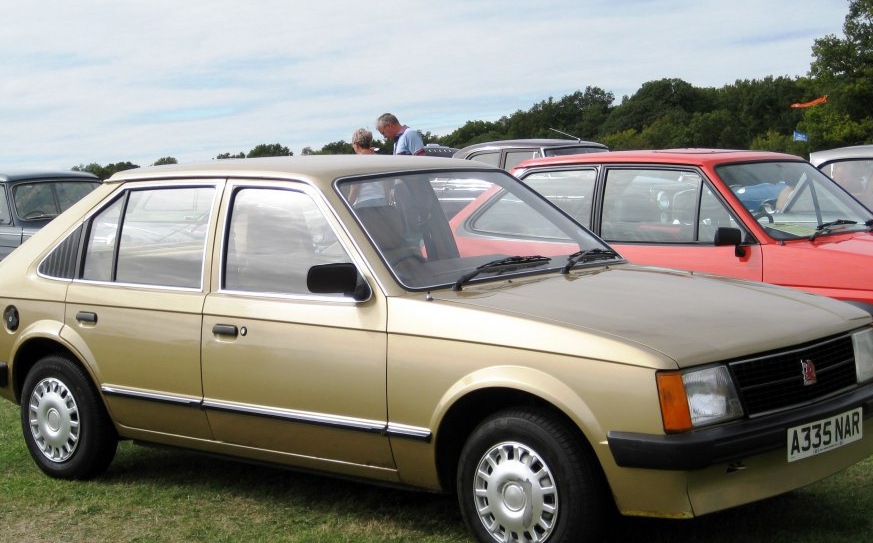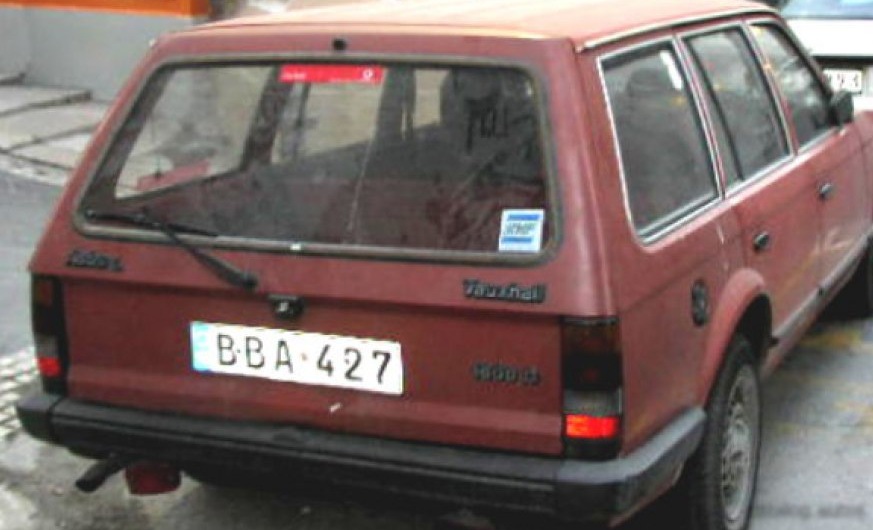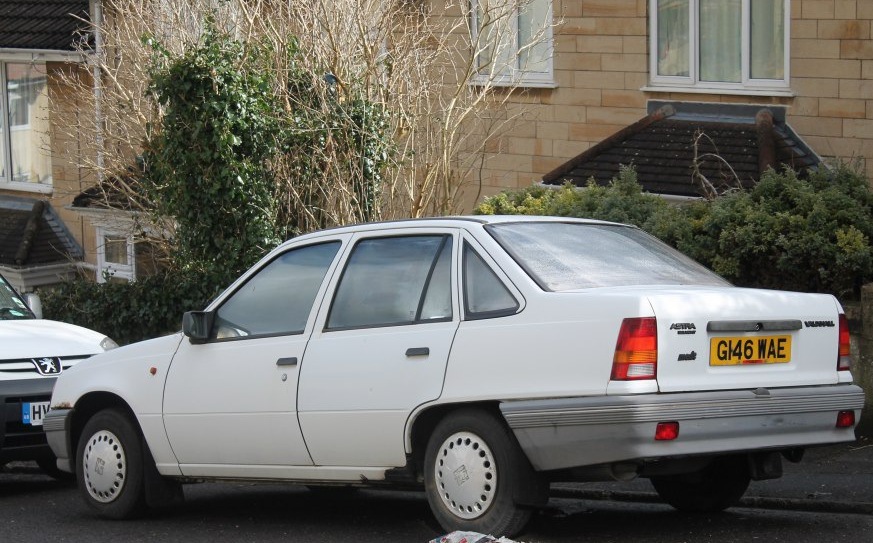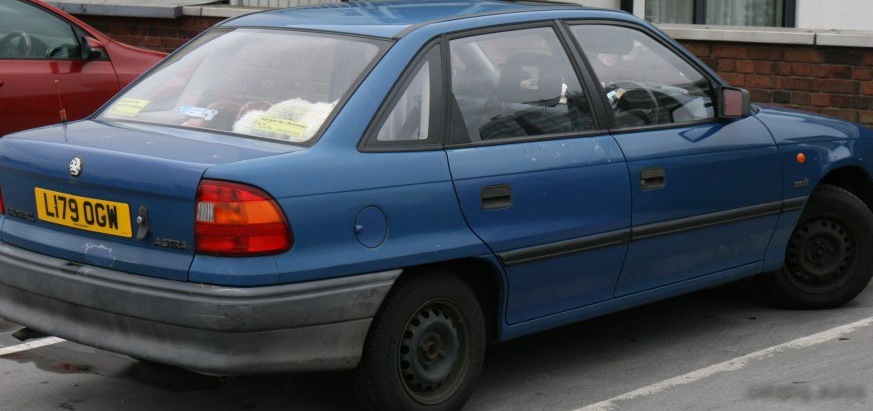
The Vauxhall Astra Mk III 2.0i 16V, produced between 1994 and 1998, represented a significant step forward for the Astra range. Positioned as a performance-oriented variant within the Mk III lineup (codenamed T98), it offered a more engaging driving experience than the lower-spec models. This generation Astra, built upon the GM T platform, aimed to provide a blend of practicality, comfort, and sporty handling, appealing to a broader customer base than its predecessors. The 2.0i 16V trim served as a mid-to-upper range offering, bridging the gap between the more economical engines and the later introduction of more focused performance models.
Technical Specifications
| Brand | Vauxhall |
| Model | Astra |
| Generation | Astra Mk III |
| Type (Engine) | 2.0i 16V (136 Hp) |
| Start of production | 1994 |
| End of production | 1998 |
| Powertrain Architecture | Internal Combustion engine |
| Body type | Sedan |
| Seats | 5 |
| Doors | 4 |
| Fuel consumption (urban) | 12.2 l/100 km (19.3 US mpg, 23.2 UK mpg, 8.2 km/l) |
| Fuel consumption (extra urban) | 6.4 l/100 km (36.8 US mpg, 44.1 UK mpg, 15.6 km/l) |
| Fuel consumption (combined) | 8.5 l/100 km (27.7 US mpg, 33.2 UK mpg, 11.8 km/l) |
| CO2 emissions | 202 g/km |
| Fuel Type | Petrol (Gasoline) |
| Acceleration 0 – 100 km/h | 9 sec |
| Acceleration 0 – 62 mph | 9 sec |
| Acceleration 0 – 60 mph | 8.6 sec |
| Maximum speed | 207 km/h (128.62 mph) |
| Weight-to-power ratio | 8.6 kg/Hp, 116.7 Hp/tonne |
| Weight-to-torque ratio | 6.3 kg/Nm, 158.8 Nm/tonne |
| Power | 136 Hp @ 5600 rpm |
| Power per litre | 68.1 Hp/l |
| Torque | 185 Nm @ 4000 rpm (136.45 lb.-ft. @ 4000 rpm) |
| Engine layout | Front, Transverse |
| Engine Model/Code | X20XEV |
| Engine displacement | 1998 cm3 (121.93 cu. in.) |
| Number of cylinders | 4 |
| Engine configuration | Inline |
| Fuel injection system | Multi-port manifold injection |
| Engine aspiration | Naturally aspirated engine |
| Engine oil capacity | 4 l (4.23 US qt | 3.52 UK qt) |
| Coolant capacity | 6.7 l (7.08 US qt | 5.9 UK qt) |
| Kerb Weight | 1165 kg (2568.39 lbs) |
| Max. weight | 1680 kg (3703.77 lbs) |
| Max load | 515 kg (1135.38 lbs) |
| Trunk (boot) space – minimum | 501 l (17.69 cu. ft.) |
| Trunk (boot) space – maximum | 1200 l (42.38 cu. ft.) |
| Fuel tank capacity | 52 l (13.74 US gal | 11.44 UK gal) |
| Length | 4239 mm (166.89 in) |
| Width | 1689 mm (66.5 in) |
| Height | 1410 mm (55.51 in) |
| Wheelbase | 2520 mm (99.21 in) |
| Front track | 1420 mm (55.91 in) |
| Rear track | 1420 mm (55.91 in) |
| Ride height (ground clearance) | 135 mm (5.31 in) |
| Drag coefficient (Cd) | 0.31 |
| Drivetrain Architecture | The Internal combustion engine (ICE) drives the front wheels of the vehicle. |
| Drive wheel | Front wheel drive |
| Number of gears and type of gearbox | 5 gears, manual transmission |
| Front brakes | Ventilated discs |
| Rear brakes | Disc |
| Steering type | Steering rack and pinion |
| Power steering | Hydraulic Steering |
| Tires size | 195/55 R15 |
| Wheel rims size | 15 |
Powertrain & Engine Architecture
The heart of the Astra Mk III 2.0i 16V is the X20XEV engine, a 1998cc inline-four cylinder powerplant. This engine is a naturally aspirated unit featuring multi-port fuel injection and a dual overhead camshaft (DOHC) design with four valves per cylinder – hence the “16V” designation. The X20XEV was part of Vauxhall/Opel’s ‘Ecotec’ family, emphasizing efficiency and refinement alongside performance. It produced 136 horsepower at 5600 rpm and 185 Nm (136 lb-ft) of torque at 4000 rpm. The engine’s design prioritized smooth power delivery and reasonable fuel economy for its class. The five-speed manual transmission was the standard offering, providing a direct connection to the engine and allowing drivers to fully exploit the available power.
Driving Characteristics
The 2.0i 16V Astra offered a noticeable improvement in performance over the lower-displacement engines. Acceleration to 60 mph took approximately 8.6 seconds, and it could reach a top speed of around 128.62 mph. While not a sports car, the 2.0i 16V provided ample power for everyday driving and confident overtaking. The five-speed gearbox was well-matched to the engine’s characteristics, offering precise shifts and a usable spread of ratios. Compared to the 1.4 or 1.6-liter models, the 2.0i 16V felt significantly more responsive, particularly at higher speeds. It didn’t possess the low-end grunt of a turbocharged engine, but its linear power delivery made it predictable and easy to control.
Equipment & Trim Levels
The 2.0i 16V trim typically included features such as central locking, electric front windows, and a basic stereo system. Higher-spec versions could be equipped with options like air conditioning, alloy wheels, and upgraded interior trim. Interior upholstery was generally cloth, with a functional and durable design. The dashboard layout was typical of the era, with clearly marked gauges and intuitive controls. The Astra Mk III offered a reasonable level of comfort and practicality for a family car, with a spacious cabin and a generous boot capacity of 501 liters (17.69 cu. ft.), expandable to 1200 liters (42.38 cu. ft.) with the rear seats folded down.
Chassis & Braking
The Astra Mk III utilized a MacPherson strut front suspension and a torsion beam rear suspension. This setup provided a good balance between ride comfort and handling. The 2.0i 16V models generally featured slightly stiffer suspension components compared to the base models, enhancing body control and reducing roll during cornering. Braking was handled by ventilated discs on the front wheels and solid discs on the rear. Hydraulic power steering was standard, providing light and precise steering feel. The 195/55 R15 tires offered adequate grip for most driving conditions.
Market Reception & Comparison
The Astra Mk III 2.0i 16V was generally well-received by automotive critics. It was praised for its refined engine, comfortable ride, and good handling. However, some reviewers noted that it lacked the outright performance of more focused rivals, such as the Ford Escort XR3i. Compared to the lower-spec Astra models, the 2.0i 16V offered a significant improvement in performance and driving enjoyment, but at a higher price point. Fuel economy was reasonable for a 2.0-liter engine, averaging around 27.7 US mpg in combined driving. Reliability was generally good, although the X20XEV engine was known to be susceptible to oil leaks as it aged.
Legacy
The Vauxhall Astra Mk III 2.0i 16V remains a popular choice among classic car enthusiasts. The X20XEV engine is known for its durability and relatively simple mechanics, making it a relatively easy engine to maintain. Parts availability is generally good, although some components may be becoming increasingly scarce. Today, well-maintained examples of the 2.0i 16V can fetch reasonable prices on the used car market, appealing to those seeking a practical and enjoyable classic hatchback. The Mk III Astra, and particularly the 2.0i 16V variant, represents a solid and dependable example of 1990s British automotive engineering.