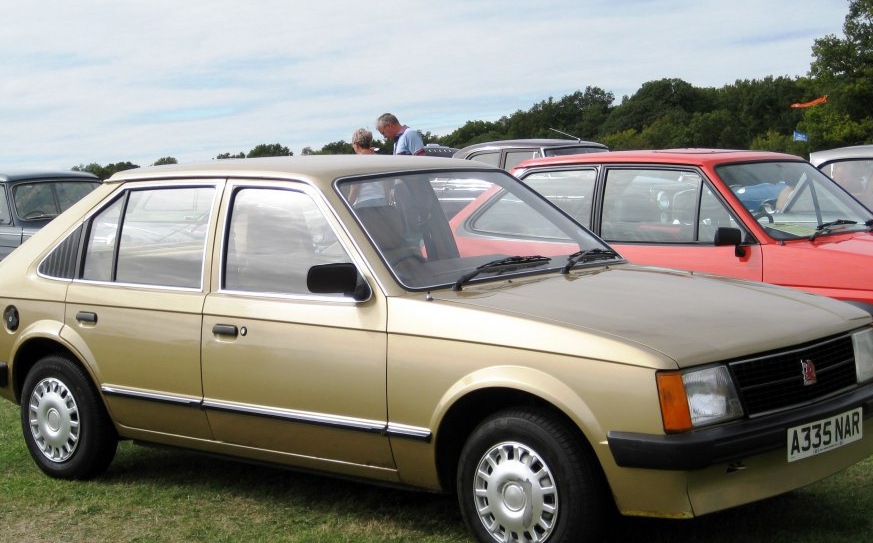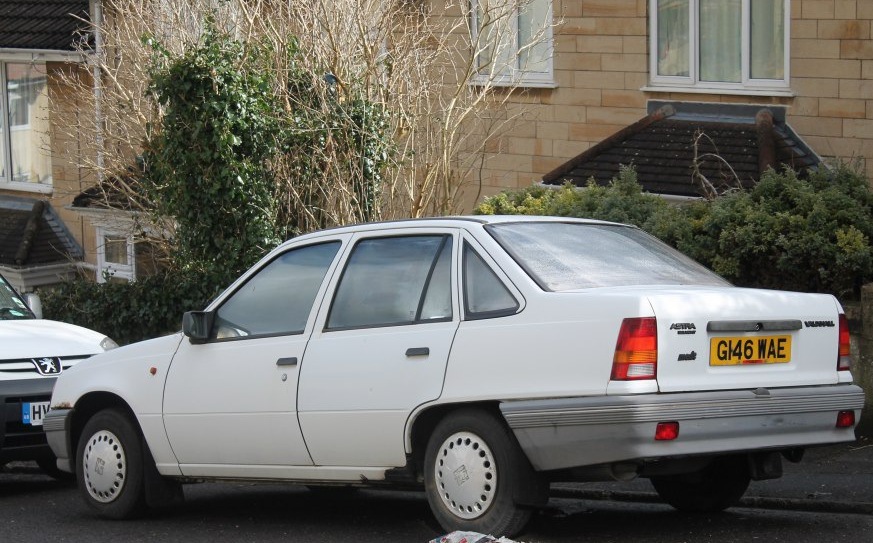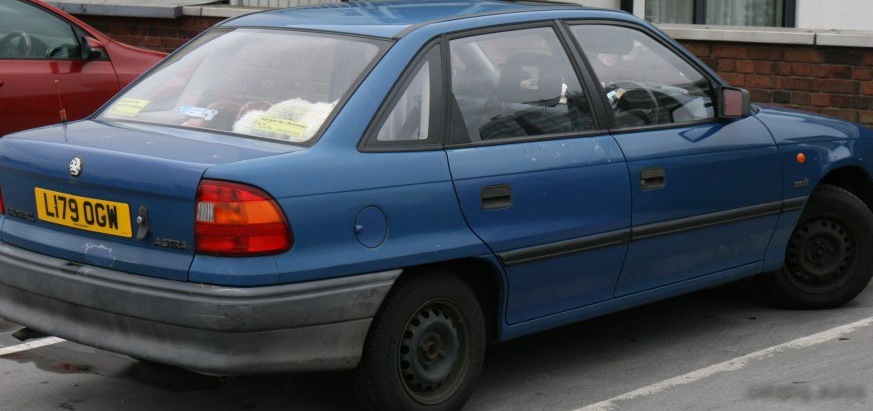
The Vauxhall Astra Mk III 2.0i 16V Automatic, produced between 1994 and 1998, represented a significant step up in performance and refinement for the Astra range. Positioned as a mid-to-upper trim level, it offered a blend of sporting potential with the convenience of an automatic transmission. This variant was part of the Mk III (1991-1998) generation, known as the Astra F, which was a crucial model for Vauxhall, solidifying its position in the competitive European compact car segment. The 2.0i 16V Automatic catered to buyers seeking a more powerful and comfortable driving experience than the base models, while remaining more accessible than the high-performance GSi variants.
Technical Specifications
| Brand | Vauxhall |
| Model | Astra |
| Generation | Astra Mk III |
| Type (Engine) | 2.0i 16V (136 Hp) Automatic |
| Start of production | 1994 |
| End of production | 1998 |
| Powertrain Architecture | Internal Combustion engine |
| Body type | Sedan |
| Seats | 5 |
| Doors | 4 |
| Fuel consumption (urban) | 13.7 l/100 km (17.2 US mpg, 20.6 UK mpg, 7.3 km/l) |
| Fuel consumption (extra urban) | 7.1 l/100 km (33.1 US mpg, 39.8 UK mpg, 14.1 km/l) |
| Fuel consumption (combined) | 9.5 l/100 km (24.8 US mpg, 29.7 UK mpg, 10.5 km/l) |
| Fuel Type | Petrol (Gasoline) |
| Acceleration 0 – 100 km/h | 10.5 sec |
| Acceleration 0 – 62 mph | 10.5 sec |
| Acceleration 0 – 60 mph | 10 sec |
| Maximum speed | 200 km/h (124.27 mph) |
| Weight-to-power ratio | 8.8 kg/Hp, 113.8 Hp/tonne |
| Weight-to-torque ratio | 6.5 kg/Nm, 154.8 Nm/tonne |
| Power | 136 Hp @ 5600 rpm |
| Power per litre | 68.1 Hp/l |
| Torque | 185 Nm @ 4000 rpm (136.45 lb.-ft. @ 4000 rpm) |
| Engine layout | Front, Transverse |
| Engine Model/Code | X20XEV |
| Engine displacement | 1998 cm3 (121.93 cu. in.) |
| Number of cylinders | 4 |
| Engine configuration | Inline |
| Fuel injection system | Multi-port manifold injection |
| Engine aspiration | Naturally aspirated engine |
| Engine oil capacity | 4 l (4.23 US qt | 3.52 UK qt) |
| Coolant capacity | 6.6 l (6.97 US qt | 5.81 UK qt) |
| Kerb Weight | 1195 kg (2634.52 lbs.) |
| Max. weight | 1710 kg (3769.9 lbs.) |
| Max load | 515 kg (1135.38 lbs.) |
| Trunk (boot) space – minimum | 501 l (17.69 cu. ft.) |
| Trunk (boot) space – maximum | 1200 l (42.38 cu. ft.) |
| Fuel tank capacity | 52 l (13.74 US gal | 11.44 UK gal) |
| Length | 4239 mm (166.89 in.) |
| Width | 1689 mm (66.5 in.) |
| Height | 1410 mm (55.51 in.) |
| Wheelbase | 2520 mm (99.21 in.) |
| Front track | 1420 mm (55.91 in.) |
| Rear (Back) track | 1420 mm (55.91 in.) |
| Ride height (ground clearance) | 135 mm (5.31 in.) |
| Drag coefficient (Cd) | 0.31 |
| Drivetrain Architecture | The Internal combustion engine (ICE) drives the front wheels of the vehicle. |
| Drive wheel | Front wheel drive |
| Number of gears and type of gearbox | 4 gears, automatic transmission |
| Front brakes | Ventilated discs |
| Rear brakes | Disc |
| Steering type | Steering rack and pinion |
| Power steering | Hydraulic Steering |
| Tires size | 195/55 R15 |
| Wheel rims size | 15 |
Powertrain & Engine Architecture
The heart of the Astra Mk III 2.0i 16V Automatic is the X20XEV engine, a 1998cc inline-four cylinder powerplant. This engine featured multi-port fuel injection and a dual overhead camshaft (DOHC) design with four valves per cylinder – hence the “16V” designation. This configuration allowed for improved breathing and higher revving capabilities compared to earlier, simpler engines. The X20XEV was known for its relatively robust construction and good reliability. The automatic transmission used was typically a four-speed unit, offering smooth, if not particularly sporty, gear changes. While not as responsive as a manual gearbox, it provided a more relaxed driving experience, particularly in urban traffic. The engine’s torque curve was reasonably flat, providing adequate pulling power across a wide range of engine speeds.
Driving Characteristics
The 2.0i 16V Automatic offered a noticeable performance upgrade over the lower-capacity Astra models. Acceleration to 60 mph took around 10 seconds, and it could reach a top speed of 124 mph. However, the automatic transmission did detract somewhat from the engine’s potential. The gear ratios were geared more towards comfort and fuel economy than outright performance. Compared to the five-speed manual version, the automatic felt slightly less eager to rev and lacked the same level of driver engagement. The suspension, while competent, was tuned for a balance between comfort and handling, resulting in a slightly softer ride than the sportier GSi models.
Equipment & Trim Levels
The 2.0i 16V Automatic typically came equipped with features such as central locking, electric front windows, power steering, and an upgraded stereo system. Interior trim generally consisted of cloth upholstery, although leather options were sometimes available. Air conditioning was a popular optional extra. The dashboard layout was functional and straightforward, typical of the early 1990s. Higher-spec versions might include features like alloy wheels, a sunroof, and upgraded interior trim materials.
Chassis & Braking
The Astra Mk III utilized a MacPherson strut front suspension and a torsion beam rear suspension. The 2.0i 16V Automatic benefited from slightly uprated brakes compared to the base models, featuring ventilated front discs and solid rear discs. Power steering was standard, providing light and easy steering input. The chassis was generally well-balanced, offering predictable handling characteristics. Stabilizer bars were fitted front and rear to reduce body roll during cornering.
Market Reception & Comparison
The Astra Mk III 2.0i 16V Automatic was generally well-received by automotive critics. It was praised for its comfortable ride, refined engine, and practical interior. However, the automatic transmission was sometimes criticized for being somewhat sluggish and detracting from the engine’s performance. Compared to rivals like the Ford Escort and Peugeot 306, the Astra offered a good balance of value, practicality, and refinement. Fuel economy was reasonable for the time, averaging around 25 mpg in combined driving. The 1.8L and diesel variants offered better fuel economy, while the GSi models provided significantly more performance.
Legacy
The X20XEV engine proved to be a durable and reliable unit, and many examples are still on the road today. The Astra Mk III, in general, has gained a following among classic car enthusiasts. The 2.0i 16V Automatic, while not the most sought-after variant, represents a well-rounded and comfortable option for those seeking a classic 1990s hatchback. Maintenance costs are generally reasonable, and parts availability is still good. However, as with any older car, regular maintenance and attention to potential corrosion issues are essential to ensure long-term reliability.