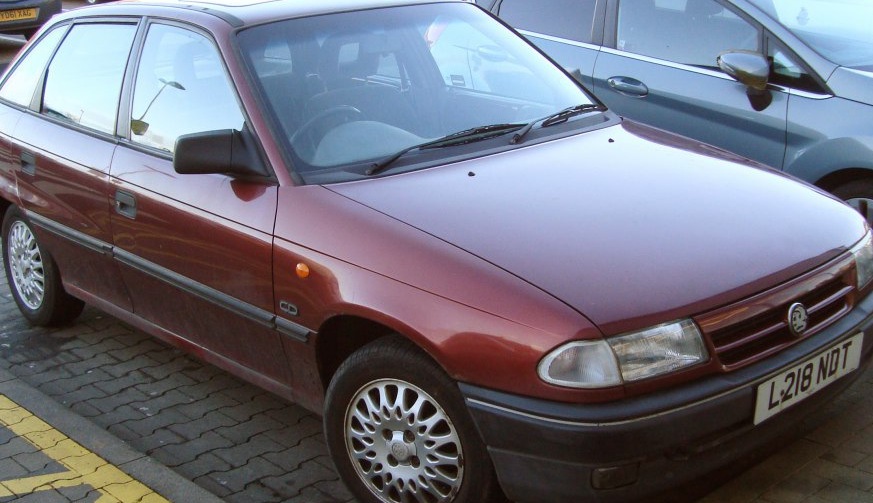
The Vauxhall Astra Mk III CC 1.4, produced between 1991 and 1994, represented the entry point into the third generation Astra range, a car that was pivotal in establishing Vauxhall as a major player in the British family car market. This variant, powered by the 14NV engine producing 75 horsepower, was designed for affordability and fuel efficiency, targeting buyers seeking reliable transportation rather than outright performance. It occupied the base trim level within the Mk III lineup, sitting below the 1.6 and 2.0-liter models, and offered a practical, no-frills option for a broad customer base. The “CC” designation signified the car’s ‘Club’ trim level, the most basic offering.
Technical Specifications
| Brand | Vauxhall |
| Model | Astra |
| Generation | Astra Mk III CC |
| Type (Engine) | 1.4 (75 Hp) |
| Start of production | 1991 |
| End of production | 1994 |
| Powertrain Architecture | Internal Combustion engine |
| Body type | Hatchback |
| Seats | 5 |
| Doors | 5 |
| Fuel Type | Petrol (Gasoline) |
| Power | 75 Hp |
| Engine Model/Code | 14NV |
| Engine aspiration | Naturally aspirated engine |
| Engine oil capacity | 3.5 l (3.7 US qt | 3.08 UK qt) |
| Coolant capacity | 5.8 l (6.13 US qt | 5.1 UK qt) |
Powertrain & Engine Architecture
The heart of the Astra Mk III CC 1.4 was the 14NV engine, a 1398cc inline-four cylinder petrol engine. This engine was a relatively simple design, featuring a single overhead camshaft (SOHC) operating two valves per cylinder. Fuel delivery was managed by a Bosch Mono-Jetronic single-point fuel injection system, a common setup for engines of this era aiming for cost-effectiveness. The 14NV wasn’t known for its sophistication; it prioritized reliability and ease of maintenance over cutting-edge technology. The engine’s modest output of 75 horsepower at 5200 rpm and 98 lb-ft of torque at 3200 rpm was sufficient for everyday driving, but didn’t offer significant acceleration. The engine was typically paired with a four-speed automatic transmission, although a five-speed manual was also available. The automatic transmission, while providing convenience, did impact performance and fuel economy compared to the manual version.
Driving Characteristics
The Astra Mk III CC 1.4 with the automatic transmission offered a comfortable, if uninspiring, driving experience. Acceleration was leisurely, with 0-60 mph times estimated around 14-15 seconds. The automatic gearbox featured relatively long gear ratios, prioritizing fuel efficiency over responsiveness. This meant that the engine often felt strained when attempting to overtake or climb hills. Compared to the 1.6 and 2.0-liter models, the 1.4 automatic felt noticeably slower and less refined. The manual transmission version offered a more engaging driving experience, allowing the driver to better utilize the engine’s limited power band. However, the automatic was favored by buyers who prioritized ease of use, particularly in urban environments.
Equipment & Trim Levels
As the entry-level trim, the Astra Mk III CC 1.4 ‘Club’ was equipped with basic features. Standard equipment typically included central locking, a basic stereo, and cloth upholstery. Power steering was often an optional extra, as were electric windows. The interior was functional and durable, but lacked the aesthetic refinements found in higher trim levels. The dashboard featured a simple layout with clearly marked gauges. Optional extras included a sunroof, upgraded stereo systems, and alloy wheels, allowing buyers to personalize their vehicles to some extent. The interior trim was generally dark grey or blue, reflecting the car’s utilitarian focus.
Chassis & Braking
The Astra Mk III CC 1.4 utilized a MacPherson strut front suspension and a torsion beam rear suspension. This setup provided a reasonable balance between ride comfort and handling. The front brakes were disc brakes, while the rear brakes were typically drum brakes, a cost-saving measure for the base model. Stabilizer bars were fitted to both the front and rear axles, helping to reduce body roll during cornering. The steering was rack and pinion, providing reasonably precise control. The suspension was tuned for comfort rather than sporty handling, resulting in a slightly soft and forgiving ride. The relatively light weight of the 1.4 model helped to mitigate the effects of the less powerful engine and basic suspension setup.
Market Reception & Comparison
The Astra Mk III CC 1.4 was generally well-received as an affordable and reliable family car. Critics acknowledged its practicality and fuel efficiency, but often criticized its lack of performance. Compared to the 1.6 and 2.0-liter models, the 1.4 automatic offered significantly less power and refinement. However, it was considerably cheaper to purchase and operate. Fuel economy was a strong point, with combined cycle figures typically around 35-40 mpg. The 1.4 was often seen as a sensible choice for first-time car buyers, families on a budget, or those who primarily used their vehicles for short journeys. The 1.6-liter version offered a noticeable performance improvement for a relatively small price increase, making it a popular alternative for buyers who wanted a bit more power.
Legacy
The Astra Mk III CC 1.4, while not a performance icon, has proven to be a surprisingly durable and reliable vehicle. The 14NV engine, despite its simplicity, is known for its longevity when properly maintained. Today, these cars are relatively rare, but those that remain are often well-preserved by enthusiasts who appreciate their affordability and classic charm. Parts availability is generally good, although some trim-specific components can be difficult to find. The Astra Mk III CC 1.4 represents a significant chapter in Vauxhall’s history, demonstrating the brand’s commitment to providing practical and affordable transportation to the British public. Its enduring appeal lies in its simplicity, reliability, and nostalgic value.