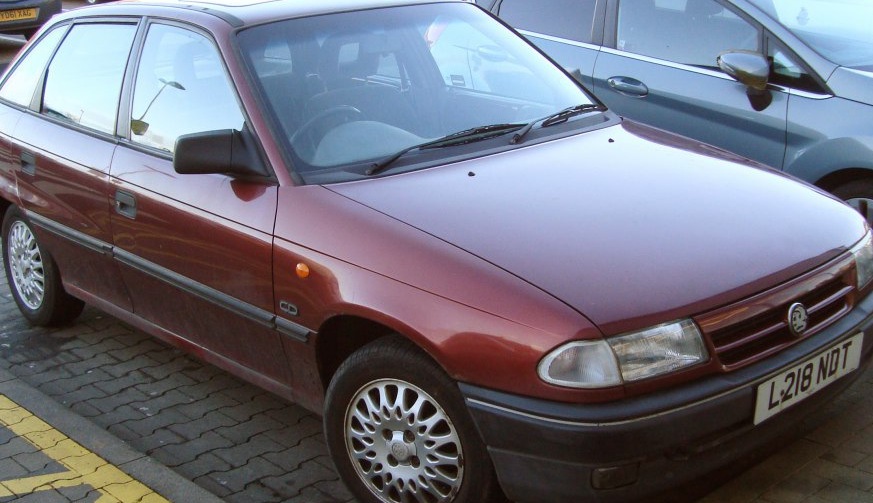
The Vauxhall Astra Mk III CC 1.6 iS, produced between 1993 and 1994, represented a mid-cycle refresh of the popular Astra Mk III (also known as the Astra G in some markets). This variant, positioned as a step up from the base models, offered a blend of reasonable performance and affordability within the compact hatchback segment. It was a key offering for Vauxhall in the UK market, appealing to buyers seeking a practical and relatively stylish family car. The “CC” designation stood for “Coupe,” although it was a hatchback in body style, a common marketing practice at the time. The Mk III Astra, built on the T-platform (internally designated as 1HX0/A3), aimed to modernize the Astra range and compete effectively with rivals like the Ford Escort and Volkswagen Golf.
Technical Specifications
| Brand | Vauxhall |
| Model | Astra |
| Generation | Astra Mk III CC |
| Type (Engine) | 1.6 iS (100 Hp) |
| Start of production | 1993 |
| End of production | 1994 |
| Powertrain Architecture | Internal Combustion engine |
| Body type | Hatchback |
| Seats | 5 |
| Doors | 3-5 |
| Fuel consumption (combined) | 7.1 l/100 km |
| Fuel consumption (US mpg) | 33.1 US mpg |
| Fuel consumption (UK mpg) | 39.8 UK mpg |
| Fuel consumption (km/l) | 14.1 km/l |
| CO2 emissions | 169 g/km |
| Fuel Type | Petrol (Gasoline) |
| Acceleration 0 – 100 km/h | 11 sec |
| Acceleration 0 – 62 mph | 11 sec |
| Acceleration 0 – 60 mph | 10.5 sec |
| Maximum speed | 190 km/h (118.06 mph) |
| Weight-to-power ratio | 9.5 kg/Hp |
| Weight-to-torque ratio | 7 kg/Nm |
| Power | 100 Hp @ 5800 rpm |
| Power per litre | 62.6 Hp/l |
| Torque | 136 Nm @ 3400 rpm (100.31 lb.-ft. @ 3400 rpm) |
| Engine layout | Front, Transverse |
| Engine Model/Code | C16SE |
| Engine displacement | 1598 cm3 (97.52 cu. in.) |
| Number of cylinders | 4 |
| Engine configuration | Inline |
| Cylinder Bore | 79 mm (3.11 in.) |
| Piston Stroke | 81.5 mm (3.21 in.) |
| Compression ratio | 10:1 |
| Number of valves per cylinder | 4 |
| Fuel injection system | Multi-port manifold injection |
| Engine aspiration | Naturally aspirated engine |
| Engine oil capacity | 3.5 l (3.7 US qt | 3.08 UK qt) |
| Coolant capacity | 5.7 l (6.02 US qt | 5.02 UK qt) |
| Kerb Weight | 950/1030 kg (2094.39 lbs.) |
| Max. weight | 1495/1550 kg (3295.91 lbs.) |
| Max load | 520-545 kg (1146.4 – 1201.52 lbs.) |
| Trunk (boot) space – minimum | 360 l (12.71 cu. ft.) |
| Trunk (boot) space – maximum | 1201 l (42.41 cu. ft.) |
| Length | 4049 mm (159.41 in.) |
| Width | 1689 mm (66.5 in.) |
| Height | 1410 mm (55.51 in.) |
| Wheelbase | 2520 mm (99.21 in.) |
| Front track | 1420 mm (55.91 in.) |
| Rear (Back) track | 1420 mm (55.91 in.) |
| Ride height (ground clearance) | 135 mm (5.31 in.) |
| Drag coefficient (Cd) | 0.31 |
| Drivetrain Architecture | The Internal combustion engine (ICE) drives the front wheels of the vehicle. |
| Drive wheel | Front wheel drive |
| Number of gears and type of gearbox | 5 gears, manual transmission |
| Front brakes | Ventilated discs |
| Rear brakes | Drum |
| Tires size | 175/65 R14 |
| Wheel rims size | 14 |
Powertrain & Engine Architecture
The 1.6 iS variant was powered by the C16SE engine, a 1.6-liter inline-four cylinder gasoline engine. This engine featured multi-port fuel injection, a relatively advanced system for its time, contributing to improved fuel efficiency and smoother power delivery compared to earlier carbureted engines. The C16SE boasted a compression ratio of 10:1 and utilized a single overhead camshaft (SOHC) valvetrain with four valves per cylinder. This configuration allowed for reasonable performance without excessive complexity. The engine produced 100 horsepower at 5800 rpm and 136 Nm (100.31 lb-ft) of torque at 3400 rpm. The engine was transversely mounted, driving the front wheels. The transmission was a standard five-speed manual gearbox, offering a balance between fuel economy and driver engagement.
Driving Characteristics
The 1.6 iS Astra offered adequate, but not exhilarating, performance. Acceleration from 0 to 60 mph took around 10.5 seconds, and the top speed was approximately 118 mph. The five-speed manual transmission was well-matched to the engine’s characteristics, providing usable power throughout the rev range. Compared to the more powerful 2.0-liter variants, the 1.6 iS felt noticeably less responsive, particularly when fully loaded or tackling steep inclines. However, the lighter weight of the 1.6-liter engine contributed to slightly better handling and fuel economy. The gear ratios were fairly conventional for the time, prioritizing everyday drivability over outright performance.
Equipment & Trim Levels
The 1.6 iS trim level typically included features such as central locking, power steering, and an upgraded interior trim compared to the base models. Interior upholstery was usually cloth, with a relatively simple dashboard layout. Optional extras included electric windows, a sunroof, and an upgraded stereo system. The 1.6 iS was often seen as a good value proposition, offering a reasonable level of equipment without the higher price tag of the more luxurious trims.
Chassis & Braking
The Astra Mk III utilized a MacPherson strut front suspension and a torsion beam rear suspension. This setup provided a comfortable ride quality, although it wasn’t particularly sporty. The front brakes were ventilated discs, offering good stopping power, while the rear brakes were drums, a cost-saving measure common in this class of vehicle. The 1.6 iS models typically featured a smaller diameter stabilizer bar compared to the higher-performance variants, contributing to a slightly softer handling characteristic.
Market Reception & Comparison
The 1.6 iS Astra was generally well-received by automotive critics as a practical and affordable family car. It offered a good balance of fuel economy, reliability, and equipment. However, some reviewers noted that the engine lacked the punch of its larger displacement counterparts. Compared to the 2.0-liter models, the 1.6 iS offered better fuel economy (around 33.1 mpg combined) but significantly less performance. The 1.6 iS was often seen as a sensible choice for buyers prioritizing practicality and value over outright performance.
Legacy
The C16SE engine, while not known for being particularly groundbreaking, proved to be a relatively reliable unit. Many examples are still on the road today, testament to its durability. The Astra Mk III, in general, gained a reputation for being a solid and dependable car. In the used car market, the 1.6 iS variant remains an affordable option for those seeking a classic 1990s hatchback. Maintenance costs are generally reasonable, and parts availability is still relatively good. However, potential buyers should be aware of common issues such as rust and wear and tear on suspension components.