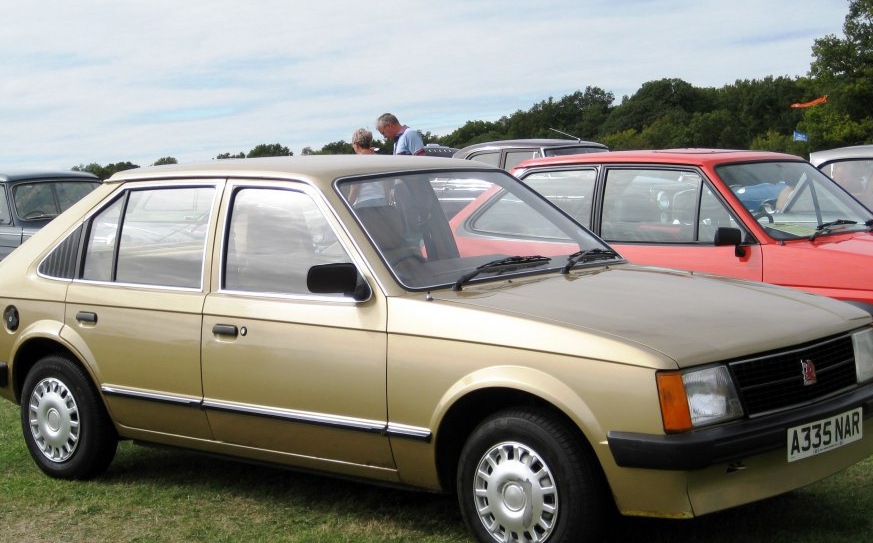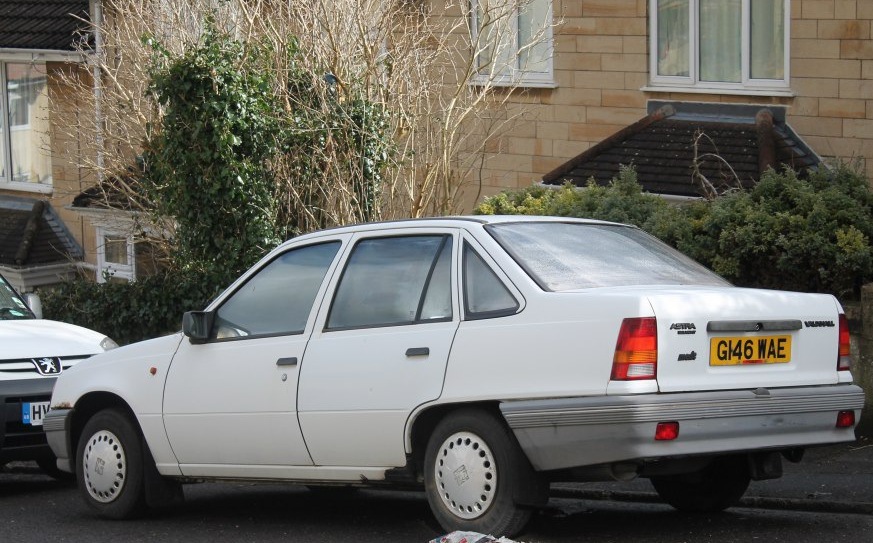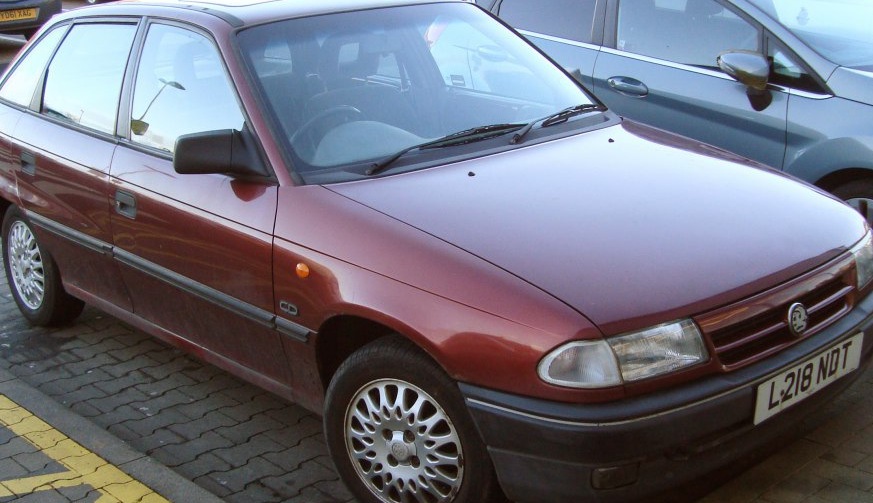
The Vauxhall Astra Mk III, produced between 1991 and 1994, represented a significant step forward for the British marque, building upon the success of its predecessor. The “CC” designation denoted the coupe/hatchback body style, offering a more streamlined and sporty appearance. Within the Mk III range, the 1.6 iS (100 hp) Automatic variant occupied a middle-ground position, aimed at buyers seeking a balance between affordability, reasonable performance, and the convenience of an automatic transmission. Production of this specific configuration ran from 1993 to 1994, and it was a popular choice in the UK market, offering a more refined driving experience than the base models.
Technical Specifications
| Brand | Vauxhall |
| Model | Astra |
| Generation | Astra Mk III CC |
| Type (Engine) | 1.6 iS (100 Hp) Automatic |
| Start of production | 1993 |
| End of production | 1994 |
| Powertrain Architecture | Internal Combustion engine |
| Body type | Hatchback |
| Seats | 5 |
| Doors | 3-5 |
| Fuel consumption (combined) | 7.8 l/100 km |
| Fuel consumption (US mpg) | 30.2 |
| Fuel consumption (UK mpg) | 36.2 |
| Fuel consumption (km/l) | 12.8 |
| Fuel Type | Petrol (Gasoline) |
| Acceleration 0 – 100 km/h | 12.5 sec |
| Acceleration 0 – 62 mph | 12.5 sec |
| Acceleration 0 – 60 mph | 11.9 sec |
| Maximum speed | 183 km/h (113.71 mph) |
| Weight-to-power ratio | 9.5 kg/Hp |
| Weight-to-torque ratio | 7 kg/Nm |
| Power | 100 Hp @ 5800 rpm |
| Power per litre | 62.6 Hp/l |
| Torque | 136 Nm @ 3400 rpm (100.31 lb.-ft. @ 3400 rpm) |
| Engine layout | Front, Transverse |
| Engine Model/Code | C16SE |
| Engine displacement | 1598 cm3 (97.52 cu. in.) |
| Number of cylinders | 4 |
| Engine configuration | Inline |
| Cylinder Bore | 79 mm (3.11 in.) |
| Piston Stroke | 81.5 mm (3.21 in.) |
| Compression ratio | 10:1 |
| Number of valves per cylinder | 4 |
| Fuel injection system | Multi-port manifold injection |
| Engine aspiration | Naturally aspirated |
| Engine oil capacity | 3.5 l (3.7 US qt | 3.08 UK qt) |
| Coolant capacity | 5.7 l (6.02 US qt | 5.02 UK qt) |
| Kerb Weight | 950/1015 kg (2094.39 lbs.) |
| Max. weight | 1475/1515 kg (3251.82 lbs.) |
| Max load | 500-525 kg (1102.31 – 1157.43 lbs.) |
| Trunk (boot) space – minimum | 360 l (12.71 cu. ft.) |
| Trunk (boot) space – maximum | 1201 l (42.41 cu. ft.) |
| Length | 4049 mm (159.41 in.) |
| Width | 1689 mm (66.5 in.) |
| Height | 1410 mm (55.51 in.) |
| Wheelbase | 2520 mm (99.21 in.) |
| Front track | 1420 mm (55.91 in.) |
| Rear track | 1420 mm (55.91 in.) |
| Ride height (ground clearance) | 135 mm (5.31 in.) |
| Drag coefficient (Cd) | 0.31 |
| Drive wheel | Front wheel drive |
| Number of gears | 4 |
| Gearbox type | automatic transmission |
| Front brakes | Ventilated discs |
| Rear brakes | Drum |
| Tires size | 175/70 R13 |
| Wheel rims size | 13 |
INTRODUCTION
The Vauxhall Astra Mk III 1.6 iS Automatic, produced from 1993-1994, was a key variant within the Mk III Astra range. The Mk III Astra (internally designated as the 1HX0/A3 platform) represented a significant redesign over the Mk II, with a more rounded and aerodynamic exterior. The “iS” designation indicated a higher trim level, featuring additional equipment and a slightly more powerful engine. The availability of an automatic transmission broadened the Astra’s appeal to drivers prioritizing comfort and ease of use. This model aimed to provide a comfortable and practical family car with a touch of sporting flair.
Powertrain & Engine Architecture
At the heart of the 1.6 iS Automatic lay the C16SE engine, a 1.6-liter inline-four cylinder petrol engine. This engine featured multi-port fuel injection, a crucial advancement for the time, improving fuel efficiency and reducing emissions compared to earlier carbureted designs. The C16SE produced 100 horsepower at 5800 rpm and 136 Nm (100.31 lb-ft) of torque at 3400 rpm. The engine utilized a single overhead camshaft (SOHC) valvetrain with four valves per cylinder. The automatic transmission was a four-speed unit, providing smooth gear changes but sacrificing some of the responsiveness found in manual transmission versions. This transmission was chosen for its ease of use, particularly in urban driving conditions.
Driving Characteristics
The 1.6 iS Automatic offered a comfortable, if not particularly exhilarating, driving experience. Acceleration from 0-60 mph took around 11.9 seconds, and top speed was approximately 113.71 mph. Compared to the 1.8-liter and 2.0-liter versions of the Astra, the 1.6 iS Automatic felt noticeably less powerful, especially when fully loaded or tackling steep inclines. The automatic transmission, while convenient, contributed to this feeling, as it lacked the direct control and quicker shifts of a manual gearbox. However, the gear ratios were well-chosen for everyday driving, providing adequate performance for most situations. The suspension was tuned for comfort, resulting in a relatively soft ride, but this also meant that the car wasn’t particularly engaging in corners.
Equipment & Trim Levels
The 1.6 iS trim level offered a step up in features compared to the base Astra models. Standard equipment typically included central locking, power steering, electric front windows, and a basic stereo system. Interior upholstery was usually cloth, with a relatively simple dashboard layout. Optional extras available for this trim included alloy wheels, a sunroof, and upgraded audio systems. The iS trim also featured slightly more refined interior trim details, such as upgraded door cards and seat fabrics. The overall interior ambiance was functional and practical, reflecting the Astra’s position as a mainstream family car.
Chassis & Braking
The Astra Mk III utilized a MacPherson strut front suspension and a torsion beam rear suspension. The front brakes were ventilated discs, providing adequate stopping power, while the rear brakes were drums. This configuration was typical for cars in this class at the time. The 1.6 iS Automatic models generally featured a slightly softer suspension setup compared to the higher-performance variants, prioritizing ride comfort over handling precision. Stabilizer bars were fitted to both the front and rear axles to reduce body roll during cornering, but their effectiveness was limited by the relatively soft suspension settings.
Market Reception & Comparison
The Astra Mk III 1.6 iS Automatic was generally well-received by automotive critics as a practical and affordable family car. However, the automatic transmission was often criticized for detracting from the car’s overall performance. Compared to the manual transmission versions, the automatic offered slower acceleration and reduced fuel economy. The 1.8-liter and 2.0-liter Astra models provided significantly more performance, but at a higher price point. The 1.6 iS Automatic appealed to buyers who prioritized comfort and convenience over outright speed, and it proved to be a popular choice for those seeking a reliable and easy-to-drive family car.
Legacy
The C16SE engine, found in the 1.6 iS Automatic, is generally considered to be a reliable unit, although age and maintenance history are crucial factors in determining its current condition. Common issues include oil leaks and wear on the timing chain. The four-speed automatic transmission is also relatively durable, but can be prone to wear and tear over time. Today, the Astra Mk III 1.6 iS Automatic is a relatively affordable classic car, appealing to enthusiasts seeking a nostalgic driving experience. While not a particularly rare or valuable model, well-maintained examples are becoming increasingly sought after by collectors and those looking for a practical and reliable classic hatchback.