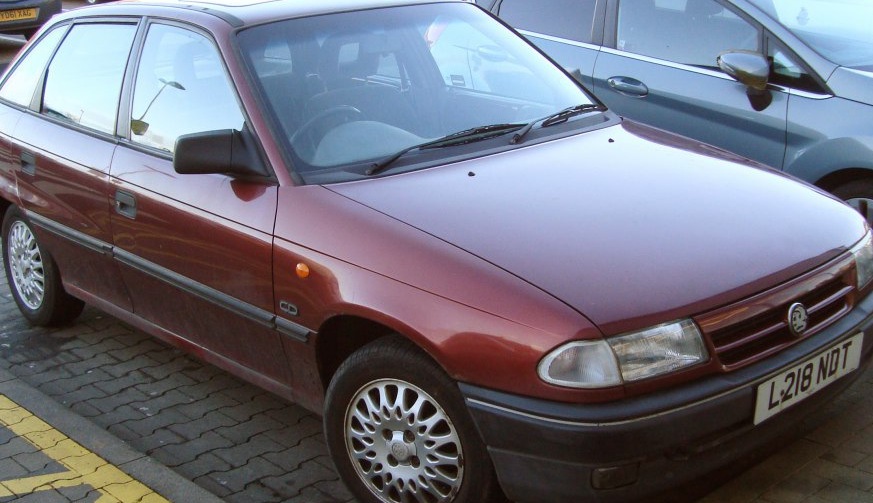
The Vauxhall Astra Mk III, produced between 1991 and 1998, represented a significant step forward for the British marque, offering a more refined and modern package than its predecessor. Within the Mk III range, the 1.6i 16V variant, available from 1994 to 1998, occupied a middle-ground position, appealing to buyers seeking a balance between performance, economy, and affordability. This model, often referred to as the ‘16V’, was a popular choice in the UK and European markets, offering a more spirited driving experience than the base 1.4-liter models while remaining more accessible than the higher-specification 1.8 and 2.0-liter options. It was built on the GM T platform, shared with other European Opel and Saab models.
Technical Specifications
| Brand | Vauxhall |
| Model | Astra |
| Generation | Astra Mk III CC |
| Type (Engine) | 1.6i 16V (101 Hp) |
| Start of production | 1994 |
| End of production | 1998 |
| Powertrain Architecture | Internal Combustion engine |
| Body type | Hatchback |
| Seats | 5 |
| Doors | 5 |
| Fuel Type | Petrol (Gasoline) |
| Emission standard | Euro 2/D3 |
| Power | 101 Hp @ 6200 rpm |
| Torque | 148 Nm @ 3500 rpm |
| Torque (lb-ft) | 109.16 lb.-ft. @ 3500 rpm |
| Engine Model/Code | X16XEL |
| Engine aspiration | Naturally aspirated engine |
| Engine oil capacity | 3.25 l / 3.43 US qt / 2.86 UK qt |
| Coolant capacity | 5.9 l / 6.23 US qt / 5.19 UK qt |
Powertrain & Engine Architecture
The heart of the Astra 1.6i 16V is the X16XEL engine, a 1.6-liter, inline-four cylinder powerplant. This engine is a member of Vauxhall/Opel’s ‘Ecotec’ family, known for its relatively lightweight construction and focus on efficiency. The ‘XEL’ designation indicates a multi-point fuel injection system, utilizing Bosch Motronic engine management. The 16-valve cylinder head, featuring dual overhead camshafts (DOHC), is a key element contributing to the engine’s improved breathing and higher power output compared to earlier 8-valve versions. The engine’s bore and stroke are 80.5mm x 88mm, resulting in a displacement of 1598cc. The compression ratio is 9.5:1. The engine’s design prioritized smooth operation and reasonable fuel economy over outright performance. The transmission paired with this engine was typically a five-speed manual, but a four-speed automatic transmission was also available, though less common. The automatic transmission, a GM-sourced unit, was geared towards comfort and ease of use rather than sporty driving.
Driving Characteristics
The 1.6i 16V Astra offered a noticeable improvement in performance over the base 1.4-liter models. With 101 horsepower, acceleration was adequate for everyday driving, though not particularly brisk. The 0-60 mph time was around 11-12 seconds, depending on the transmission. The engine felt responsive at higher RPMs, benefiting from the 16-valve head, but lacked significant low-end torque. The four-speed automatic transmission, while providing smooth shifts, did detract from the engine’s potential, resulting in a slightly sluggish feel. Gear ratios were spaced to prioritize fuel economy, and kickdown response wasn’t particularly sharp. Compared to the manual transmission version, the automatic felt noticeably slower. The manual version offered a more engaging driving experience, allowing the driver to fully utilize the engine’s power band. The suspension, tuned for comfort, provided a reasonably compliant ride, but didn’t offer the same level of handling precision as some of its rivals.
Equipment & Trim Levels
The 1.6i 16V Astra typically came equipped with features such as power steering, central locking, and an adjustable steering column. Interior trim levels varied, but generally included cloth upholstery and a basic dashboard layout. Higher trim levels, such as the ‘GL’ and ‘SE’, added features like electric windows, a sunroof, and upgraded interior trim. Air conditioning was often an optional extra. The dashboard featured a straightforward design with clearly labeled controls. The seats offered reasonable comfort for long journeys. The Astra Mk III offered a relatively practical interior with ample storage space for a car of its size.
Chassis & Braking
The Astra Mk III utilized a MacPherson strut front suspension and a torsion beam rear suspension. This setup provided a good balance between ride comfort and handling. The front brakes were typically disc brakes, while the rear brakes were drum brakes on most models. Higher trim levels sometimes featured rear disc brakes. Stabilizer bars were fitted to both the front and rear axles to reduce body roll during cornering. The steering was rack and pinion, providing precise and responsive steering feel. The chassis was relatively lightweight, contributing to the car’s overall agility. Tire sizes were typically 175/70 R14 or 185/65 R14.
Market Reception & Comparison
The Astra 1.6i 16V was generally well-received by automotive critics. It was praised for its refined engine, comfortable ride, and reasonable fuel economy. However, some critics noted that the automatic transmission felt somewhat dated and detracted from the engine’s performance. Compared to rivals like the Ford Escort and Volkswagen Golf, the Astra offered a competitive package in terms of price, features, and reliability. The 1.8-liter and 2.0-liter Astra models offered more performance, but at a higher price point. The 1.4-liter models were more affordable, but lacked the 1.6i 16V’s punch. Fuel economy was respectable for the time, averaging around 30-35 mpg in mixed driving conditions.
Legacy
The X16XEL engine proved to be a relatively reliable unit, and many Astra 1.6i 16V models are still on the road today. Common issues include oil leaks and occasional sensor failures, but these are generally inexpensive to repair. The Astra Mk III, and particularly the 1.6i 16V variant, has gained a following among classic car enthusiasts. Parts availability is generally good, and the car’s relatively simple mechanical design makes it relatively easy to maintain. In the used car market, these Astras represent an affordable and practical option for those seeking a classic 1990s hatchback. The 1.6i 16V strikes a good balance between performance, economy, and reliability, making it a popular choice among buyers looking for a well-rounded and dependable vehicle.