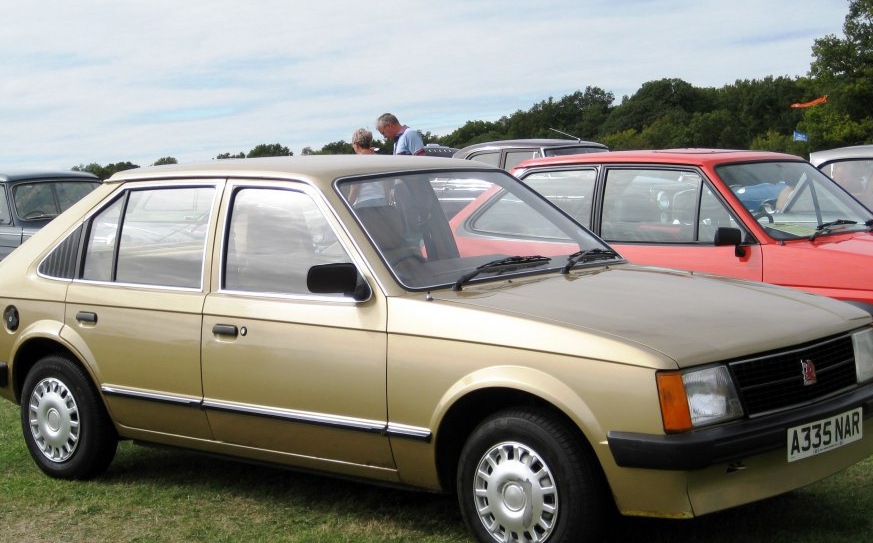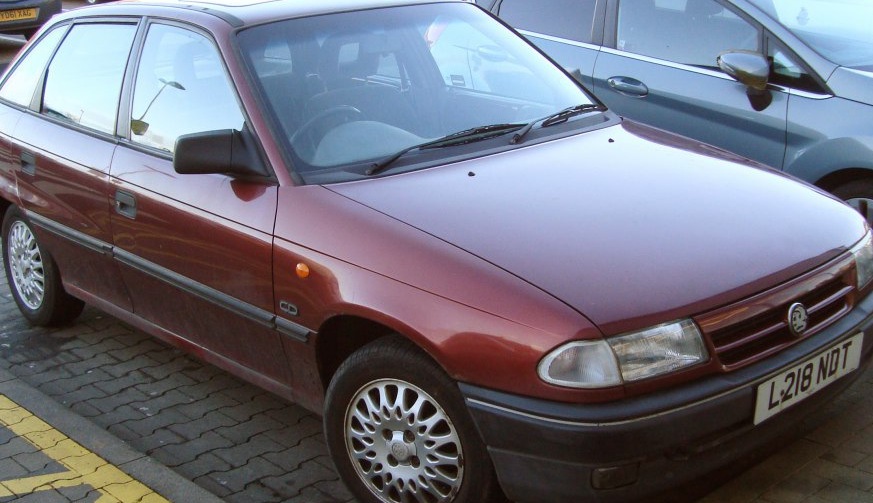
The Vauxhall Astra Mk III, produced from 1991 to 1998, represented a significant step forward for the British marque, building upon the success of its predecessors. Within the Mk III range, the 1.6i variant with an automatic transmission occupied a crucial position as an entry-level offering, aimed at buyers prioritizing comfort and ease of use over outright performance. This model, powered by the X16SZ engine, was a common sight on British roads during the 1990s, serving as a practical and affordable family hatchback. It was part of the larger Astra Mk III (CC) generation, internally designated as the 1HX0, which shared its platform with other General Motors vehicles of the era.
Technical Specifications
| Brand | Vauxhall |
| Model | Astra |
| Generation | Astra Mk III CC |
| Type (Engine) | 1.6i (71 Hp) Automatic |
| Start of production | 1991 |
| End of production | 1998 |
| Powertrain Architecture | Internal Combustion engine |
| Body type | Hatchback |
| Seats | 5 |
| Doors | 5 |
| Fuel consumption (combined) | 6.9 l/100 km |
| Fuel consumption (US mpg) | 34.1 |
| Fuel consumption (UK mpg) | 40.9 |
| CO2 emissions | 164 g/km |
| Fuel Type | Petrol (Gasoline) |
| Acceleration 0 – 100 km/h | 14 sec |
| Acceleration 0 – 62 mph | 14 sec |
| Acceleration 0 – 60 mph | 13.3 sec |
| Maximum speed | 171 km/h (106.25 mph) |
| Weight-to-power ratio | 13.4 kg/Hp |
| Weight-to-torque ratio | 7.4 kg/Nm |
| Power | 71 Hp @ 5000 rpm |
| Power per litre | 44.4 Hp/l |
| Torque | 128 Nm @ 2800 rpm (94.41 lb.-ft. @ 2800 rpm) |
| Engine layout | Front, Transverse |
| Engine Model/Code | X16SZ |
| Engine displacement | 1598 cm3 (97.52 cu. in.) |
| Number of cylinders | 4 |
| Engine configuration | Inline |
| Compression ratio | 9.6:1 |
| Number of valves per cylinder | 2 |
| Fuel injection system | Single-point injection |
| Engine aspiration | Naturally aspirated |
| Engine oil capacity | 3.5 l (3.7 US qt | 3.08 UK qt) |
| Coolant capacity | 5.6 l (5.92 US qt | 4.93 UK qt) |
| Kerb Weight | 950 kg (2094.39 lbs) |
| Max. weight | 1475 kg (3251.82 lbs) |
| Max load | 525 kg (1157.43 lbs) |
| Trunk (boot) space – minimum | 360 l (12.71 cu. ft.) |
| Trunk (boot) space – maximum | 1201 l (42.41 cu. ft.) |
| Length | 4049 mm (159.41 in.) |
| Width | 1689 mm (66.5 in.) |
| Height | 1410 mm (55.51 in.) |
| Wheelbase | 2520 mm (99.21 in.) |
| Front track | 1420 mm (55.91 in.) |
| Rear track | 1420 mm (55.91 in.) |
| Ride height (ground clearance) | 135 mm (5.31 in.) |
| Drag coefficient (Cd) | 0.31 |
| Drivetrain Architecture | Front wheel drive |
| Number of gears | 4 |
| Gearbox type | Automatic transmission |
| Front brakes | Ventilated discs |
| Rear brakes | Drum |
| Tires size | 185/60 R14 |
| Wheel rims size | 14 |
Powertrain & Engine Architecture
The heart of the Astra 1.6i Automatic was the X16SZ engine, a 1.6-liter inline-four cylinder unit. This engine utilized a single-point fuel injection system, a relatively simple setup compared to the multi-point injection systems becoming more common at the time. The X16SZ featured a two-valve per cylinder configuration and a compression ratio of 9.6:1. Its 71 horsepower output at 5000 rpm and 128 Nm (94.41 lb-ft) of torque at 2800 rpm were modest, but adequate for everyday driving. The engine was transversely mounted in the front of the vehicle, driving the front wheels. The automatic transmission was a four-speed unit, designed for smooth, if not particularly rapid, gear changes. This transmission was a common GM design used across various models during the period.
Driving Characteristics
The 1.6i Automatic Astra offered a comfortable, but uninspiring, driving experience. Acceleration was leisurely, taking around 14 seconds to reach 62 mph. The automatic transmission, while convenient, contributed to a noticeable lack of responsiveness. The gear ratios were optimized for fuel economy rather than performance. Compared to the manual transmission versions of the 1.6i, or the more powerful 1.8 and 2.0-liter models, the automatic felt significantly slower. However, for drivers prioritizing ease of use and a relaxed driving style, the 1.6i Automatic provided a suitable solution. The suspension was tuned for comfort, absorbing bumps reasonably well, but lacking the sporty handling of some competitors.
Equipment & Trim Levels
The 1.6i Automatic typically came with a fairly basic level of equipment. Standard features generally included central locking, power steering, and an adjustable steering column. Interior upholstery was typically cloth, and the dashboard featured a simple, functional design. Optional extras included electric windows, a sunroof, and upgraded audio systems. Trim levels varied slightly depending on the market, but the 1.6i Automatic generally represented the entry point to the Astra Mk III range. It was positioned below the more well-equipped 1.8 and 2.0-liter models, and the sportier GSi variants.
Chassis & Braking
The Astra Mk III utilized a MacPherson strut front suspension and a torsion beam rear suspension. The 1.6i Automatic models typically featured ventilated disc brakes on the front wheels and drum brakes on the rear. This configuration was common for vehicles in this weight class during the 1990s. Stabilizer bars were fitted to both the front and rear axles to reduce body roll during cornering. The relatively lightweight nature of the 1.6i model (around 950 kg or 2094 lbs) helped to offset the limitations of the braking system.
Market Reception & Comparison
The Astra 1.6i Automatic was generally well-received as a practical and affordable family car. Critics acknowledged its comfortable ride and ease of use, but often criticized its lack of performance. Compared to rivals like the Ford Escort and Volkswagen Golf, the Astra offered a competitive package in terms of price and equipment. However, the Golf generally offered a more refined driving experience, while the Escort was often praised for its handling. Fuel economy was reasonable for the time, averaging around 34.1 US mpg, but was not class-leading. Reliability was generally good, although the single-point fuel injection system could occasionally require maintenance.
Legacy
The Vauxhall Astra Mk III 1.6i Automatic remains a relatively common sight on UK roads today, testament to its durability and affordability. The X16SZ engine, while not particularly powerful, proved to be a reliable unit when properly maintained. The automatic transmission, although dated by modern standards, is generally robust. In the used car market, these Astras are typically valued for their low purchase price and simplicity. They represent a nostalgic reminder of 1990s motoring, offering a comfortable and practical driving experience for those seeking a classic family hatchback.