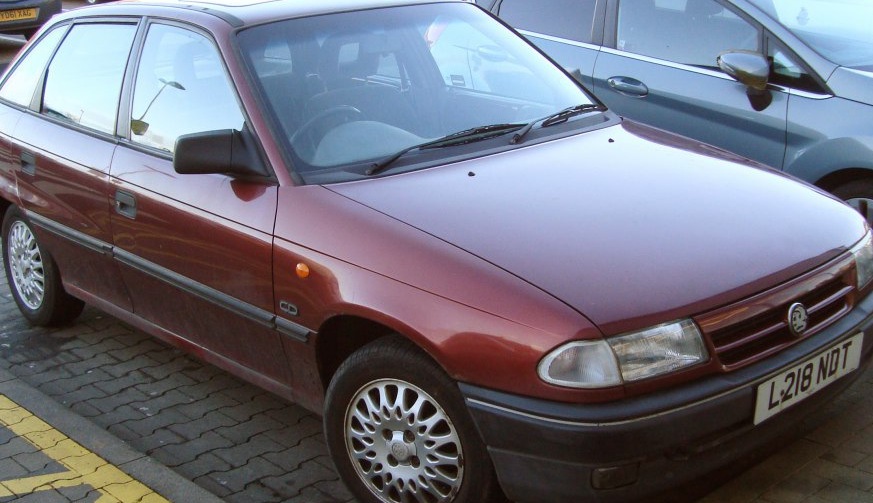
The Vauxhall Astra Mk III CC 1.6i Automatic, produced between 1991 and 1998, represented an entry-level offering within the broader Mk III Astra range (designated as the 1HX0/A3 platform). This three-door hatchback aimed to provide affordable and practical transportation, prioritizing fuel economy and ease of use over outright performance. Positioned as the base model with an automatic transmission, it catered to buyers seeking convenience and simplicity in a compact package. While the Astra Mk III was a popular choice in the UK and European markets, the 1.6i Automatic variant specifically targeted drivers who preferred a no-frills, comfortable ride for daily commuting and urban driving.
Technical Specifications
| Brand | Vauxhall |
| Model | Astra |
| Generation | Astra Mk III CC |
| Type (Engine) | 1.6i (75 Hp) Automatic |
| Start of production | 1991 |
| End of production | 1998 |
| Powertrain Architecture | Internal Combustion engine |
| Body type | Hatchback |
| Seats | 5 |
| Doors | 3 |
| Fuel consumption (urban) | 11.7 l/100 km (20.1 US mpg, 24.1 UK mpg, 8.5 km/l) |
| Fuel consumption (extra urban) | 6.5 l/100 km (36.2 US mpg, 43.5 UK mpg, 15.4 km/l) |
| Fuel consumption (combined) | 8.4 l/100 km (28 US mpg, 33.6 UK mpg, 11.9 km/l) |
| Fuel Type | Petrol (Gasoline) |
| Acceleration 0 – 100 km/h | 16.5 sec |
| Acceleration 0 – 62 mph | 16.5 sec |
| Acceleration 0 – 60 mph | 15.7 sec |
| Maximum speed | 159 km/h (98.8 mph) |
| Weight-to-power ratio | 13.6 kg/Hp, 73.5 Hp/tonne |
| Weight-to-torque ratio | 8.2 kg/Nm, 122.5 Nm/tonne |
| Power | 75 Hp @ 5200 rpm |
| Power per litre | 46.9 Hp/l |
| Torque | 125 Nm @ 3200 rpm (92.2 lb.-ft. @ 3200 rpm) |
| Engine layout | Front, Transverse |
| Engine Model/Code | C16NZ |
| Engine displacement | 1598 cm3 (97.52 cu. in.) |
| Number of cylinders | 4 |
| Engine configuration | Inline |
| Cylinder Bore | 79 mm (3.11 in.) |
| Piston Stroke | 81.5 mm (3.21 in.) |
| Compression ratio | 9.6:1 |
| Number of valves per cylinder | 2 |
| Fuel injection system | Multi-port manifold injection |
| Engine aspiration | Naturally aspirated |
| Engine oil capacity | 3.5 l (3.7 US qt | 3.08 UK qt) |
| Coolant | 5.6 l (5.92 US qt | 4.93 UK qt) |
| Kerb Weight | 1020 kg (2248.72 lbs.) |
| Max. weight | 1545 kg (3406.14 lbs.) |
| Max load | 525 kg (1157.43 lbs.) |
| Trunk (boot) space – minimum | 360 l (12.71 cu. ft.) |
| Trunk (boot) space – maximum | 1201 l (42.41 cu. ft.) |
| Length | 4049 mm (159.41 in.) |
| Width | 1689 mm (66.5 in.) |
| Height | 1410 mm (55.51 in.) |
| Wheelbase | 2520 mm (99.21 in.) |
| Front track | 1420 mm (55.91 in.) |
| Rear (Back) track | 1420 mm (55.91 in.) |
| Ride height (ground clearance) | 135 mm (5.31 in.) |
| Drag coefficient (Cd) | 0.31 |
| Drivetrain Architecture | The Internal combustion engine (ICE) drives the front wheels of the vehicle. |
| Drive wheel | Front wheel drive |
| Number of gears and type of gearbox | 4 gears, automatic transmission |
| Front brakes | Ventilated discs |
| Rear brakes | Drum |
| Tires size | 175/70 R13 |
| Wheel rims size | 13 |
Powertrain & Engine Architecture
The heart of the Astra Mk III CC 1.6i Automatic is the C16NZ engine, a 1.6-liter inline-four cylinder petrol engine. This engine is a naturally aspirated unit, meaning it doesn’t utilize a turbocharger or supercharger. It features a two-valve-per-cylinder configuration and utilizes a multi-port fuel injection system for precise fuel delivery. The C16NZ engine was known for its relative simplicity and durability, though it wasn’t a powerhouse in terms of performance. The engine’s 75 horsepower output at 5200 rpm and 125 Nm (92.2 lb-ft) of torque at 3200 rpm were modest, but adequate for everyday driving. Paired with a four-speed automatic transmission, the powertrain prioritized smooth operation and ease of use over sporty acceleration. This automatic transmission was a traditional hydraulic unit, offering a relatively smooth, if not particularly quick, shifting experience.
Driving Characteristics
The 1.6i Automatic variant of the Astra Mk III offered a comfortable, but uninspiring, driving experience. Acceleration was leisurely, with a 0-60 mph time of around 15.7 seconds. The automatic transmission, while convenient, contributed to a noticeable lack of responsiveness compared to the five-speed manual versions. Gear ratios were optimized for fuel efficiency rather than performance, resulting in a somewhat sluggish feel during overtaking maneuvers. However, for urban driving and cruising on the highway, the powertrain proved adequate. The engine’s torque curve was relatively flat, providing usable power across a reasonable rev range, but it lacked the punch of the higher-output engines available in the Astra Mk III lineup, such as the 2.0-liter 16V.
Equipment & Trim Levels
The 1.6i Automatic trim level typically included basic features such as central locking, power steering, and an adjustable steering column. Interior upholstery was generally cloth, with a simple dashboard layout. Optional extras included electric windows, a sunroof, and upgraded audio systems. The trim level was designed to be affordable and practical, focusing on essential features rather than luxury appointments. Compared to higher trim levels like the LS or GLS, the 1.6i Automatic lacked features like alloy wheels, upgraded interior trim, and more sophisticated audio systems.
Chassis & Braking
The Astra Mk III CC 1.6i Automatic utilized a MacPherson strut front suspension and a torsion beam rear suspension. The front brakes were ventilated discs, providing adequate stopping power, while the rear brakes were drums. This configuration was typical for vehicles in this weight class and price range during the 1990s. The suspension setup prioritized ride comfort over sporty handling, resulting in a relatively soft and forgiving ride. Stabilizer bars were present, but their thickness was modest, contributing to a degree of body roll during cornering.
Market Reception & Comparison
The Astra Mk III 1.6i Automatic received mixed reviews. Critics generally praised its affordability, fuel economy, and ease of use, but criticized its lack of performance and somewhat dated interior. Compared to other trims in the Astra Mk III lineup, such as the 1.8-liter and 2.0-liter models, the 1.6i Automatic offered significantly less power and a less engaging driving experience. However, it was more fuel-efficient and generally less expensive to maintain. In terms of reliability, the C16NZ engine was generally considered to be robust, but the automatic transmission could be prone to issues if not properly maintained.
Legacy
The Vauxhall Astra Mk III CC 1.6i Automatic remains a relatively common sight on UK and European roads today, albeit primarily as a classic or budget-friendly transportation option. The C16NZ engine is known for its durability, and well-maintained examples can still provide reliable service. However, age-related issues such as corrosion and wear and tear on suspension components are common. The automatic transmission, while convenient, requires regular fluid changes to prevent premature failure. In the used car market, the 1.6i Automatic variant typically commands a lower price than higher-spec models, making it an attractive option for buyers seeking an affordable and practical classic hatchback.