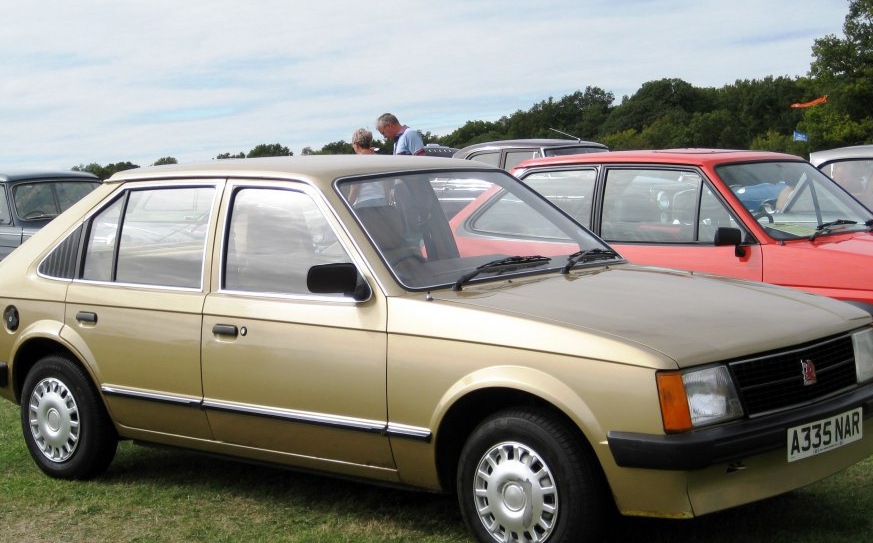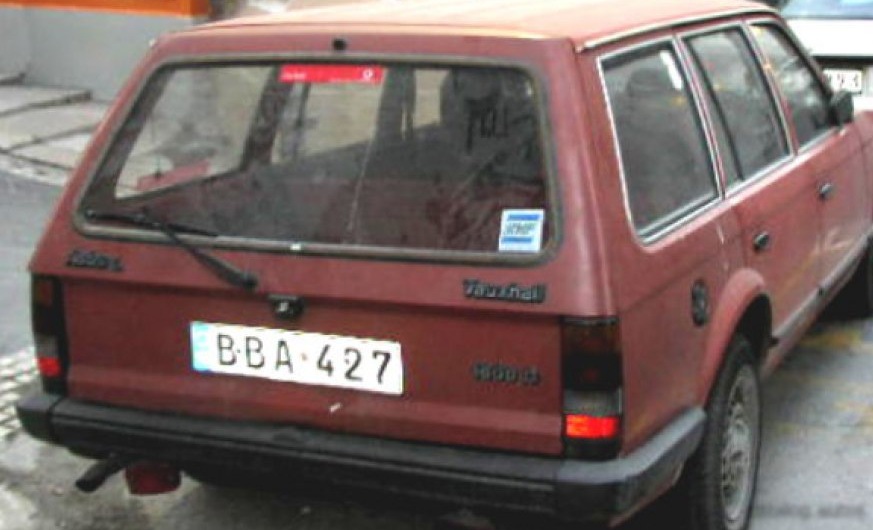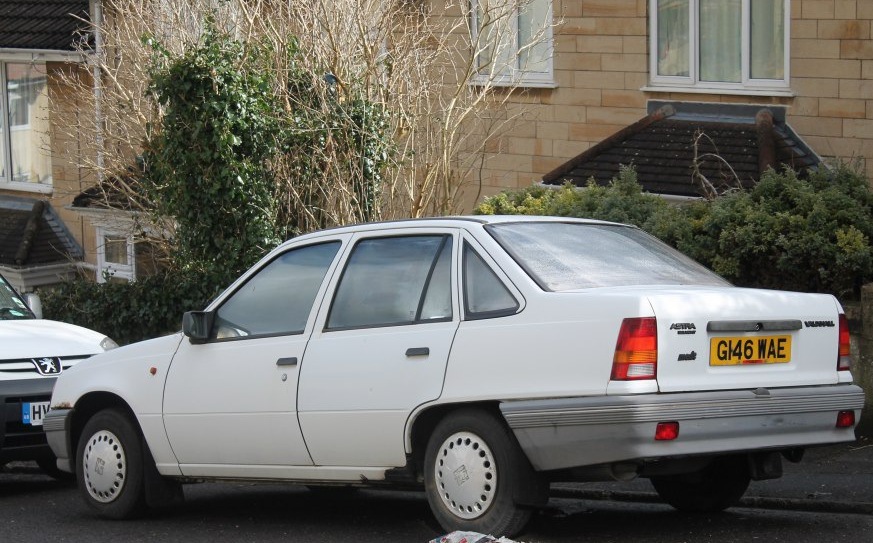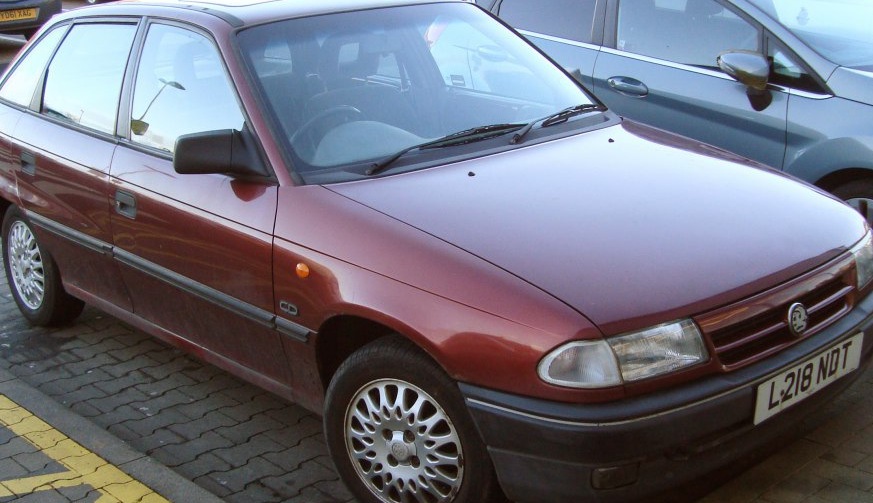
The Vauxhall Astra Mk III CC 1.7 D, produced between 1991 and 1992, represented the entry-level diesel offering within the Mk III Astra range (designated as the 1HX0/A3 platform). Positioned as an economical and practical hatchback, it catered to buyers prioritizing fuel efficiency and low running costs over outright performance. This variant was primarily sold in the United Kingdom and other European markets, where diesel engines were gaining popularity for their fuel economy. It served as a workhorse option, appealing to fleet buyers and individuals seeking a no-frills, dependable vehicle.
Technical Specifications
| Brand | Vauxhall |
| Model | Astra |
| Generation | Astra Mk III CC |
| Type (Engine) | 1.7 D (57 Hp) |
| Start of production | 1991 |
| End of production | 1992 |
| Powertrain Architecture | Internal Combustion engine |
| Body type | Hatchback |
| Seats | 5 |
| Doors | 5 |
| Fuel consumption (urban) | 6.7 l/100 km (35.1 US mpg, 42.2 UK mpg, 14.9 km/l) |
| Fuel consumption (extra urban) | 4.2 l/100 km (56 US mpg, 67.3 UK mpg, 23.8 km/l) |
| Fuel consumption (combined) | 6 l/100 km (39.2 US mpg, 47.1 UK mpg, 16.7 km/l) |
| Fuel Type | Diesel |
| Acceleration 0 – 100 km/h | 18.5 sec |
| Acceleration 0 – 62 mph | 18.5 sec |
| Acceleration 0 – 60 mph | 17.6 sec |
| Maximum speed | 153 km/h (95.07 mph) |
| Weight-to-power ratio | 17.6 kg/Hp, 56.7 Hp/tonne |
| Weight-to-torque ratio | 9.6 kg/Nm, 104.5 Nm/tonne |
| Power | 57 Hp @ 2400 rpm |
| Power per litre | 33.5 Hp/l |
| Torque | 105 Nm @ 2400 rpm (77.44 lb.-ft. @ 2400 rpm) |
| Engine layout | Front, Transverse |
| Engine Model/Code | 17D |
| Engine displacement | 1699 cm3 (103.68 cu. in.) |
| Number of cylinders | 4 |
| Engine configuration | Inline |
| Cylinder Bore | 82.5 mm (3.25 in.) |
| Piston Stroke | 79.5 mm (3.13 in.) |
| Compression ratio | 23:1 |
| Number of valves per cylinder | 2 |
| Fuel injection system | Precombustion chamber injection |
| Engine aspiration | Naturally aspirated engine |
| Valvetrain | SOHC |
| Engine oil capacity | 5 l (5.28 US qt | 4.4 UK qt) |
| Coolant | 7.8 l (8.24 US qt | 6.86 UK qt) |
| Kerb Weight | 1005 kg (2215.65 lbs.) |
| Max. weight | 1515 kg (3340 lbs.) |
| Max load | 510 kg (1124.36 lbs.) |
| Trunk (boot) space – minimum | 316 l (11.16 cu. ft.) |
| Trunk (boot) space – maximum | 1200 l (42.38 cu. ft.) |
| Fuel tank capacity | 52 l (13.74 US gal | 11.44 UK gal) |
| Length | 4051 mm (159.49 in.) |
| Width | 1688 mm (66.46 in.) |
| Width including mirrors | 1795 mm (70.67 in.) |
| Height | 1410 mm (55.51 in.) |
| Wheelbase | 2517 mm (99.09 in.) |
| Front track | 1430 mm (56.3 in.) |
| Rear (Back) track | 1429 mm (56.26 in.) |
| Ride height (ground clearance) | 135 mm (5.31 in.) |
| Drag coefficient (Cd) | 0.32 |
| Drivetrain Architecture | The Internal combustion engine (ICE) drives the front wheels of the vehicle. |
| Drive wheel | Front wheel drive |
| Number of gears and type of gearbox | 5 gears, manual transmission |
| Front suspension | Independent, type McPherson with coil spring and anti-roll bar |
| Rear suspension | Spring Strut, Coil spring, Torsion |
| Front brakes | Disc |
| Rear brakes | Disc |
| Steering type | Steering rack and pinion |
| Power steering | Hydraulic Steering |
| Tires size | 175/70 R13 |
| Wheel rims size | 5.5J x 13 |
Powertrain & Engine Architecture
The Astra Mk III 1.7 D was powered by the 17D engine, a naturally aspirated, inline-four cylinder diesel engine displacing 1699 cc (103.68 cubic inches). This engine utilized precombustion chamber injection, a common diesel technology of the era. This system involved injecting fuel into a precombustion chamber connected to the main cylinder, promoting more complete combustion. The engine featured a single overhead camshaft (SOHC) valvetrain with two valves per cylinder. The 17D produced 57 horsepower at 2400 rpm and 105 Nm (77.44 lb-ft) of torque, also at 2400 rpm. The engine was transversely mounted in the front of the vehicle. The transmission was a five-speed manual gearbox, chosen for its efficiency and cost-effectiveness. This configuration was typical for European diesel hatchbacks of the early 1990s.
Driving Characteristics
The 1.7 D automatic Astra was not known for its performance. Acceleration was leisurely, with a 0-60 mph time of around 17.6 seconds and a top speed of 95 mph. The engine’s torque delivery was relatively flat, providing adequate pulling power for everyday driving, but lacking the responsiveness of higher-output engines. The five-speed manual transmission helped to maximize fuel economy, but required frequent shifting to maintain momentum. Compared to the more powerful petrol (gasoline) variants, such as the 1.8 or 2.0 litre models, the 1.7 D offered significantly less acceleration and overall performance. However, it excelled in fuel efficiency, achieving around 39.2 US mpg on a combined cycle.
Equipment & Trim Levels
The 1.7 D trim level was generally considered the base model. Standard equipment typically included basic cloth upholstery, a simple dashboard layout, and manual windows and door locks. Power steering was often included, but air conditioning and central locking were usually optional extras. The interior was functional and durable, prioritizing practicality over luxury. Optional extras could include a radio/cassette player, upgraded seat fabrics, and alloy wheels, but these were rarely specified on the base model.
Chassis & Braking
The Astra Mk III featured an independent McPherson strut front suspension with a coil spring and anti-roll bar. The rear suspension utilized a torsion beam setup with coil springs. This configuration provided a reasonable balance between ride comfort and handling. Braking was accomplished via disc brakes on all four wheels, offering adequate stopping power for the vehicle’s weight and performance. The steering was a rack and pinion system with hydraulic power assistance, providing relatively light and precise steering feel.
Market Reception & Comparison
The Astra Mk III 1.7 D was well-received by buyers seeking an economical and reliable hatchback. Critics praised its fuel efficiency and low running costs, but noted its lack of performance. Compared to the petrol-powered Astra variants, the 1.7 D offered significantly better fuel economy but considerably slower acceleration. It was often compared to other small diesel hatchbacks of the era, such as the Ford Escort Diesel and the Peugeot 205 Diesel. The Astra generally offered a more refined driving experience and a more spacious interior than its competitors.
Legacy
The 17D engine, while not known for its sophistication, proved to be a durable and reliable unit. Many examples of the Astra Mk III 1.7 D are still on the road today, testament to its robust construction. In the used car market, these vehicles are valued for their simplicity, affordability, and fuel efficiency. However, potential buyers should be aware of the age-related issues common to vehicles of this era, such as corrosion and wear and tear on suspension components. The 1.7 D Astra represents a practical and economical choice for those seeking a classic European hatchback.