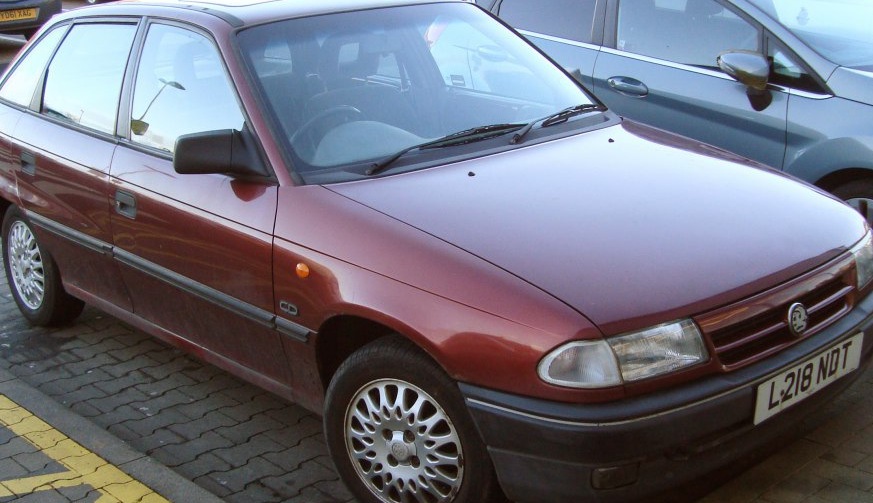
The Vauxhall Astra Mk III, manufactured between 1991 and 1998, marked a substantial advancement for the British automaker, presenting a more sophisticated and contemporary design compared to its predecessor. Within the Mk III lineup, the 1.7 TD (68 hp) variant, available from 1994 to 1998, served as the entry-level option for buyers prioritizing fuel efficiency and practicality. Typically offered as a 3 or 5-door hatchback, this model catered to drivers seeking a cost-effective and dependable vehicle for daily commutes and general transportation needs. It played a vital role in sustaining the Astra’s popularity in the UK and European markets, where diesel engines were gaining prominence due to advantageous taxation and fuel costs.
Technical Specifications
| Brand | Vauxhall |
| Model | Astra |
| Generation | Astra Mk III CC |
| Type (Engine) | 1.7 TD (68 Hp) |
| Start of production | 1994 |
| End of production | 1998 |
| Powertrain Architecture | Internal Combustion engine |
| Body type | Hatchback |
| Seats | 5 |
| Doors | 3-5 |
| Fuel consumption (urban) | 8.5 l/100 km (27.7 US mpg, 33.2 UK mpg, 11.8 km/l) |
| Fuel consumption (extra urban) | 5.2 l/100 km (45.2 US mpg, 54.3 UK mpg, 19.2 km/l) |
| Fuel consumption (combined) | 6.4 l/100 km (36.8 US mpg, 44.1 UK mpg, 15.6 km/l) |
| CO2 emissions | 170 g/km |
| Fuel Type | Diesel |
| Acceleration 0 – 100 km/h | 18.5 sec |
| Acceleration 0 – 62 mph | 18.5 sec |
| Acceleration 0 – 60 mph | 17.6 sec |
| Maximum speed | 164 km/h (101.9 mph) |
| Weight-to-power ratio | 15.1 kg/Hp |
| Weight-to-torque ratio | 9.8 kg/Nm |
| Power | 68 Hp @ 4600 rpm |
| Torque | 105 Nm @ 2400 rpm (77.44 lb.-ft. @ 2400 rpm) |
| Engine layout | Front, Transverse |
| Engine Model/Code | X17DTL |
| Engine displacement | 1699 cm3 (103.68 cu. in.) |
| Number of cylinders | 4 |
| Engine configuration | Inline |
| Fuel injection system | Precombustion chamber injection |
| Engine aspiration | Turbocharger |
| Engine oil capacity | 4.5 l (4.76 US qt, 3.96 UK qt) |
| Coolant capacity | 6.8 l (7.19 US qt, 5.98 UK qt) |
| Kerb Weight | 1030/1050 kg (2270.76 lbs.) |
| Max. weight | 1555 kg (3428.19 lbs.) |
| Max load | 505-525 kg (1113.33 – 1157.43 lbs.) |
| Trunk (boot) space – minimum | 360 l (12.71 cu. ft.) |
| Trunk (boot) space – maximum | 1201 l (42.41 cu. ft.) |
| Length | 4049 mm (159.41 in.) |
| Width | 1689 mm (66.5 in.) |
| Height | 1410 mm (55.51 in.) |
| Wheelbase | 2520 mm (99.21 in.) |
| Front track | 1420 mm (55.91 in.) |
| Rear track | 1420 mm (55.91 in.) |
| Ride height (ground clearance) | 135 mm (5.31 in.) |
| Drag coefficient (Cd) | 0.28 |
| Drivetrain | Front wheel drive |
| Number of gears | 5 |
| Gearbox type | Manual transmission |
| Front brakes | Ventilated discs |
| Rear brakes | Drum |
| Tires size | 175/70 R13 |
| Wheel rims size | 13 |
Powertrain & Engine Architecture
The Astra 1.7 TD’s engine was the Isuzu-sourced X17DTL diesel. This 1.7-liter inline-four utilized precombustion chamber injection, a common system in European diesels of the period. This involved injecting fuel into a precombustion chamber connected to the main cylinder, enhancing combustion efficiency and reducing engine noise. A turbocharger increased power output to 68 horsepower at 4600 rpm and 105 Nm (77.44 lb-ft) of torque at 2400 rpm. The engine’s relatively low compression ratio and turbocharging contributed to its fuel economy. It was paired exclusively with a five-speed manual transmission, chosen for its simplicity and cost-effectiveness. An automatic transmission was available on other Mk III Astras, but not with the 1.7 TD engine.
Driving Characteristics
The 1.7 TD Astra wasn’t built for rapid acceleration. Reaching 62 mph took approximately 18.5 seconds. However, the engine’s torque characteristics made it surprisingly usable in everyday driving. The turbocharger provided a noticeable power boost once it spooled up, assisting with overtaking. The five-speed manual transmission allowed drivers to maintain the engine within its optimal power range. Compared to the gasoline-powered Astra variants, the 1.7 TD offered significantly better fuel economy, making it a popular choice for drivers covering high mileage. Handling was typical for a front-wheel-drive hatchback of the era – safe and predictable, but not particularly sporty.
Equipment & Trim Levels
The 1.7 TD Astra generally came with a basic equipment level. Standard features typically included power steering, central locking, and an adjustable steering column. Interior upholstery was usually cloth, and the dashboard design was functional, though somewhat basic. Optional extras included electric windows, a sunroof, and upgraded audio systems. This trim level was positioned as the entry point to the Astra range, prioritizing essential transportation at an affordable price. It was frequently used as a fleet vehicle or chosen by budget-conscious buyers.
Chassis & Braking
The Astra Mk III employed a MacPherson strut front suspension and a torsion beam rear suspension. This setup provided a reasonable compromise between ride comfort and handling. The 1.7 TD models featured ventilated disc brakes on the front wheels and drum brakes on the rear. This configuration was adequate for the vehicle’s weight and performance. Stabilizer bars were fitted to both axles to minimize body roll during cornering. The relatively light weight of the 1.7 TD variant reduced the strain on the braking system.
Market Reception & Comparison
The Astra 1.7 TD was generally well-regarded as a practical and economical vehicle. Its fuel efficiency was a major selling point, especially in Europe where diesel fuel was cheaper than gasoline. However, its lack of performance and basic interior were often criticized. Compared to the petrol Astra variants, the 1.7 TD offered lower running costs but a less engaging driving experience. Against competitors like the Ford Escort Diesel and Volkswagen Golf Diesel, the Astra 1.7 TD offered a competitive package in terms of price, fuel economy, and reliability.
Legacy
The Vauxhall Astra Mk III 1.7 TD has proven to be a durable and reliable vehicle. The Isuzu diesel engine, while not known for refinement, is generally robust and capable of high mileage with proper maintenance. Today, these cars are becoming increasingly scarce, but well-maintained examples are sought after by enthusiasts and collectors. The 1.7 TD represents a significant chapter in the Astra’s history, demonstrating the brand’s commitment to providing affordable and practical transportation. Its enduring appeal lies in its simplicity, fuel efficiency, and overall reliability, making it a fondly remembered vehicle for many drivers of the 1990s.