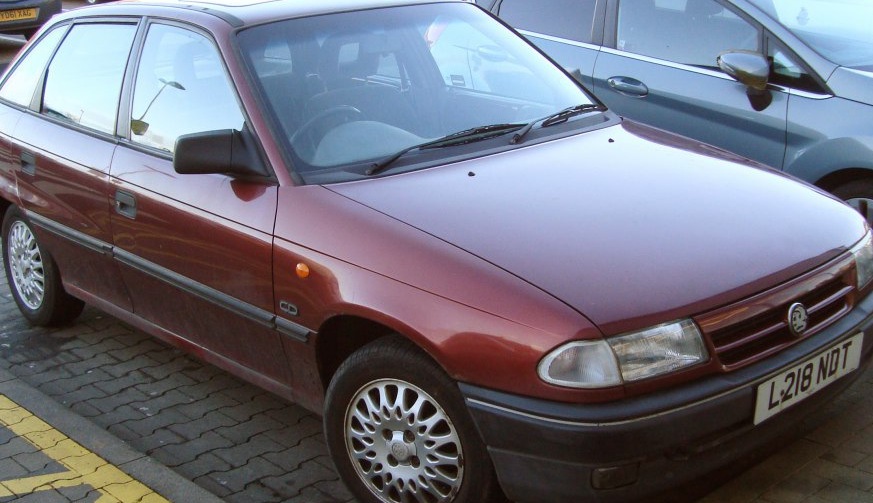
The Vauxhall Astra Mk III, produced from 1991 to 1998, represented a significant step forward for the British manufacturer, building upon the success of its predecessors. Within the Mk III range, the 2.0 GSi 16V variant, boasting 150 horsepower, occupied a performance-oriented niche. This model, often recognized as a driver’s car, aimed to deliver a sporty experience while maintaining the practicality expected of a family hatchback. It was a key offering in the competitive European C-segment, appealing to enthusiasts seeking a blend of performance and affordability. The Astra Mk III chassis code was CC, and this particular variant was a 3-door hatchback.
Technical Specifications
| Brand | Vauxhall |
| Model | Astra |
| Generation | Astra Mk III CC |
| Type (Engine) | 2.0 GSi 16V (150 Hp) |
| Start of production | 1991 |
| End of production | 1998 |
| Powertrain Architecture | Internal Combustion engine |
| Body type | Hatchback |
| Seats | 5 |
| Doors | 3 |
| Fuel consumption (combined) | 7.7 l/100 km |
| Fuel consumption (US mpg) | 30.5 US mpg |
| Fuel consumption (UK mpg) | 36.7 UK mpg |
| Fuel consumption (km/l) | 13 km/l |
| Fuel Type | Petrol (Gasoline) |
| Acceleration 0 – 100 km/h | 8 sec |
| Acceleration 0 – 62 mph | 8 sec |
| Acceleration 0 – 60 mph | 7.6 sec |
| Maximum speed | 220 km/h (136.7 mph) |
| Weight-to-power ratio | 7.3 kg/Hp, 137 Hp/tonne |
| Weight-to-torque ratio | 5.6 kg/Nm, 179 Nm/tonne |
| Power | 150 Hp @ 6000 rpm |
| Power per litre | 75.1 Hp/l |
| Torque | 196 Nm @ 4600 rpm (144.56 lb.-ft. @ 4600 rpm) |
| Engine layout | Front, Transverse |
| Engine Model/Code | C20XE |
| Engine displacement | 1998 cm3 (121.93 cu. in.) |
| Number of cylinders | 4 |
| Engine configuration | Inline |
| Number of valves per cylinder | 4 |
| Fuel injection system | Multi-port manifold injection |
| Engine aspiration | Naturally aspirated engine |
| Engine oil capacity | 4.5 l (4.76 US qt | 3.96 UK qt) |
| Coolant capacity | 6.9 l (7.29 US qt | 6.07 UK qt) |
| Kerb Weight | 1095 kg (2414.06 lbs) |
| Max. weight | 1595 kg (3516.37 lbs) |
| Max load | 500 kg (1102.31 lbs) |
| Trunk (boot) space – minimum | 360 l (12.71 cu. ft.) |
| Trunk (boot) space – maximum | 1201 l (42.41 cu. ft.) |
| Length | 4049 mm (159.41 in.) |
| Width | 1689 mm (66.5 in.) |
| Height | 1410 mm (55.51 in.) |
| Wheelbase | 2520 mm (99.21 in.) |
| Front track | 1420 mm (55.91 in.) |
| Rear track | 1420 mm (55.91 in.) |
| Ride height (ground clearance) | 135 mm (5.31 in.) |
| Drag coefficient (Cd) | 0.31 |
| Drivetrain Architecture | The Internal combustion engine (ICE) drives the front wheels of the vehicle. |
| Drive wheel | Front wheel drive |
| Number of gears and type of gearbox | 5 gears, manual transmission |
| Front brakes | Ventilated discs |
| Rear brakes | Disc |
| Tires size | 185/60 R14 |
| Wheel rims size | 14 |
Powertrain & Engine Architecture
The heart of the Astra GSi 16V was the C20XE engine, a 2.0-liter inline-four cylinder powerplant. This engine was a member of Vauxhall/Opel’s ‘E’ family of engines, known for its robust construction and potential for tuning. The ‘XE’ designation indicated a dual overhead camshaft (DOHC) configuration with four valves per cylinder, contributing to its relatively high specific output. Fuel delivery was managed by Bosch Motronic multi-port fuel injection, optimizing combustion efficiency and responsiveness. The engine produced 150 horsepower at 6000 rpm and 196 Nm (144.56 lb-ft) of torque at 4600 rpm. This power was transmitted to the front wheels through a five-speed manual transmission, the only gearbox option available for this specific trim. The engine’s transverse mounting and front-wheel-drive layout were typical for vehicles in this class.
Driving Characteristics
The 2.0 GSi 16V offered a noticeably more engaging driving experience compared to lower-spec Astra models. The 150 hp engine provided brisk acceleration, achieving 0-60 mph in approximately 7.6 seconds and a top speed of 136.7 mph. While not a sports car by modern standards, the GSi felt lively and responsive, particularly in the mid-range. The five-speed manual transmission was well-matched to the engine’s characteristics, offering precise shifts and allowing the driver to maintain optimal power delivery. Compared to the 1.8-liter versions, the 2.0 GSi provided a significant boost in performance, making it more suitable for spirited driving and longer journeys. The suspension was tuned for a balance between comfort and handling, providing a reasonably compliant ride while minimizing body roll during cornering.
Equipment & Trim Levels
The GSi 16V trim level was positioned as the premium offering within the Astra Mk III range. Standard equipment included sports seats with distinctive upholstery, a leather-wrapped steering wheel, and a comprehensive instrument cluster. Exterior features included a body-colored front spoiler, side skirts, and a rear spoiler, giving the car a more aggressive appearance. Optional extras included electric windows, central locking, and an upgraded audio system. The interior was generally well-equipped for its time, offering a comfortable and functional environment for both driver and passengers.
Chassis & Braking
The Astra Mk III utilized a MacPherson strut front suspension and a torsion beam rear suspension. The GSi 16V benefited from a slightly stiffer suspension setup compared to standard models, improving handling and stability. Braking duties were handled by ventilated disc brakes at the front and solid disc brakes at the rear. The braking system provided adequate stopping power for the car’s weight and performance, although it lacked the sophistication of more modern braking technologies. The car’s relatively light weight (1095 kg / 2414.06 lbs) contributed to its agile handling characteristics.
Market Reception & Comparison
The Astra Mk III 2.0 GSi 16V was generally well-received by automotive critics. It was praised for its performance, handling, and overall value for money. Compared to rivals such as the Ford Escort XR3i and the Volkswagen Golf GTI, the Astra GSi offered a compelling combination of features and performance at a competitive price point. Fuel economy was reasonable for a performance-oriented hatchback, averaging around 30.5 US mpg. Reliability was generally good, although the C20XE engine could be prone to oil leaks if not properly maintained. The GSi 16V appealed to drivers who wanted a sporty and practical hatchback without breaking the bank.
Legacy
The Vauxhall Astra Mk III 2.0 GSi 16V has become a popular classic car among enthusiasts. The C20XE engine is highly regarded for its durability and tunability, making it a favorite among those who enjoy modifying their vehicles. While examples are now over 25 years old, many remain on the road, testament to the car’s robust construction. The GSi 16V is often sought after for its nostalgic appeal and its engaging driving experience. In the used car market, well-maintained examples command a premium, reflecting the car’s growing popularity among collectors and enthusiasts. The Astra Mk III GSi 16V remains a fondly remembered icon of 1990s British motoring.