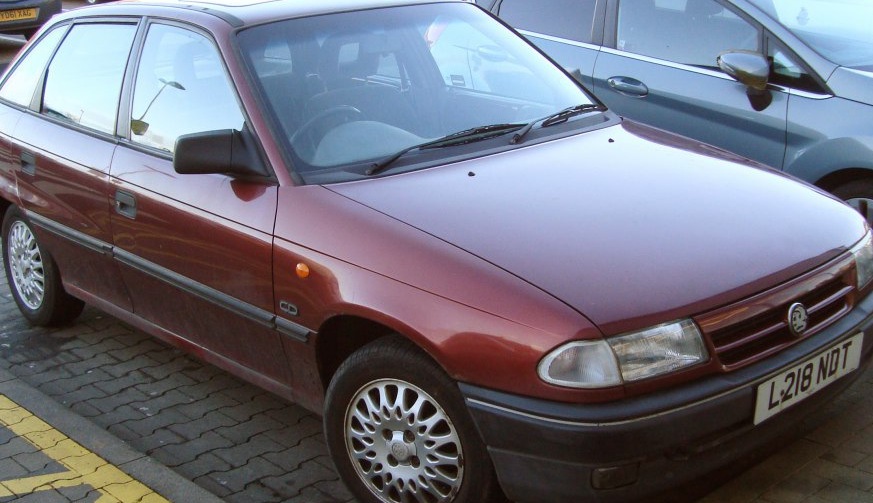
The Vauxhall Astra Mk III, produced from 1991 to 1998, represented a significant step forward for the British marque, offering a more refined and modern package compared to its predecessors. Within the Mk III range, the 2.0i 16V variant, available from 1994, occupied a position as a performance-oriented trim, bridging the gap between the more economical models and the range-topping GSi. This model, available in both 3-door and 5-door hatchback configurations, aimed to provide a balance of practicality, comfort, and spirited driving. It was a key player in the competitive C-segment of the European market, appealing to buyers seeking a stylish and capable family car with a bit more punch.
Technical Specifications
| Brand | Vauxhall |
| Model | Astra |
| Generation | Astra Mk III CC |
| Type (Engine) | 2.0i 16V (136 Hp) |
| Start of production | 1994 |
| End of production | 1998 |
| Powertrain Architecture | Internal Combustion engine |
| Body type | Hatchback |
| Seats | 5 |
| Doors | 3-5 |
| Fuel consumption (urban) | 12.1 l/100 km (19.4 US mpg, 23.3 UK mpg, 8.3 km/l) |
| Fuel consumption (extra urban) | 6.6 l/100 km (35.6 US mpg, 42.8 UK mpg, 15.2 km/l) |
| Fuel consumption (combined) | 8.6 l/100 km (27.4 US mpg, 32.8 UK mpg, 11.6 km/l) |
| CO2 emissions | 202 g/km |
| Fuel Type | Petrol (Gasoline) |
| Acceleration 0 – 100 km/h | 9 sec |
| Acceleration 0 – 62 mph | 9 sec |
| Acceleration 0 – 60 mph | 8.6 sec |
| Maximum speed | 207 km/h (128.62 mph) |
| Weight-to-power ratio | 8 kg/Hp, 124.8 Hp/tonne |
| Weight-to-torque ratio | 5.9 kg/Nm, 169.7 Nm/tonne |
| Power | 136 Hp @ 5600 rpm |
| Power per litre | 68.1 Hp/l |
| Torque | 185 Nm @ 4000 rpm (136.45 lb.-ft. @ 4000 rpm) |
| Engine layout | Front, Transverse |
| Engine Model/Code | X20XEV |
| Engine displacement | 1998 cm3 (121.93 cu. in.) |
| Number of cylinders | 4 |
| Engine configuration | Inline |
| Number of valves per cylinder | 4 |
| Fuel injection system | Multi-port manifold injection |
| Engine aspiration | Naturally aspirated engine |
| Engine oil capacity | 4 l (4.23 US qt | 3.52 UK qt) |
| Coolant capacity | 6.7 l (7.08 US qt | 5.9 UK qt) |
| Kerb Weight | 1090/1110 kg (2403.04 lbs.) |
| Max. weight | 1605/1625 kg (3538.42 lbs.) |
| Max load | 515 kg (1135.38 lbs.) |
| Trunk (boot) space – minimum | 360 l (12.71 cu. ft.) |
| Trunk (boot) space – maximum | 1201 l (42.41 cu. ft.) |
| Length | 4049 mm (159.41 in.) |
| Width | 1689 mm (66.5 in.) |
| Height | 1410 mm (55.51 in.) |
| Wheelbase | 2520 mm (99.21 in.) |
| Front track | 1420 mm (55.91 in.) |
| Rear (Back) track | 1420 mm (55.91 in.) |
| Ride height (ground clearance) | 135 mm (5.31 in.) |
| Drag coefficient (Cd) | 0.28 |
| Drivetrain Architecture | The Internal combustion engine (ICE) drives the front wheels of the vehicle. |
| Drive wheel | Front wheel drive |
| Number of gears and type of gearbox | 5 gears, manual transmission |
| Front brakes | Ventilated discs |
| Rear brakes | Disc |
| Tires size | 195/55 R15 |
| Wheel rims size | 15 |
INTRODUCTION
The Vauxhall Astra Mk III 2.0i 16V, produced between 1994 and 1998, was a key variant within the ‘CC’ (Coupe Cabriolet) body style of the Mk III Astra range. Built on the GM T platform (internally known as the 1HX0), this model aimed to offer a more engaging driving experience than the lower-spec engines. The 2.0i 16V was positioned as a mid-range performance option, sitting below the more potent GSi models but above the 1.4 and 1.6-liter variants. It catered to drivers who desired a blend of practicality, reasonable fuel economy, and a noticeable step up in performance.
Powertrain & Engine Architecture
At the heart of the Astra 2.0i 16V lies the X20XEV engine, a 1998cc inline-four cylinder unit. This engine featured a cast iron block with an aluminum cylinder head, incorporating dual overhead camshafts (DOHC) and four valves per cylinder – hence the ‘16V’ designation. Fuel delivery was managed by a Bosch Motronic multi-port fuel injection system, optimizing fuel atomization and combustion efficiency. The X20XEV was known for its relatively robust construction and good reliability. The engine was transversely mounted, driving the front wheels. The standard transmission was a five-speed manual gearbox, providing precise gear changes and enhancing driver control. While an automatic transmission was available on some Mk III Astras, it was less common with the 2.0i 16V, as it diminished the sporty character of the car.
Driving Characteristics
The 2.0i 16V Astra offered a noticeable improvement in performance compared to its smaller-engined siblings. The 136 horsepower output, coupled with 185 Nm (136 lb-ft) of torque, provided brisk acceleration and respectable cruising speeds. The five-speed manual gearbox allowed drivers to effectively utilize the engine’s powerband, with strong mid-range torque making overtaking maneuvers relatively effortless. While not a sports car, the 2.0i 16V offered a more engaging driving experience than the base models, with responsive steering and a reasonably well-controlled chassis. Compared to the GSi models, the 2.0i 16V felt less raw and more refined, prioritizing comfort and usability over outright performance. The gear ratios were tuned for a balance between acceleration and fuel economy, making it a suitable choice for both city driving and longer journeys.
Equipment & Trim Levels
The Astra 2.0i 16V typically came equipped with a reasonable level of standard features. This included central locking, power steering, electric front windows, and an adjustable steering column. Interior upholstery was usually cloth, with a choice of colors available. Higher trim levels could add features such as alloy wheels, a sunroof, and upgraded audio systems. Optional extras included air conditioning, anti-lock brakes (ABS), and a trip computer. The dashboard layout was functional and straightforward, with clearly labeled controls. The 2.0i 16V often featured a slightly more sporty interior trim compared to the base models, with upgraded seat fabrics and a leather-wrapped steering wheel available as options.
Chassis & Braking
The Astra Mk III utilized a MacPherson strut front suspension and a torsion beam rear suspension. This setup provided a good balance between ride comfort and handling. The 2.0i 16V models typically featured a slightly stiffer suspension setup compared to the lower-spec variants, enhancing body control and reducing roll during cornering. Braking duties were handled by ventilated disc brakes at the front and solid discs at the rear. ABS was available as an option, providing improved braking performance and stability, particularly in adverse conditions. The steering was rack and pinion, offering precise and responsive control.
Market Reception & Comparison
The Astra 2.0i 16V was generally well-received by automotive critics, who praised its blend of performance, practicality, and value for money. It was seen as a competent and enjoyable family car that offered a noticeable step up in driving experience compared to the base models. Compared to rivals such as the Ford Escort and Peugeot 306, the Astra 2.0i 16V offered a competitive package in terms of performance, equipment, and price. Fuel economy was reasonable for a 2.0-liter engine, although it was not as efficient as the smaller-engined variants. Reliability was generally good, although some owners reported minor issues with the fuel injection system and electrical components.
Legacy
The Vauxhall Astra Mk III 2.0i 16V remains a popular choice among classic car enthusiasts and collectors. The X20XEV engine is known for its durability and relatively simple construction, making it a relatively easy engine to maintain and repair. Parts availability is generally good, although some components may be becoming increasingly scarce. Today, well-maintained examples of the 2.0i 16V are sought after for their blend of retro styling, engaging driving experience, and affordability. It represents a significant chapter in Vauxhall’s history, showcasing the brand’s ability to produce stylish, capable, and reliable family cars.