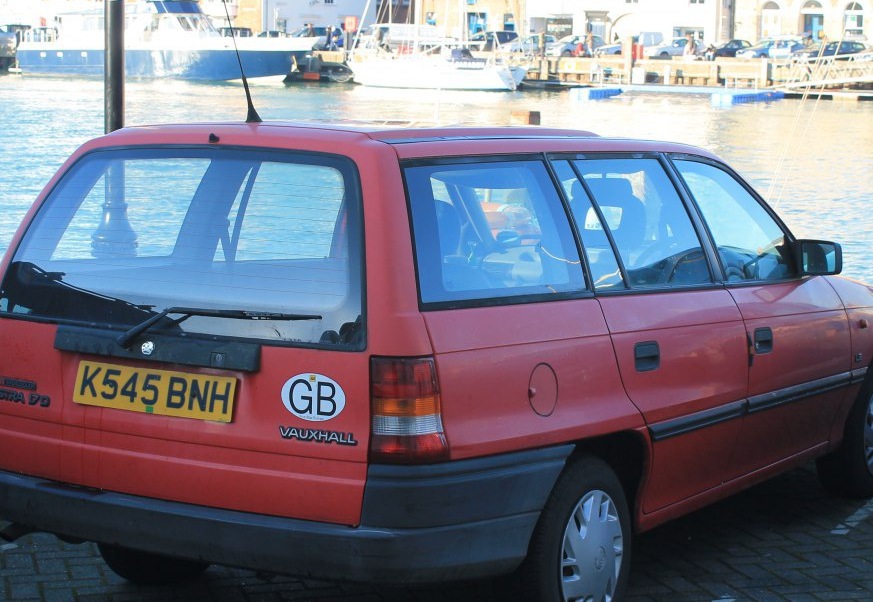
The Vauxhall Astra Mk III Estate 1.4i, producing 82 horsepower, was a mainstay of the British family car market from 1992 to 1998. Positioned as the entry-level engine option within the Mk III Estate range, it offered a practical and affordable solution for buyers prioritizing economy and space over outright performance. This variant was built on the GM T platform, also known internally as the 1HX0, and shared many components with the Opel Astra F, reflecting Vauxhall’s close ties with its German sister brand. The estate body style, or station wagon as it’s known in the US, was particularly popular in the UK and Europe, catering to families and those requiring substantial cargo capacity.
Technical Specifications
| Brand | Vauxhall |
| Model | Astra |
| Generation | Astra Mk III Estate |
| Type (Engine) | 1.4i (82 Hp) |
| Start of production | 1992 |
| End of production | 1998 |
| Powertrain Architecture | Internal Combustion engine |
| Body type | Station wagon (estate) |
| Seats | 5 |
| Doors | 5 |
| Fuel consumption (urban) | 9.7 l/100 km (24.2 US mpg, 29.1 UK mpg, 10.3 km/l) |
| Fuel consumption (combined) | 7.4 l/100 km (31.8 US mpg, 38.2 UK mpg, 13.5 km/l) |
| CO2 emissions | 176 g/km |
| Fuel Type | Petrol (Gasoline) |
| Acceleration 0 – 100 km/h | 13 sec |
| Acceleration 0 – 62 mph | 13 sec |
| Acceleration 0 – 60 mph | 12.4 sec |
| Maximum speed | 175 km/h (108.74 mph) |
| Power | 82 Hp @ 6800 rpm |
| Power per litre | 59 Hp/l |
| Torque | 113 Nm @ 3400 rpm (83.34 lb.-ft. @ 3400 rpm) |
| Engine layout | Front, Transverse |
| Engine Model/Code | C14SE |
| Engine displacement | 1389 cm3 (84.76 cu. in.) |
| Number of cylinders | 4 |
| Engine configuration | Inline |
| Number of valves per cylinder | 2 |
| Fuel injection system | Multi-port manifold injection |
| Engine aspiration | Naturally aspirated engine |
| Engine oil capacity | 3.5 l (3.7 US qt, 3.08 UK qt) |
| Coolant capacity | 5.8 l (6.13 US qt, 5.1 UK qt) |
| Max. weight | 1475 kg (3251.82 lbs) |
| Trunk (boot) space – minimum | 500 l (17.66 cu. ft.) |
| Fuel tank capacity | 50 l (13.21 US gal, 11 UK gal) |
| Length | 4280 mm (168.5 in) |
| Width | 1688 mm (66.46 in) |
| Height | 1481 mm (58.31 in) |
| Wheelbase | 2520 mm (99.21 in) |
| Drivetrain Architecture | Front wheel drive, Internal Combustion Engine |
| Number of gears and type of gearbox | 5 gears, manual transmission |
| Front brakes | Ventilated discs |
| Rear brakes | Drum |
| Tires size | 185/60 R14 |
| Wheel rims size | 14 |
Powertrain & Engine Architecture
The heart of the Astra Mk III Estate 1.4i was the C14SE engine, a 1.4-liter inline-four cylinder petrol engine. This engine featured a cast iron block and an aluminum cylinder head, employing a relatively simple two-valve per cylinder configuration. Fuel delivery was handled by a multi-port fuel injection system, a significant improvement over the carburetors found in older Vauxhall models. The C14SE produced 82 horsepower at 6800 rpm and 113 Nm (83.34 lb-ft) of torque at 3400 rpm. The engine’s design prioritized fuel efficiency and reliability over outright performance. The standard transmission was a five-speed manual gearbox, although a four-speed automatic transmission was also available, albeit less common. The automatic gearbox, while offering convenience, did noticeably impact acceleration and fuel economy.
Driving Characteristics
The 1.4i engine, paired with the manual transmission, provided adequate, but not exhilarating, performance. Acceleration to 60 mph took around 12.4 seconds, and top speed was approximately 108.74 mph. The engine felt somewhat strained when fully loaded or tackling steep inclines. The automatic transmission further diminished performance, adding a couple of seconds to the 0-60 mph time. Gear ratios were geared towards economy, with taller gearing in higher gears to reduce engine speed at cruising speeds. Handling was typical for a front-wheel-drive estate car of the era – safe and predictable, but not particularly sporty. The suspension was tuned for comfort, absorbing bumps reasonably well, but body roll was noticeable in corners.
Equipment & Trim Levels
The 1.4i Estate typically represented the base trim level. Standard equipment included central locking, power steering, and an adjustable steering column. Interior upholstery was typically cloth, and the dashboard featured a simple, functional design. Optional extras included electric windows, a sunroof, and an upgraded stereo system. Higher trim levels, such as the LS and GLS, added features like alloy wheels, upgraded interior trim, and more sophisticated audio systems. The 1.4i was often seen as a practical choice for families and those on a budget, prioritizing functionality over luxury.
Chassis & Braking
The Astra Mk III Estate utilized a MacPherson strut front suspension and a torsion beam rear suspension. Front brakes were ventilated discs, providing adequate stopping power, while rear brakes were drums. This configuration was common for vehicles in this weight class during the 1990s. Stabilizer bars were fitted to both the front and rear axles, helping to reduce body roll. The chassis was relatively lightweight, contributing to the car’s fuel efficiency. Tire size was typically 185/60 R14, providing a good balance between comfort and handling.
Market Reception & Comparison
The Astra Mk III Estate 1.4i was generally well-received as a practical and affordable family car. Critics praised its spacious interior, large boot capacity, and reasonable fuel economy. However, the 1.4i engine was often criticized for its lack of power, particularly when compared to the more potent 1.6-liter and 2.0-liter engine options available in the Astra range. The 1.6-liter offered a noticeable performance improvement, while the 2.0-liter provided significantly more power but at the cost of increased fuel consumption. The 1.9 TDI diesel variant was also popular, offering excellent fuel economy and strong low-end torque, but with a higher purchase price. Compared to rivals like the Ford Escort Estate and the Peugeot 305 Estate, the Astra offered a competitive package in terms of space, practicality, and value for money.
Legacy
The C14SE engine, while not known for its performance, proved to be a relatively reliable unit. With regular maintenance, these engines can cover high mileages. Common issues include oil leaks and occasional problems with the cooling system. Today, the Astra Mk III Estate 1.4i is a relatively affordable classic car, appealing to those seeking a practical and nostalgic vehicle. Parts availability is generally good, and the car’s simple mechanical design makes it relatively easy to maintain. While not a collector’s item, it remains a popular choice for everyday transport and a reminder of a bygone era of British motoring. The automatic transmission versions, while less desirable to enthusiasts, offer a comfortable and convenient driving experience for those prioritizing ease of use.