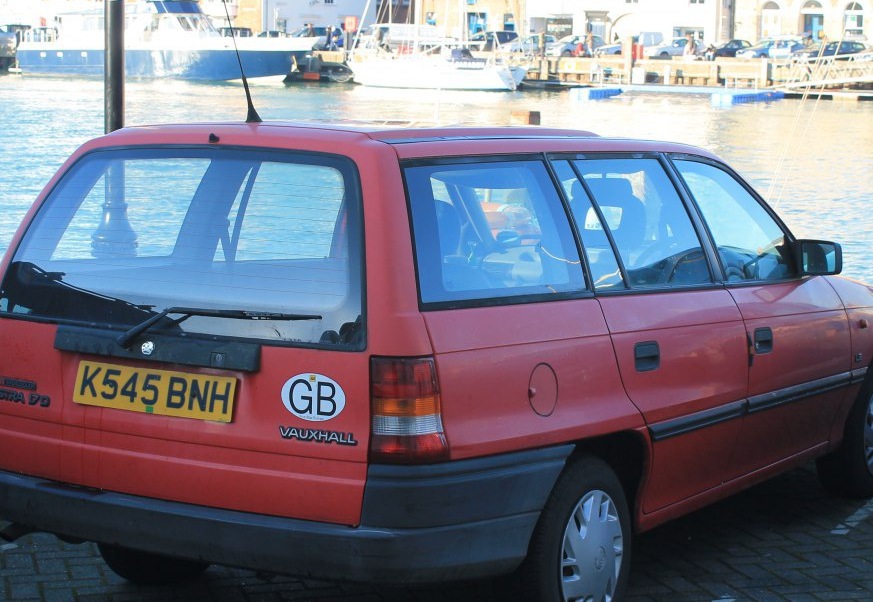
The Vauxhall Astra Mk III Estate 1.6i Eco Automatic, produced between 1991 and 1996, represented an entry-level offering within the broader Mk III Astra Estate range. Positioned as a practical and economical family vehicle, it catered to buyers prioritizing fuel efficiency and affordability over outright performance. This variant utilized a 1.6-liter naturally aspirated engine paired with a four-speed automatic transmission, making it a popular choice for those seeking ease of driving. The Mk III Astra Estate, built on the GM T platform (internally known as the 1HX0), was a significant update to the Astra line, offering increased space and practicality compared to its hatchback counterpart.
Technical Specifications
| Brand | Vauxhall |
| Model | Astra |
| Generation | Astra Mk III Estate |
| Type (Engine) | 1.6i Eco (71 Hp) Automatic |
| Start of production | 1991 |
| End of production | 1996 |
| Powertrain Architecture | Internal Combustion engine |
| Body type | Station wagon (estate) |
| Seats | 5 |
| Doors | 5 |
| Fuel consumption (combined) | 7.6 l/100 km |
| Fuel consumption (US mpg) | 30.9 US mpg |
| Fuel consumption (UK mpg) | 37.2 UK mpg |
| Fuel consumption (km/l) | 13.2 km/l |
| Fuel Type | Petrol (Gasoline) |
| Acceleration 0 – 100 km/h | 17 sec |
| Acceleration 0 – 62 mph | 17 sec |
| Acceleration 0 – 60 mph | 16.2 sec |
| Maximum speed | 163 km/h (101.28 mph) |
| Weight-to-power ratio | 14.4 kg/Hp |
| Weight-to-torque ratio | 8 kg/Nm |
| Power | 71 Hp @ 5000 rpm |
| Power per litre | 44.4 Hp/l |
| Torque | 128 Nm @ 2800 rpm (94.41 lb.-ft. @ 2800 rpm) |
| Engine layout | Front, Transverse |
| Engine Model/Code | X16SZ |
| Engine displacement | 1598 cm3 (97.52 cu. in.) |
| Number of cylinders | 4 |
| Engine configuration | Inline |
| Number of valves per cylinder | 2 |
| Fuel injection system | Single-point injection |
| Engine aspiration | Naturally aspirated |
| Engine oil capacity | 3.5 l (3.7 US qt | 3.08 UK qt) |
| Coolant capacity | 5.6 l (5.92 US qt | 4.93 UK qt) |
| Kerb Weight | 1020 kg (2248.72 lbs) |
| Max. weight | 1495 kg (3295.91 lbs) |
| Max load | 475 kg (1047.2 lbs) |
| Trunk (boot) space – minimum | 500 l (17.66 cu. ft.) |
| Fuel tank capacity | 50 l (13.21 US gal | 11 UK gal) |
| Length | 4280 mm (168.5 in) |
| Width | 1688 mm (66.46 in) |
| Height | 1481 mm (58.31 in) |
| Wheelbase | 2520 mm (99.21 in) |
| Drivetrain Architecture | Front wheel drive |
| Number of gears and type of gearbox | 4 gears, automatic transmission |
| Front brakes | Ventilated discs |
| Rear brakes | Drum |
| Tires size | 175/70 R13 |
| Wheel rims size | 13 |
Powertrain & Engine Architecture
The heart of the Astra Mk III Estate 1.6i Eco Automatic is the X16SZ engine, a 1.6-liter inline-four cylinder unit. This engine featured a single overhead camshaft (SOHC) design with two valves per cylinder. The X16SZ utilized a single-point fuel injection system (throttle body injection), which was a cost-effective solution common in entry-level vehicles of the era. While not as sophisticated as multi-point injection, it provided adequate fuel delivery for the engine’s modest power output. The engine’s relatively low compression ratio and conservative tuning prioritized fuel economy and reliability over performance. The four-speed automatic transmission, a GM-sourced unit, was chosen for its simplicity and ease of use. It featured a traditional torque converter and planetary gearsets. The transmission’s gear ratios were optimized for comfortable cruising and acceptable acceleration, though it wasn’t designed for sporty driving.
Driving Characteristics
The 1.6i Eco Automatic offered a relaxed and undemanding driving experience. With only 71 horsepower, acceleration was leisurely, taking approximately 17 seconds to reach 62 mph. The automatic transmission contributed to this relaxed feel, providing smooth, if somewhat slow, gear changes. The engine’s torque peak of 128 Nm (94.41 lb-ft) at 2800 rpm provided sufficient power for everyday driving situations, but overtaking maneuvers required careful planning. Compared to the more powerful 1.8 and 2.0-liter versions of the Astra, or even the diesel variants, the 1.6i Eco Automatic felt noticeably slower. However, its fuel economy was a significant advantage, making it a practical choice for drivers covering long distances.
Equipment & Trim Levels
The 1.6i Eco Automatic trim level typically included basic features such as central locking, power steering, and an adjustable steering column. Interior upholstery was usually cloth, and the dashboard featured a simple, functional design. Optional extras included electric front windows, a sunroof, and upgraded audio systems. The trim level was designed to be affordable, so many examples were equipped with minimal options. The focus was on providing a comfortable and practical vehicle at a competitive price point.
Chassis & Braking
The Astra Mk III Estate featured independent suspension at the front, utilizing MacPherson struts and a stabilizer bar. The rear suspension employed a torsion beam setup, which was a cost-effective solution for maintaining ride comfort and handling stability. Braking duties were handled by ventilated discs at the front and drum brakes at the rear. While adequate for normal driving conditions, the braking system lacked the stopping power of more advanced setups found on higher-spec Astra models. The relatively light weight of the 1.6i Eco Automatic helped to mitigate the limitations of the braking system.
Market Reception & Comparison
The Astra Mk III Estate 1.6i Eco Automatic was generally well-received as a practical and affordable family vehicle. Critics praised its fuel efficiency and comfortable ride, but noted its lack of performance. Compared to the 1.8 and 2.0-liter versions, the 1.6i Eco Automatic offered significantly lower running costs but at the expense of driving enjoyment. The diesel variants, while offering even better fuel economy, were often criticized for their noise and vibration. The 1.6i Eco Automatic struck a balance between affordability, practicality, and comfort, making it a popular choice for budget-conscious buyers.
Legacy
The X16SZ engine and the associated four-speed automatic transmission proved to be relatively reliable powertrains. While not known for their longevity in the same way as some of the more robust engines of the era, they were generally durable and relatively easy to maintain. Today, the Astra Mk III Estate 1.6i Eco Automatic is a relatively affordable classic car, appealing to those seeking a practical and nostalgic vehicle. Parts availability is generally good, and the simple mechanical design makes it accessible to home mechanics. However, potential buyers should be aware of common issues such as corrosion and wear and tear on suspension components. The 1.6i Eco Automatic remains a testament to the enduring appeal of a simple, honest, and economical family estate car.