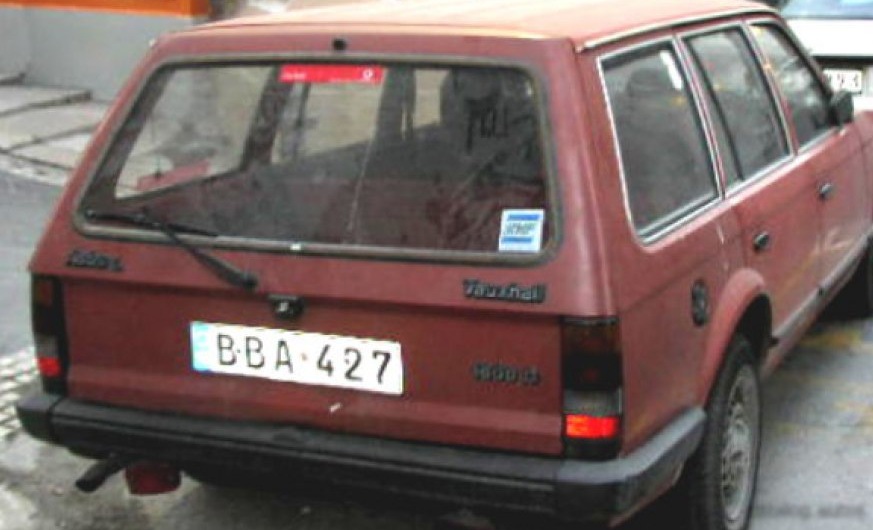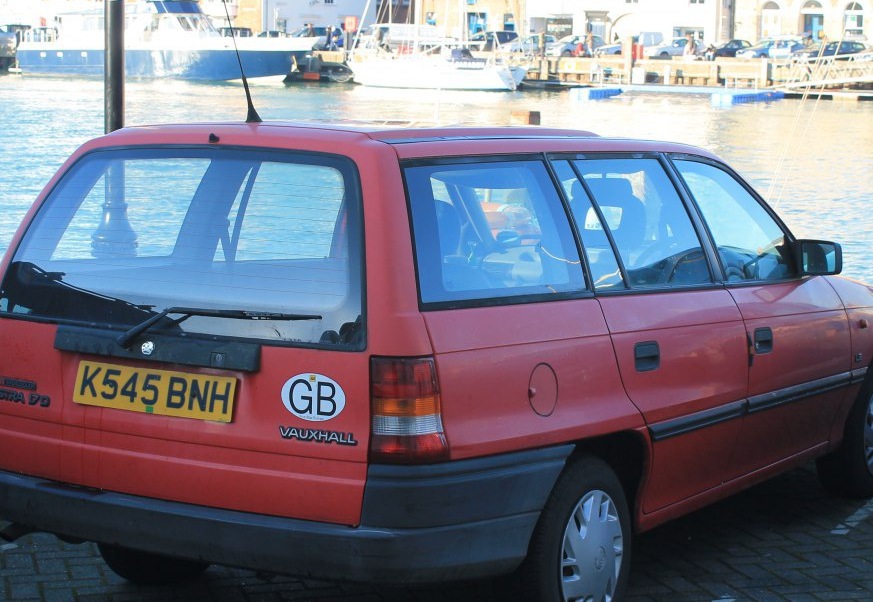
The Vauxhall Astra Mk III Estate 1.7 D, produced between 1991 and 1994, represented a practical and economical offering within the broader Astra Mk III (G) range. Positioned as the entry-level diesel variant of the estate body style, it catered to buyers prioritizing fuel efficiency and load-carrying capacity over outright performance. This model, built on the GM T platform, was a key part of Vauxhall’s lineup during a period of increasing demand for family-friendly, versatile vehicles in the United Kingdom and Europe. The 1.7 D engine, while modest in power, provided a durable and reliable powerplant for those needing a workhorse vehicle.
Technical Specifications
| Brand | Vauxhall |
| Model | Astra |
| Generation | Astra Mk III Estate |
| Type (Engine) | 1.7 D (60 Hp) |
| Start of production | 1991 |
| End of production | 1994 |
| Powertrain Architecture | Internal Combustion engine |
| Body type | Station wagon (estate) |
| Seats | 5 |
| Doors | 5 |
| Fuel consumption (urban) | 6.7 l/100 km (35.1 US mpg, 42.2 UK mpg, 14.9 km/l) |
| Fuel consumption (extra urban) | 4.2 l/100 km (56 US mpg, 67.3 UK mpg, 23.8 km/l) |
| Fuel consumption (combined) | 5.6 l/100 km (42 US mpg, 50.4 UK mpg, 17.9 km/l) |
| Fuel Type | Diesel |
| Acceleration 0 – 100 km/h | 18.5 sec |
| Acceleration 0 – 62 mph | 18.5 sec |
| Acceleration 0 – 60 mph | 17.6 sec |
| Maximum speed | 153 km/h (95.07 mph) |
| Weight-to-power ratio | 18.3 kg/Hp, 54.8 Hp/tonne |
| Weight-to-torque ratio | 10.4 kg/Nm, 95.9 Nm/tonne |
| Power | 60 Hp @ 4600 rpm |
| Power per litre | 35.3 Hp/l |
| Torque | 105 Nm @ 2400 rpm (77.44 lb.-ft. @ 2400 rpm) |
| Engine layout | Front, Transverse |
| Engine Model/Code | 17DR |
| Engine displacement | 1700 cm3 (103.74 cu. in.) |
| Number of cylinders | 4 |
| Engine configuration | Inline |
| Number of valves per cylinder | 2 |
| Engine aspiration | Naturally aspirated |
| Engine oil capacity | 5 l (5.28 US qt | 4.4 UK qt) |
| Coolant capacity | 7.8 l (8.24 US qt | 6.86 UK qt) |
| Kerb Weight | 1095 kg (2414.06 lbs) |
| Max. weight | 1580 kg (3483.3 lbs) |
| Max load | 485 kg (1069.24 lbs) |
| Trunk (boot) space – minimum | 500 l (17.66 cu. ft.) |
| Fuel tank capacity | 50 l (13.21 US gal | 11 UK gal) |
| Length | 4280 mm (168.5 in) |
| Width | 1688 mm (66.46 in) |
| Height | 1481 mm (58.31 in) |
| Wheelbase | 2520 mm (99.21 in) |
| Drivetrain Architecture | Front wheel drive |
| Number of gears | 5 gears, manual transmission |
| Front brakes | Ventilated discs |
| Rear brakes | Drum |
| Tires size | 175/70 R13 |
| Wheel rims size | 13 |
Powertrain & Engine Architecture
The heart of the Astra Mk III Estate 1.7 D was the 17DR engine, a naturally aspirated, indirect injection diesel engine. This engine, a mainstay of Vauxhall/Opel’s diesel offerings during the period, was known for its robustness, if not its refinement. The indirect injection system, utilizing a pre-chamber, contributed to quieter operation compared to direct injection diesels of the time, but at the cost of some efficiency. The engine featured a two-valve per cylinder configuration and a relatively low compression ratio for a diesel, contributing to its durability. The five-speed manual transmission was the only gearbox option available with this engine, geared for maximizing fuel economy rather than providing spirited acceleration. The transmission’s ratios were relatively long, emphasizing cruising efficiency over quick responses.
Driving Characteristics
The 1.7 D-powered Astra Estate was not a performance-oriented vehicle. Acceleration was leisurely, with 0-60 mph taking around 17.6 seconds. The engine’s 105 Nm (77.44 lb-ft) of torque, while sufficient for everyday driving, required frequent gear changes to maintain momentum, especially when laden with passengers or cargo. The long gearing, while aiding fuel economy, meant the engine often felt strained when climbing hills or overtaking. Compared to the petrol-powered Astra Estates, or even the later 1.7 TDI diesel, the 1.7 D felt significantly underpowered. However, the engine’s linear power delivery and the robust transmission made it a dependable and predictable vehicle to drive.
Equipment & Trim Levels
The 1.7 D Estate typically represented the base trim level within the Astra Estate range. Standard equipment was relatively sparse, focusing on practicality. Features generally included basic cloth upholstery, a simple dashboard layout, and manual windows and door locks. Central locking and power steering were often optional extras. The interior was designed for durability and ease of cleaning, reflecting the vehicle’s intended role as a workhorse. Optional extras could include a radio/cassette player, upgraded seat fabrics, and occasionally, a sunroof.
Chassis & Braking
The Astra Mk III Estate utilized a MacPherson strut front suspension and a torsion beam rear suspension. The suspension setup was tuned for comfort and stability, prioritizing ride quality over sporty handling. Braking was provided by ventilated discs on the front wheels and drum brakes on the rear. The braking system was adequate for the vehicle’s weight and performance, but lacked the stopping power of higher-spec Astra models equipped with rear disc brakes. Stabilizer bars were typically fitted to both the front and rear axles, helping to reduce body roll during cornering.
Market Reception & Comparison
The Astra Mk III Estate 1.7 D was generally well-received as a practical and economical vehicle. Critics praised its fuel efficiency and spacious cargo area, but noted its lack of performance. Compared to the petrol-engined Astra Estates, the 1.7 D offered significantly better fuel economy, but at the expense of acceleration and refinement. The later introduction of the 1.7 TDI diesel engine offered a more refined and powerful alternative, but also came at a higher price point. The 1.7 D appealed to buyers who prioritized low running costs and reliability over driving excitement.
Legacy
The 1.7 D engine, while not known for its technological sophistication, proved to be remarkably durable. Many examples of the Astra Mk III Estate 1.7 D remain on the road today, testament to the engine’s inherent reliability. In the used car market, these vehicles are often sought after by those looking for a simple, affordable, and dependable estate car. Maintenance is generally straightforward, and parts availability remains reasonable. However, potential buyers should be aware of the engine’s age and the possibility of wear and tear on components such as the fuel injection pump and glow plugs. The Astra Mk III Estate 1.7 D represents a bygone era of practical, no-frills motoring.