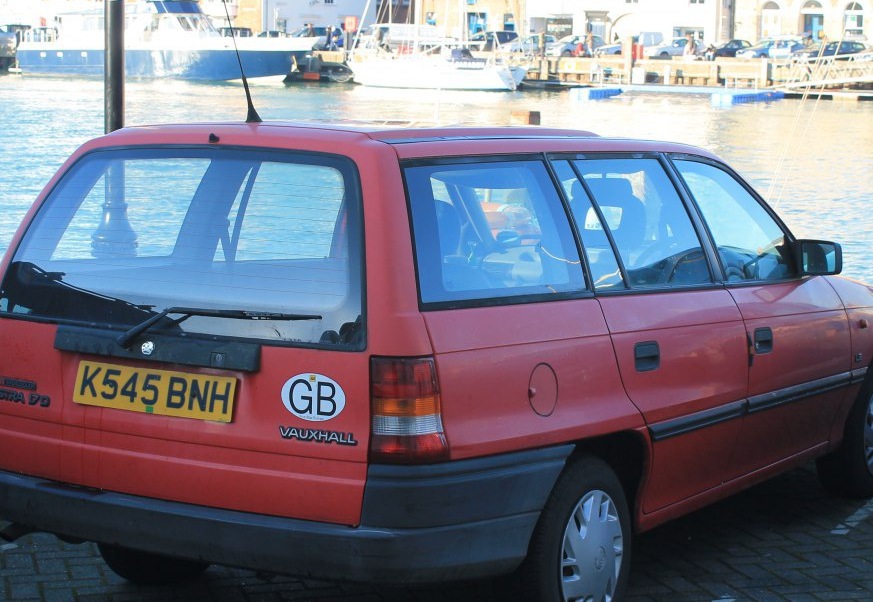
The Vauxhall Astra Mk III Estate 1.8i 16V, produced between 1994 and 1998, represented a significant offering in the British family car market. Part of the G platform (internally designated as the 1HX0 for the estate variant), this model combined the practicality of a station wagon with a relatively potent 1.8-liter 16-valve engine. Positioned as a mid-range trim within the Mk III Estate lineup, it aimed to provide a balance between performance, fuel economy, and affordability, appealing to families and individuals needing versatile transportation. It was a key part of Vauxhall’s strategy to compete with rivals like the Ford Mondeo Estate and the Rover 75 Estate.
Technical Specifications
| Brand | Vauxhall |
| Model | Astra |
| Generation | Astra Mk III Estate |
| Type (Engine) | 1.8i 16V (115 Hp) |
| Start of production | 1994 |
| End of production | 1998 |
| Powertrain Architecture | Internal Combustion engine |
| Body type | Station wagon (estate) |
| Seats | 5 |
| Doors | 5 |
| Fuel consumption (urban) | 12.2 l/100 km (19.3 US mpg, 23.2 UK mpg, 8.2 km/l) |
| Fuel consumption (extra urban) | 6.3 l/100 km (37.3 US mpg, 44.8 UK mpg, 15.9 km/l) |
| Fuel consumption (combined) | 8.5 l/100 km (27.7 US mpg, 33.2 UK mpg, 11.8 km/l) |
| CO2 emissions | 202 g/km |
| Fuel Type | Petrol (Gasoline) |
| Acceleration 0 – 100 km/h | 10 sec |
| Acceleration 0 – 62 mph | 10 sec |
| Acceleration 0 – 60 mph | 9.5 sec |
| Maximum speed | 195 km/h (121.17 mph) |
| Weight-to-power ratio | 9.8 kg/Hp, 102.2 Hp/tonne |
| Weight-to-torque ratio | 6.7 kg/Nm, 149.3 Nm/tonne |
| Power | 115 Hp @ 5400 rpm |
| Power per litre | 63.9 Hp/l |
| Torque | 168 Nm @ 4800 rpm (123.91 lb.-ft. @ 4800 rpm) |
| Engine layout | Front, Transverse |
| Engine Model/Code | C18XEL |
| Engine displacement | 1799 cm3 (109.78 cu. in.) |
| Number of cylinders | 4 |
| Engine configuration | Inline |
| Fuel injection system | Multi-port manifold injection |
| Engine aspiration | Naturally aspirated engine |
| Engine oil capacity | 4 l (4.23 US qt | 3.52 UK qt) |
| Coolant capacity | 7 l (7.4 US qt | 6.16 UK qt) |
| Kerb Weight | 1125 kg (2480.2 lbs) |
| Max. weight | 1625 kg (3582.51 lbs) |
| Max load | 500 kg (1102.31 lbs) |
| Trunk (boot) space – minimum | 501 l (17.69 cu. ft) |
| Fuel tank capacity | 50 l (13.21 US gal | 11 UK gal) |
| Length | 4280 mm (168.5 in) |
| Width | 1689 mm (66.5 in) |
| Height | 1481 mm (58.31 in) |
| Wheelbase | 2520 mm (99.21 in) |
| Front track | 1420 mm (55.91 in) |
| Rear track | 1420 mm (55.91 in) |
| Ride height (ground clearance) | 140 mm (5.51 in) |
| Drag coefficient (Cd) | 0.31 |
| Drivetrain Architecture | The Internal combustion engine (ICE) drives the front wheels of the vehicle. |
| Drive wheel | Front wheel drive |
| Number of gears and type of gearbox | 5 gears, manual transmission |
| Front brakes | Ventilated discs |
| Rear brakes | Disc |
| Tires size | 175/65 R14 |
| Wheel rims size | 14 |
Powertrain & Engine Architecture
The heart of the Astra Mk III Estate 1.8i 16V was the C18XEL engine, a 1.8-liter inline-four cylinder powerplant. This engine was a mainstay of Vauxhall/Opel’s offerings during the 1990s. The ‘XEL’ designation indicated a multi-point fuel injection system, crucial for meeting increasingly stringent emissions standards. The 16-valve cylinder head, featuring dual overhead camshafts, allowed for improved breathing and higher engine speeds compared to earlier 8-valve designs. The engine produced 115 horsepower at 5400 rpm and 168 Nm (124 lb-ft) of torque at 4800 rpm. The engine’s relatively high compression ratio (around 9.5:1) contributed to its responsiveness. The standard transmission was a five-speed manual gearbox, providing a good balance between performance and fuel efficiency. While an automatic transmission was available, it was less common and often resulted in a slight performance decrease.
Driving Characteristics
The 1.8i 16V Estate offered a noticeable step up in performance compared to the lower-spec 1.4 and 1.6-liter versions. Acceleration to 60 mph took around 9.5 seconds, making it reasonably quick for its time and class. The five-speed manual transmission allowed drivers to keep the engine in its optimal power band, providing good in-gear acceleration for overtaking. The estate body style did add weight compared to the hatchback, but the extra power helped mitigate this. Compared to the more powerful (and often more expensive) GSi models, the 1.8i 16V offered a more relaxed driving experience, prioritizing comfort and practicality over outright performance. The steering was light and precise, making it easy to maneuver in urban environments, while the suspension provided a comfortable ride on most road surfaces.
Equipment & Trim Levels
The 1.8i 16V Estate typically came equipped with features such as central locking, power steering, and an adjustable steering column. Interior trim generally consisted of cloth upholstery, although higher-spec versions could be found with partial leather trim. Optional extras included an electric sunroof, alloy wheels, and a stereo system. The dashboard layout was functional and straightforward, with clearly labeled controls. Air conditioning was often an optional extra, and its presence significantly increased the car’s appeal, particularly during warmer months. Safety features were relatively basic by modern standards, typically including a driver’s airbag and seatbelts.
Chassis & Braking
The Astra Mk III Estate utilized a MacPherson strut front suspension and a torsion beam rear suspension. This setup provided a good compromise between ride comfort and handling. The front brakes were ventilated discs, offering good stopping power, while the rear brakes were typically solid discs. The 175/65 R14 tires provided adequate grip in most conditions. Stabilizer bars were fitted to both the front and rear axles, helping to reduce body roll during cornering. The chassis was relatively lightweight, contributing to the car’s overall agility.
Market Reception & Comparison
The Astra Mk III Estate 1.8i 16V was generally well-received by automotive critics. It was praised for its spacious interior, practical estate body style, and relatively strong performance. Fuel economy was considered reasonable for a car of its size and engine capacity, averaging around 33 mpg on a combined cycle. Compared to the 1.4 and 1.6-liter versions, the 1.8i 16V offered a noticeable improvement in performance, making it a more enjoyable car to drive. However, it was more expensive to purchase and insure. Compared to rivals like the Ford Mondeo Estate, the Astra offered a slightly more compact size and a more nimble driving experience.
Legacy
The C18XEL engine proved to be a reliable unit, and many Astra Mk III Estates with this engine are still on the road today. While not without its quirks (such as potential for coolant leaks and occasional sensor failures), the engine is generally considered to be relatively easy to maintain. The Astra Mk III Estate 1.8i 16V remains a popular choice among classic car enthusiasts and those seeking an affordable and practical family vehicle. Its combination of practicality, performance, and affordability has ensured its enduring appeal in the used car market.