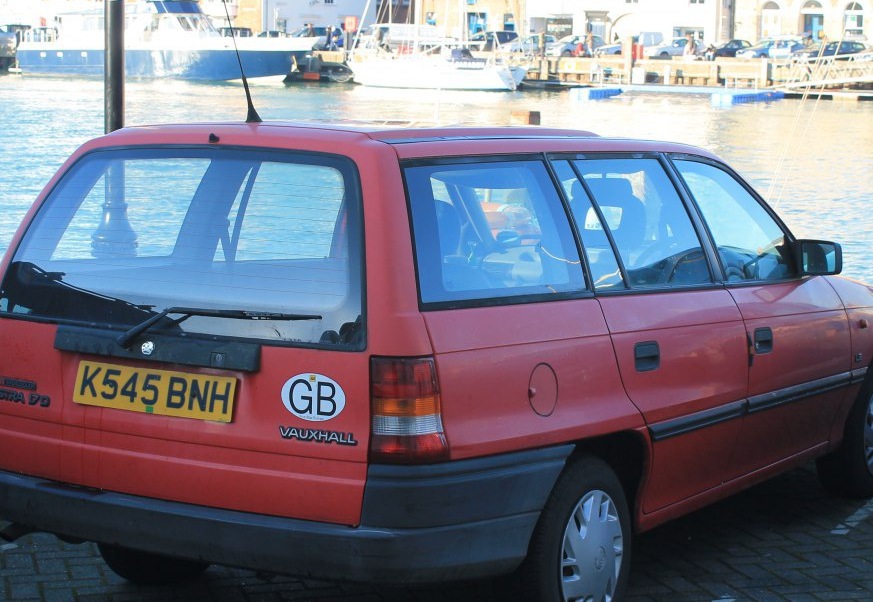
The Vauxhall Astra Mk III Estate 1.8i (90 hp) Automatic, produced between 1996 and 1998, represented a practical and affordable option within the broader Astra Mk III range. Part of the G platform family (internally designated as 1HX0 for the estate), this variant aimed to provide comfortable, family-oriented transportation with the convenience of an automatic transmission. It occupied a mid-range position in the estate lineup, slotting below the more powerful 2.0L 16V models and above the base 1.4L and 1.6L offerings. The Mk III Astra Estate, and this trim specifically, was primarily marketed towards families and individuals needing a versatile vehicle for both everyday commuting and load-carrying duties within the United Kingdom and broader European markets.
Technical Specifications
| Brand | Vauxhall |
| Model | Astra |
| Generation | Astra Mk III Estate |
| Type (Engine) | 1.8i (90 Hp) Automatic |
| Start of production | 1996 |
| End of production | 1998 |
| Powertrain Architecture | Internal Combustion engine |
| Body type | Station wagon (estate) |
| Seats | 5 |
| Doors | 5 |
| Fuel consumption (combined) | 8.2 l/100 km |
| Fuel consumption (US mpg) | 28.7 US mpg |
| Fuel consumption (UK mpg) | 34.4 UK mpg |
| Fuel consumption (km/l) | 12.2 km/l |
| Fuel Type | Petrol (Gasoline) |
| Acceleration 0 – 100 km/h | 14.5 sec |
| Acceleration 0 – 62 mph | 14.5 sec |
| Acceleration 0 – 60 mph | 13.8 sec |
| Maximum speed | 175 km/h (108.74 mph) |
| Weight-to-power ratio | 11.8 kg/Hp |
| Weight-to-torque ratio | 7.3 kg/Nm |
| Power | 90 Hp @ 5400 rpm |
| Power per litre | 50.1 Hp/l |
| Torque | 145 Nm @ 3000 rpm (106.95 lb.-ft. @ 3000 rpm) |
| Engine layout | Front, Transverse |
| Engine Model/Code | C18NZ |
| Engine displacement | 1796 cm3 (109.6 cu. in.) |
| Number of cylinders | 4 |
| Engine configuration | Inline |
| Fuel injection system | Single-point injection |
| Engine aspiration | Naturally aspirated engine |
| Engine oil capacity | 4 l (4.23 US qt | 3.52 UK qt) |
| Coolant capacity | 6.9 l (7.29 US qt | 6.07 UK qt) |
| Kerb Weight | 1060 kg (2336.9 lbs) |
| Max. weight | 1580 kg (3483.3 lbs) |
| Max load | 520 kg (1146.4 lbs) |
| Trunk (boot) space – minimum | 500 l (17.66 cu. ft.) |
| Fuel tank capacity | 50 l (13.21 US gal | 11 UK gal) |
| Length | 4280 mm (168.5 in) |
| Width | 1688 mm (66.46 in) |
| Height | 1481 mm (58.31 in) |
| Wheelbase | 2520 mm (99.21 in) |
| Drivetrain Architecture | Internal Combustion engine (ICE) drives front wheels |
| Drive wheel | Front wheel drive |
| Number of gears and type of gearbox | 4 gears, automatic transmission |
| Front brakes | Ventilated discs |
| Rear brakes | Drum |
| Tires size | 175/65 R14 |
| Wheel rims size | 14 |
Powertrain & Engine Architecture
The heart of the Astra Mk III Estate 1.8i Automatic is the C18NZ engine, an 1.8-liter inline-four cylinder petrol engine. This engine utilizes a single-point fuel injection system (throttle body injection), a relatively simple and cost-effective technology for the time. The C18NZ is known for its durability, but its single-point injection system is less efficient and delivers less precise fuel metering compared to multi-point injection systems found in some of its contemporaries. The engine features a two-valve per cylinder valvetrain, contributing to its straightforward mechanical design. The automatic transmission is a four-speed unit, providing smooth but not particularly rapid gear changes. This transmission was chosen to prioritize comfort and ease of driving over outright performance.
Driving Characteristics
The 1.8i Automatic variant offered a comfortable, if not exhilarating, driving experience. With 90 horsepower, acceleration was modest, taking around 14.5 seconds to reach 62 mph. The automatic transmission, while convenient, did sap some power from the engine, resulting in a noticeable difference in performance compared to the five-speed manual versions. Gear ratios were optimized for fuel economy and relaxed cruising rather than spirited driving. The car felt most at home on the highway, where its relaxed nature and automatic transmission made for effortless long-distance travel. Hill climbs and overtaking maneuvers required careful planning and often necessitated a full throttle response.
Equipment & Trim Levels
The 1.8i Automatic trim typically included features such as central locking, power steering, and an adjustable steering column. Interior upholstery was generally cloth, with a practical and durable finish. Dashboard configuration was fairly basic, focusing on functionality rather than luxury. Optional extras available for this trim included air conditioning, electric windows, and a sunroof. Higher-spec Astra Estates offered more luxurious interior appointments and additional features, but the 1.8i Automatic aimed for a balance between affordability and comfort.
Chassis & Braking
The Astra Mk III Estate featured a MacPherson strut front suspension and a torsion beam rear suspension. This setup provided a reasonable compromise between ride comfort and handling. The 1.8i Automatic variant typically used ventilated disc brakes on the front wheels and drum brakes on the rear. This configuration was adequate for the car’s weight and performance, but lacked the stopping power of fully disc-braked models. Stabilizer bars were fitted to both the front and rear axles, helping to reduce body roll during cornering.
Market Reception & Comparison
The Astra Mk III Estate 1.8i Automatic was generally well-received as a practical and affordable family car. Critics praised its spacious interior, comfortable ride, and reasonable fuel economy (around 28.7 US mpg). However, the automatic transmission and relatively low power output were often cited as drawbacks. Compared to the 2.0L 16V models, the 1.8i Automatic offered significantly less performance, but at a lower price point. The 1.9 TDI diesel variants provided superior fuel economy but lacked the refinement of the petrol engine. The 1.8i Automatic appealed to buyers who prioritized comfort and convenience over outright performance.
Legacy
The C18NZ engine, while not known for its high performance, proved to be a reliable and durable unit. The four-speed automatic transmission, though somewhat dated by modern standards, also demonstrated reasonable longevity. Today, the Astra Mk III Estate 1.8i Automatic is a relatively affordable classic car, appealing to enthusiasts seeking a practical and nostalgic vehicle. Parts availability is generally good, and maintenance costs are relatively low. However, potential buyers should be aware of the age-related issues common to vehicles of this era, such as corrosion and wear and tear on rubber components. The car represents a solid, if unspectacular, example of 1990s family motoring.