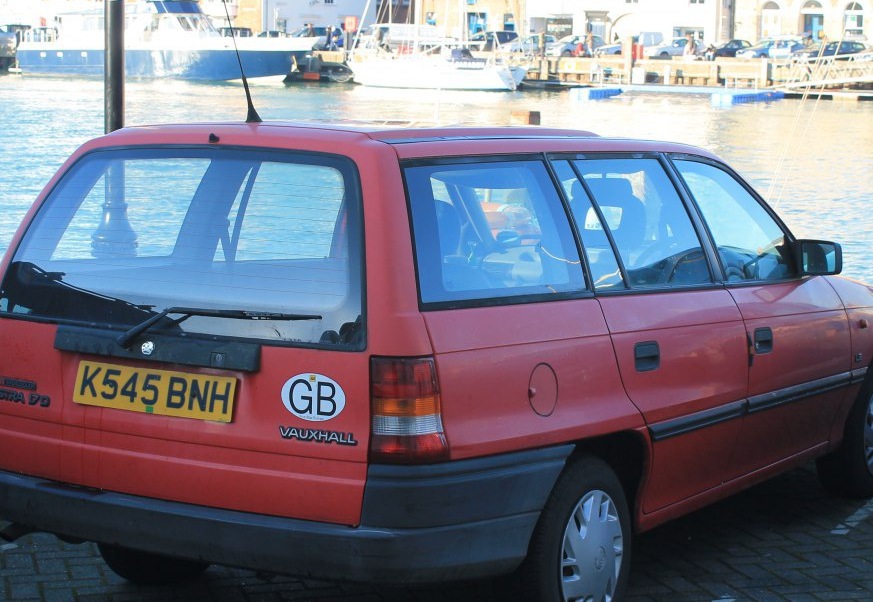
The Vauxhall Astra Mk III Estate 2.0i 16V, produced between 1994 and 1998, represented a performance-oriented variant within the third generation of the Astra range. Positioned as a practical yet engaging option, it combined the versatility of a station wagon body style with a relatively powerful 2.0-liter 16-valve engine. This model was part of the Mk III Astra (codenamed T98), which offered a significant step forward in terms of refinement and technology compared to its predecessor. The estate version, in particular, catered to buyers needing additional cargo space without sacrificing driving enjoyment.
Technical Specifications
| Brand | Vauxhall |
| Model | Astra |
| Generation | Astra Mk III Estate |
| Type (Engine) | 2.0i 16V (136 Hp) |
| Start of production | 1994 |
| End of production | 1998 |
| Powertrain Architecture | Internal Combustion engine |
| Body type | Station wagon (estate) |
| Seats | 5 |
| Doors | 5 |
| Fuel consumption (urban) | 12.1 l/100 km (19.4 US mpg) |
| Fuel consumption (extra urban) | 6.6 l/100 km (35.6 US mpg) |
| Fuel consumption (combined) | 8.6 l/100 km (27.4 US mpg) |
| CO2 emissions | 202 g/km |
| Fuel Type | Petrol (Gasoline) |
| Acceleration 0 – 100 km/h | 9 sec |
| Acceleration 0 – 62 mph | 9 sec |
| Acceleration 0 – 60 mph | 8.6 sec |
| Maximum speed | 207 km/h (128.62 mph) |
| Weight-to-power ratio | 8.2 kg/Hp |
| Weight-to-torque ratio | 6 kg/Nm |
| Power | 136 Hp @ 5600 rpm |
| Torque | 185 Nm @ 4000 rpm (136.45 lb.-ft. @ 4000 rpm) |
| Engine layout | Front, Transverse |
| Engine Model/Code | X20XEV |
| Engine displacement | 1998 cm3 (121.93 cu. in.) |
| Number of cylinders | 4 |
| Engine configuration | Inline |
| Fuel injection system | Multi-port manifold injection |
| Engine oil capacity | 4 l (4.23 US qt | 3.52 UK qt) |
| Coolant capacity | 6.7 l (7.08 US qt | 5.9 UK qt) |
| Kerb Weight | 1110 kg (2447.13 lbs) |
| Max. weight | 1595 kg (3516.37 lbs) |
| Max load | 485 kg (1069.24 lbs) |
| Trunk (boot) space – minimum | 500 l (17.66 cu. ft.) |
| Fuel tank capacity | 50 l (13.21 US gal | 11 UK gal) |
| Length | 4280 mm (168.5 in) |
| Width | 1688 mm (66.46 in) |
| Height | 1481 mm (58.31 in) |
| Wheelbase | 2520 mm (99.21 in) |
| Drivetrain Architecture | Front wheel drive |
| Number of gears | 5 gears, manual transmission |
| Front brakes | Ventilated discs |
| Rear brakes | Disc |
| Tires size | 195/55 R15 |
| Wheel rims size | 15 |
Powertrain & Engine Architecture
The heart of the Astra Mk III Estate 2.0i 16V was the X20XEV engine, a 1998cc inline-four cylinder unit. This engine was a key component of Vauxhall/Opel’s ‘Ecotec’ family, known for its focus on efficiency and refinement. The ‘16V’ designation indicated a dual overhead camshaft (DOHC) valvetrain, featuring four valves per cylinder. This configuration allowed for improved breathing and higher engine speeds. Fuel delivery was handled by a multi-port fuel injection system, providing precise fuel metering for optimal combustion. The X20XEV produced 136 horsepower at 5600 rpm and 185 Nm (136 lb-ft) of torque at 4000 rpm. The engine’s transverse mounting and front-wheel drive configuration were standard for this class of vehicle. The five-speed manual transmission was the standard offering, providing a direct connection between the engine and the front wheels.
Driving Characteristics
The 2.0i 16V offered a noticeable performance upgrade over the lower-spec Astra Estate models. Acceleration to 60 mph took approximately 8.6 seconds, and it could achieve a top speed of around 128 mph. While not a sports car, the 2.0-liter engine provided ample power for everyday driving and overtaking maneuvers. The five-speed manual transmission allowed drivers to keep the engine in its optimal power band. Compared to the 1.8-liter versions, the 2.0i 16V felt more responsive and capable, particularly when fully loaded. The gear ratios were well-matched for both urban and highway driving, offering a balance between acceleration and fuel economy. However, the suspension, while competent, was tuned more for comfort than outright handling, resulting in a slightly less engaging driving experience than some of its rivals.
Equipment & Trim Levels
The 2.0i 16V typically came with a reasonably well-equipped specification, reflecting its position as a higher-end trim level. Standard features often included central locking, electric front windows, power steering, and an adjustable steering column. Interior upholstery was typically cloth, with options for upgraded materials. Dashboard design was functional and straightforward, with clear instrumentation. Optional extras could include air conditioning, a sunroof, and upgraded audio systems. The estate body style itself added to the practicality, offering a generous 500-liter luggage capacity with the rear seats up.
Chassis & Braking
The Astra Mk III Estate utilized a MacPherson strut front suspension and a torsion beam rear suspension. This setup provided a good balance between ride comfort and handling. Braking was handled by ventilated discs on the front wheels and solid discs on the rear. The braking system was adequate for the vehicle’s weight and performance, but lacked the sophistication of more advanced systems found on some competitors. Stabilizer bars were fitted to both the front and rear axles to reduce body roll during cornering.
Market Reception & Comparison
The Astra Mk III Estate 2.0i 16V was generally well-received by automotive critics. It was praised for its spacious interior, comfortable ride, and relatively strong performance. However, some reviewers noted that the interior styling was somewhat dated compared to newer rivals. Compared to the 1.8-liter versions, the 2.0i 16V offered a significant performance boost, but at the cost of slightly higher fuel consumption. The 2.0i 16V also represented a more affordable alternative to the higher-performance Astra GSi models. Fuel economy averaged around 27.4 mpg combined, which was respectable for the time.
Legacy
The X20XEV engine proved to be a relatively reliable unit, and well-maintained examples of the Astra Mk III Estate 2.0i 16V can still be found on the used car market today. While not particularly collectible, these cars offer a practical and affordable option for those seeking a classic estate car with a decent level of performance. Common issues include oil leaks and wear on suspension components, but these are generally straightforward to address. The Astra Mk III Estate 2.0i 16V remains a testament to Vauxhall’s ability to produce well-rounded and dependable family cars.