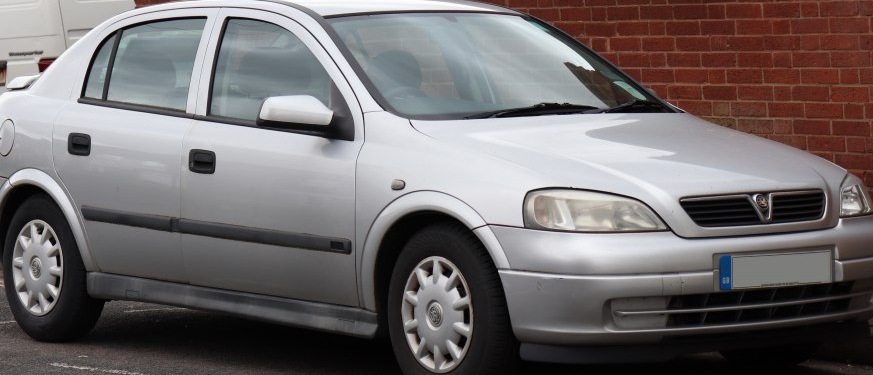
The Vauxhall Astra Mk IV 1.6 16V, produced between 1998 and 2004, represented a significant step forward for the Astra line, and for Vauxhall (Opel’s UK brand) in general. This generation, based on the GM240/H platform, aimed to offer a more refined and modern driving experience than its predecessor. The 1.6 16V variant occupied a crucial mid-range position in the Mk IV Astra lineup, appealing to buyers seeking a balance between affordability, fuel efficiency, and reasonable performance. It was a common sight on British roads, serving as a practical and reliable family car. This model was a key component in Vauxhall’s strategy to compete with established rivals like the Ford Focus and Volkswagen Golf.
Technical Specifications
| Brand | Vauxhall |
| Model | Astra |
| Generation | Astra Mk IV |
| Type (Engine) | 1.6 16V (100 Hp) |
| Start of production | 1998 |
| End of production | 2004 |
| Powertrain Architecture | Internal Combustion engine |
| Body type | Sedan |
| Seats | 5 |
| Doors | 4 |
| Fuel consumption (urban) | 10.1 l/100 km (23.3 US mpg / 28 UK mpg) |
| Fuel consumption (extra urban) | 6 l/100 km (39.2 US mpg / 47.1 UK mpg) |
| Fuel consumption (combined) | 7.5 l/100 km (31.4 US mpg / 37.7 UK mpg) |
| CO2 emissions | 180 g/km |
| Fuel Type | Petrol (Gasoline) |
| Acceleration 0 – 100 km/h | 11.5 sec |
| Acceleration 0 – 62 mph | 11.5 sec |
| Acceleration 0 – 60 mph | 10.9 sec |
| Maximum speed | 188 km/h (116.82 mph) |
| Weight-to-power ratio | 10.8 kg/Hp |
| Weight-to-torque ratio | 7.2 kg/Nm |
| Power | 100 Hp @ 6000 rpm |
| Torque | 150 Nm @ 3200 rpm (110.63 lb.-ft. @ 3200 rpm) |
| Engine layout | Front, Transverse |
| Engine Model/Code | X16XEL |
| Engine displacement | 1598 cm3 (97.52 cu. in.) |
| Number of cylinders | 4 |
| Engine configuration | Inline |
| Number of valves per cylinder | 4 |
| Fuel injection system | Multi-port manifold injection |
| Engine aspiration | Naturally aspirated |
| Engine oil capacity | 3.25 l (3.43 US qt / 2.86 UK qt) |
| Coolant capacity | 6.3 l (6.66 US qt / 5.54 UK qt) |
| Kerb Weight | 1075 kg (2369.97 lbs) |
| Max. weight | 1645 kg (3626.6 lbs) |
| Max load | 570 kg (1256.63 lbs) |
| Trunk (boot) space – minimum | 460 l (16.24 cu. ft.) |
| Fuel tank capacity | 52 l (13.74 US gal / 11.44 UK gal) |
| Length | 4252 mm (167.4 in) |
| Width | 1709 mm (67.28 in) |
| Width including mirrors | 1967 mm (77.44 in) |
| Height | 1425 mm (56.1 in) |
| Wheelbase | 2606 mm (102.6 in) |
| Ride height (ground clearance) | 160 mm (6.3 in) |
| Drag coefficient (Cd) | 0.29 |
| Minimum turning circle | 10 m (32.81 ft) |
| Drivetrain Architecture | Front wheel drive |
| Number of gears | 5 |
| Gearbox type | Manual transmission |
| Front brakes | Ventilated discs |
| Rear brakes | Drum |
| Tires size | 195/60 R15 |
| Wheel rims size | 15 |
Powertrain & Engine Architecture
The heart of the Astra 1.6 16V was the X16XEL engine, a 1.6-liter inline-four cylinder powerplant. This engine was a mainstay of Vauxhall/Opel’s range for many years, known for its relative simplicity and durability. The ‘16V’ designation refers to the four valves per cylinder, enhancing breathing and contributing to improved power output compared to older two-valve designs. The X16XEL utilized a multi-port fuel injection system, delivering fuel directly into the intake ports, optimizing combustion efficiency. The engine featured a single overhead camshaft (SOHC) design, keeping the engine relatively compact and lightweight. The five-speed manual transmission was the most common pairing, offering a good balance of performance and fuel economy. The engine produced 100 horsepower at 6000 rpm and 150 Nm (110 lb-ft) of torque at 3200 rpm.
Driving Characteristics
The 1.6 16V Astra offered a competent, if not particularly thrilling, driving experience. Acceleration from 0-60 mph took around 10.9 seconds, making it adequate for everyday driving but not a performance standout. The five-speed manual gearbox was well-matched to the engine, providing reasonable gear spacing. Compared to the more powerful 1.8 or 2.0-liter versions, the 1.6 felt less strained on inclines and during overtaking maneuvers. However, it lacked the punch and responsiveness of its larger-engined siblings. The suspension provided a comfortable ride, absorbing bumps and imperfections in the road surface effectively. Steering was light and precise, making the Astra easy to maneuver in urban environments.
Equipment & Trim Levels
The 1.6 16V Astra typically came equipped with a reasonable level of standard features. These included central locking, power steering, electric front windows, and an adjustable steering column. Higher trim levels, such as the ‘Design’ or ‘SE’ variants, added features like alloy wheels, air conditioning, a CD player, and upgraded interior trim. Interior upholstery was typically cloth, with a relatively simple and functional dashboard layout. Optional extras included a sunroof, rear electric windows, and upgraded audio systems.
Chassis & Braking
The Astra Mk IV utilized a MacPherson strut front suspension and a torsion beam rear suspension. This setup provided a good compromise between ride comfort and handling. Front brakes were ventilated discs, offering good stopping power, while rear brakes were typically drum brakes on the 1.6 model, a cost-saving measure. Stabilizer bars were fitted to both the front and rear axles to reduce body roll during cornering. The 15-inch wheels were fitted with 195/60 R15 tires, providing adequate grip in most conditions.
Market Reception & Comparison
The Astra 1.6 16V was generally well-received by automotive critics as a practical and affordable family car. It was praised for its comfortable ride, decent fuel economy (around 31-38 mpg combined), and reliable engine. However, it was often criticized for its lack of outright performance compared to rivals like the Ford Focus and Volkswagen Golf. The 1.8-liter Astra offered significantly more power, but at a higher price point. The 1.6 was often seen as the sensible choice for buyers prioritizing fuel efficiency and affordability over performance.
Legacy
The X16XEL engine proved to be a durable and reliable unit, and many Astra 1.6 16V models are still on the road today. While not a particularly sought-after classic, these Astras represent a solid and dependable used car option. Maintenance is generally straightforward and relatively inexpensive, thanks to the engine’s simple design and the widespread availability of spare parts. The Astra Mk IV 1.6 16V remains a testament to Vauxhall’s commitment to building practical and affordable vehicles for the mass market.