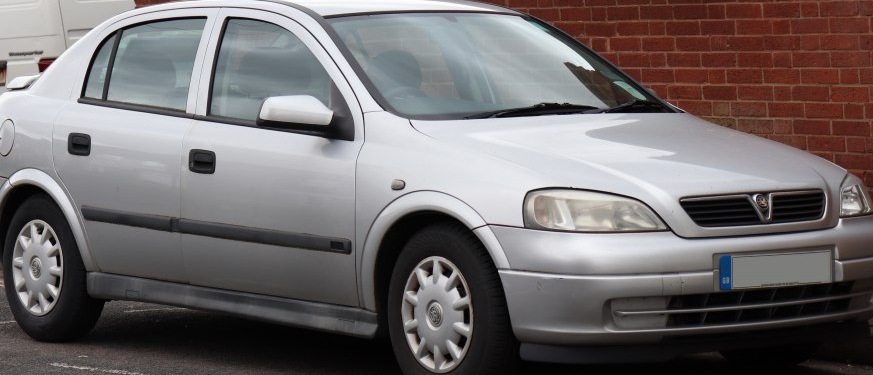
The Vauxhall Astra Mk IV 2.0 Di, produced between 1998 and 2004, represented a significant offering in the British compact car market. Positioned as a fuel-efficient and practical option, this variant utilized a direct-injection diesel engine paired with a five-speed manual transmission. It occupied a middle ground within the Mk IV Astra range, offering a balance between economy and performance, appealing to drivers prioritizing practicality over outright speed. The Mk IV Astra, built on the GM2600 platform (internally known as the 1HX0), was a crucial model for Vauxhall, solidifying its position as a major player in the family car segment.
Technical Specifications
| Brand | Vauxhall |
| Model | Astra |
| Generation | Astra Mk IV |
| Type (Engine) | 2.0 Di (82 Hp) |
| Start of production | 1998 |
| End of production | 2004 |
| Powertrain Architecture | Internal Combustion engine |
| Body type | Sedan |
| Seats | 5 |
| Doors | 4 |
| Fuel consumption (urban) | 8.9 l/100 km (26.4 US mpg) |
| Fuel consumption (extra urban) | 5.4 l/100 km (43.6 US mpg) |
| Fuel consumption (combined) | 6.7 l/100 km (35.1 US mpg) |
| CO2 emissions | 180 g/km |
| Fuel Type | Diesel |
| Acceleration 0 – 100 km/h | 15.5 sec |
| Acceleration 0 – 62 mph | 15.5 sec |
| Acceleration 0 – 60 mph | 14.7 sec |
| Maximum speed | 171 km/h (106.25 mph) |
| Weight-to-power ratio | 14.9 kg/Hp |
| Weight-to-torque ratio | 6.6 kg/Nm |
| Power | 82 Hp @ 4300 rpm |
| Torque | 185 Nm @ 1800 rpm (136.45 lb.-ft. @ 1800 rpm) |
| Engine layout | Front, Transverse |
| Engine Model/Code | X20DTL, Y20DTL |
| Engine displacement | 1995 cm3 (121.74 cu. in.) |
| Number of cylinders | 4 |
| Engine configuration | Inline |
| Number of valves per cylinder | 4 |
| Fuel injection system | Direct injection |
| Engine aspiration | Turbocharger |
| Engine oil capacity | 5.5 l (5.81 US qt | 4.84 UK qt) |
| Coolant capacity | 7.9 l (8.35 US qt | 6.95 UK qt) |
| Kerb Weight | 1225 kg (2700.66 lbs.) |
| Max. weight | 1795 kg (3957.3 lbs.) |
| Max load | 570 kg (1256.63 lbs.) |
| Trunk (boot) space – minimum | 460 l (16.24 cu. ft.) |
| Fuel tank capacity | 52 l (13.74 US gal | 11.44 UK gal) |
| Length | 4252 mm (167.4 in.) |
| Width | 1709 mm (67.28 in.) |
| Width including mirrors | 1967 mm (77.44 in.) |
| Height | 1425 mm (56.1 in.) |
| Wheelbase | 2606 mm (102.6 in.) |
| Ride height (ground clearance) | 160 mm (6.3 in.) |
| Drag coefficient (Cd) | 0.29 |
| Minimum turning circle | 10 m (32.81 ft.) |
| Drivetrain Architecture | Front wheel drive |
| Number of gears | 5 |
| Gearbox type | Manual transmission |
| Front brakes | Ventilated discs |
| Rear brakes | Disc |
| Tires size | 195/60 R15 |
| Wheel rims size | 15 |
Powertrain & Engine Architecture
The heart of the Astra 2.0 Di was the X20DTL or Y20DTL engine, a 1.995-liter inline-four cylinder diesel. This engine utilized direct fuel injection, a technology that significantly improved fuel efficiency and reduced emissions compared to older indirect injection systems. The direct injection system, coupled with a turbocharger, allowed the relatively small engine to produce 82 horsepower and 185 Nm (136 lb-ft) of torque. The turbocharger provided a noticeable boost in power, particularly at lower engine speeds, improving drivability. The five-speed manual transmission was a standard feature, offering a good balance between fuel economy and driver control. The engine’s architecture was relatively simple, contributing to its overall reliability.
Driving Characteristics
The 2.0 Di Astra offered a practical and economical driving experience. Acceleration was not its strong suit, with a 0-60 mph time of around 14.7 seconds. However, the engine’s torque output provided adequate power for everyday driving and overtaking maneuvers. The five-speed manual transmission allowed drivers to keep the engine in its optimal power band. Compared to the more powerful petrol variants, the 2.0 Di prioritized fuel economy over outright performance. The gear ratios were tuned for efficiency, resulting in a comfortable cruising experience on the highway. While not sporty, the Astra 2.0 Di provided a composed and predictable ride.
Equipment & Trim Levels
The Astra 2.0 Di typically came equipped with a reasonable level of standard features. These included central locking, power steering, electric front windows, and an adjustable steering column. Interior upholstery was typically cloth, with a functional and durable design. Optional extras included air conditioning, alloy wheels, and a CD player. Trim levels varied depending on the market, but generally, the 2.0 Di sat in the mid-range of the Astra lineup, offering a step up in refinement and features compared to the base models.
Chassis & Braking
The Astra Mk IV featured a MacPherson strut front suspension and a torsion beam rear suspension. This setup provided a good balance between ride comfort and handling. The front brakes were ventilated discs, offering good stopping power, while the rear brakes were solid discs. The chassis was designed to be lightweight, contributing to the car’s overall fuel efficiency. The steering was precise and responsive, making the Astra easy to maneuver in urban environments. Stabilizer bars were fitted to both the front and rear axles to reduce body roll during cornering.
Market Reception & Comparison
The Astra 2.0 Di was generally well-received by critics as a practical and economical family car. Its fuel efficiency was a major selling point, particularly in Europe where diesel fuel was often cheaper than petrol. Compared to the petrol-powered Astra variants, the 2.0 Di offered significantly better fuel economy, although it lacked the same level of performance. Reliability was generally good, although some owners reported issues with the turbocharger and fuel injection system. The Astra 2.0 Di competed with other popular compact cars such as the Ford Focus, Volkswagen Golf, and Peugeot 306.
Legacy
The Vauxhall Astra Mk IV 2.0 Di remains a relatively common sight on roads today, testament to its durability and practicality. The X20DTL/Y20DTL engine, while not known for being particularly exciting, proved to be a reliable and long-lasting unit. In the used car market, these Astras are often sought after by buyers looking for an affordable and economical vehicle. While maintenance costs can increase with age, the availability of spare parts and the relatively simple engine design make them relatively easy to maintain. The Astra 2.0 Di represents a significant chapter in Vauxhall’s history, showcasing the brand’s commitment to providing practical and affordable transportation.