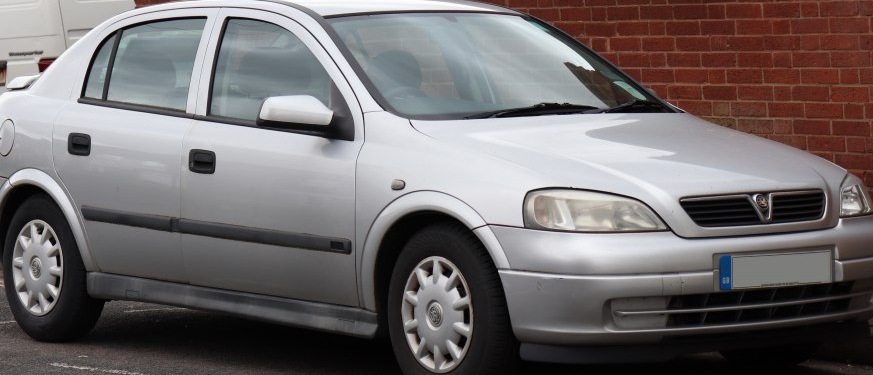
The Vauxhall Astra Mk IV 2.0 DTi 16V, produced between 1999 and 2004, represented a significant offering in the British market’s compact family car segment. Positioned as a more economical and refined alternative to the petrol-powered Astras, the 2.0 DTi slotted into the mid-range of the Mk IV lineup, offering a balance between performance and fuel efficiency. It was part of the G platform series, shared with the Opel Astra, and aimed at buyers seeking a comfortable and practical vehicle with lower running costs. This variant was particularly popular in the United Kingdom and other European markets where diesel engines held a strong appeal due to favorable taxation and fuel prices.
Technical Specifications
| Brand | Vauxhall |
| Model | Astra |
| Generation | Astra Mk IV |
| Type (Engine) | 2.0 DTi 16V (100 Hp) |
| Start of production | 1999 |
| End of production | 2004 |
| Powertrain Architecture | Internal Combustion engine |
| Body type | Sedan |
| Seats | 5 |
| Doors | 4 |
| Fuel consumption (urban) | 7.6 l/100 km (30.9 US mpg) |
| Fuel consumption (extra urban) | 4.6 l/100 km (51.1 US mpg) |
| Fuel consumption (combined) | 5.7 l/100 km (41.3 US mpg) |
| CO2 emissions | 154 g/km |
| Fuel Type | Diesel |
| Acceleration 0 – 100 km/h | 12 sec |
| Acceleration 0 – 62 mph | 12 sec |
| Acceleration 0 – 60 mph | 11.4 sec |
| Maximum speed | 188 km/h (116.82 mph) |
| Weight-to-power ratio | 12.5 kg/Hp |
| Weight-to-torque ratio | 5.4 kg/Nm |
| Power | 100 Hp @ 4300 rpm |
| Torque | 230 Nm @ 1950 rpm (169.64 lb.-ft. @ 1950 rpm) |
| Engine layout | Front, Transverse |
| Engine Model/Code | Y20DTH |
| Engine displacement | 1995 cm3 (121.74 cu. in.) |
| Number of cylinders | 4 |
| Engine configuration | Inline |
| Number of valves per cylinder | 4 |
| Fuel injection system | Direct injection |
| Engine aspiration | Turbocharger |
| Engine oil capacity | 5.5 l (5.81 US qt | 4.84 UK qt) |
| Coolant capacity | 5.9 l (6.23 US qt | 5.19 UK qt) |
| Kerb Weight | 1245 kg (2744.76 lbs.) |
| Max. weight | 1790 kg (3946.27 lbs.) |
| Max load | 545 kg (1201.52 lbs.) |
| Trunk (boot) space – minimum | 460 l (16.24 cu. ft.) |
| Fuel tank capacity | 52 l (13.74 US gal | 11.44 UK gal) |
| Length | 4252 mm (167.4 in.) |
| Width | 1709 mm (67.28 in.) |
| Width including mirrors | 1967 mm (77.44 in.) |
| Height | 1425 mm (56.1 in.) |
| Wheelbase | 2606 mm (102.6 in.) |
| Ride height (ground clearance) | 160 mm (6.3 in.) |
| Drag coefficient (Cd) | 0.29 |
| Minimum turning circle | 10 m (32.81 ft.) |
| Drivetrain Architecture | Front wheel drive |
| Number of gears | 5 |
| Gearbox type | Manual transmission |
| Front brakes | Ventilated discs |
| Rear brakes | Disc |
| Tires size | 195/60 R15 |
Powertrain & Engine Architecture
The heart of the Astra 2.0 DTi 16V is the Y20DTH engine, a 1995cc inline-four cylinder diesel. This engine utilizes direct fuel injection, a technology that significantly improved fuel efficiency and reduced emissions compared to older indirect injection diesel systems. The ‘16V’ designation indicates the engine features four valves per cylinder, enhancing breathing and contributing to improved power output. A turbocharger, coupled with an intercooler, forces more air into the cylinders, boosting power and torque. The Y20DTH engine is known for its relatively robust construction, although early versions were sometimes plagued by turbocharger failures. The five-speed manual transmission was the standard offering, providing a good balance between fuel economy and drivability. The gearbox itself is a fairly conventional design, known for its durability but not particularly sporty feel.
Driving Characteristics
The 2.0 DTi 16V Astra offered a noticeable step up in performance compared to the smaller 1.7 DTi engine. While not a sports car, the 100 horsepower and 230 Nm (169.64 lb-ft) of torque provided adequate acceleration for everyday driving and comfortable cruising on highways. The turbocharger provides a noticeable boost in power from around 1950 rpm, making overtaking maneuvers relatively effortless. However, the engine can feel somewhat strained at higher RPMs. The five-speed manual transmission is well-matched to the engine’s characteristics, with gear ratios optimized for fuel efficiency and relaxed cruising. Compared to the petrol-powered Astras, the DTi offered significantly better fuel economy, but at the expense of outright performance and refinement. The diesel engine is inherently noisier and vibrates more than a comparable petrol engine.
Equipment & Trim Levels
The Astra Mk IV 2.0 DTi 16V was typically offered in LS and GLS trim levels. The LS trim included features such as central locking, power steering, electric front windows, and an adjustable steering column. The GLS trim added features like alloy wheels, air conditioning, and a more comprehensive stereo system. Optional extras included a sunroof, rear electric windows, and upgraded upholstery. Interior materials were generally durable but not particularly luxurious, reflecting the car’s position as a mainstream family vehicle. The dashboard layout was functional and straightforward, with easy-to-read gauges and well-placed controls.
Chassis & Braking
The Astra Mk IV utilized a MacPherson strut front suspension and a torsion beam rear suspension. This setup provided a comfortable ride quality, although it wasn’t particularly sporty. The front brakes were ventilated discs, while the rear brakes were solid discs, providing adequate stopping power for the car’s weight and performance. Stabilizer bars were fitted to both the front and rear axles to reduce body roll during cornering. The steering was hydraulic power-assisted, providing a light and easy steering feel.
Market Reception & Comparison
The Astra 2.0 DTi 16V was generally well-received by automotive critics as a practical and economical family car. It was praised for its fuel efficiency, comfortable ride, and spacious interior. However, some critics noted the engine could be noisy and lacked the refinement of some of its competitors. Compared to other diesel Astras, the 2.0 DTi offered a noticeable performance advantage over the smaller 1.7 DTi, but at a slightly higher price point. Against petrol-powered rivals, it offered superior fuel economy but less overall performance. Reliability was generally good, although early versions of the Y20DTH engine were prone to turbocharger failures.
Legacy
The Vauxhall Astra Mk IV 2.0 DTi 16V remains a relatively common sight on UK roads today, testament to its durability and practicality. The Y20DTH engine, while not without its issues, is generally considered a robust and reliable unit when properly maintained. In the used car market, these Astras represent a good value proposition for buyers seeking an affordable and economical family car. However, potential buyers should be aware of the potential for turbocharger issues and ensure the car has been regularly serviced. The Mk IV Astra, and particularly the 2.0 DTi variant, played a significant role in establishing diesel engines as a popular choice for family car buyers in the UK and Europe.