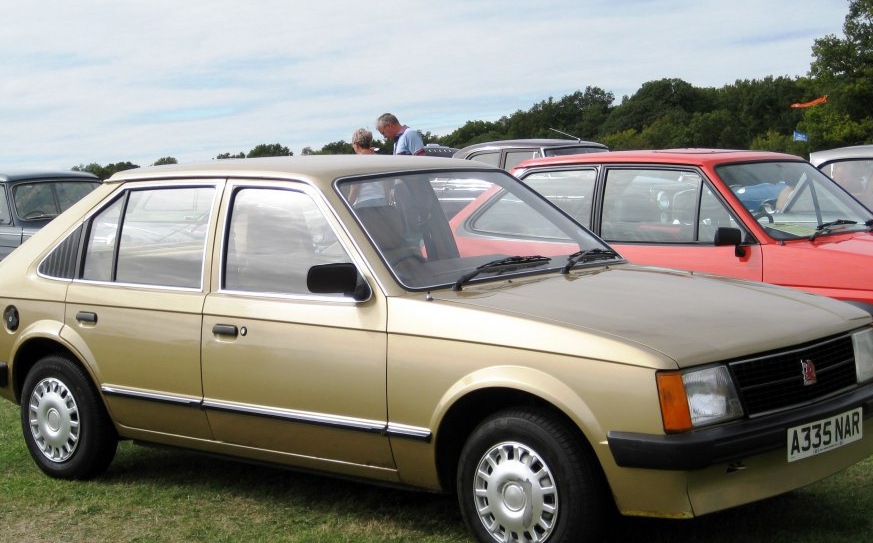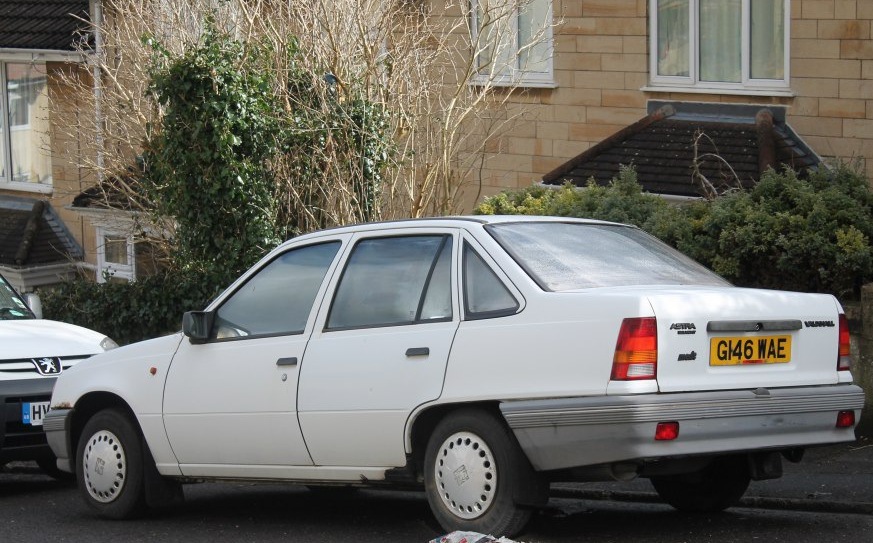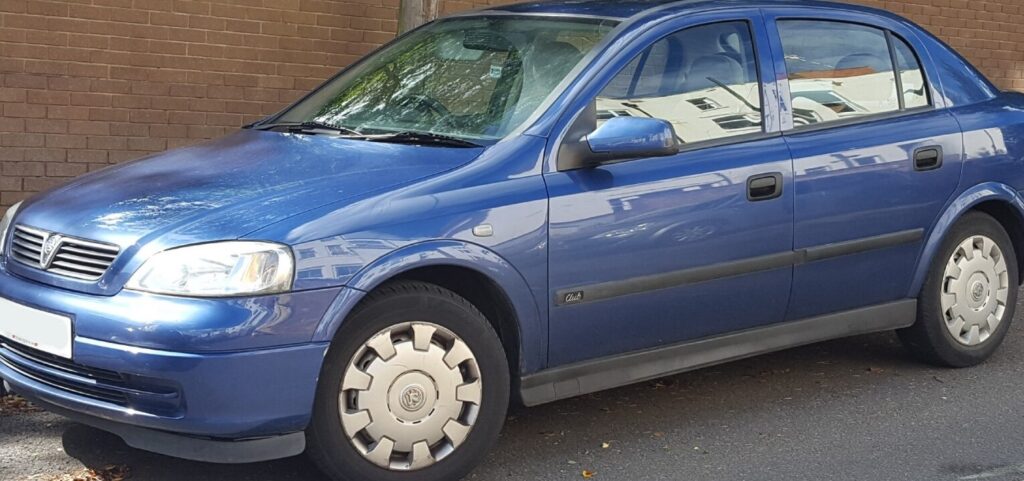
The Vauxhall Astra Mk IV, produced from 1998 to 2004, represented a significant step forward for the British marque, building upon the success of its predecessor. Within the Mk IV range, the 1.2 16V variant, producing 65 horsepower, served as the entry point into the Astra lineup, particularly in the 3-door “Coupe” (CC) body style. This model aimed to provide affordable and economical transportation, appealing to first-time buyers, city commuters, and those seeking a practical hatchback. It was positioned below the more powerful 1.4, 1.6, 1.8, and diesel variants, offering a balance between purchase price and running costs. The Mk IV Astra shared its platform (the GM240, also known as the T-Car platform) with the Opel Astra F, and later the Astra G, as well as other vehicles within the General Motors portfolio.
Technical Specifications
| Brand | Vauxhall |
| Model | Astra |
| Generation | Astra Mk IV CC |
| Type (Engine) | 1.2 16V (65 Hp) |
| Start of production | 1998 |
| End of production | 2004 |
| Powertrain Architecture | Internal Combustion engine |
| Body type | Hatchback |
| Seats | 5 |
| Doors | 3-5 |
| Fuel consumption (urban) | 8 l/100 km (29.4 US mpg, 35.3 UK mpg, 12.5 km/l) |
| Fuel consumption (extra urban) | 5.2 l/100 km (45.2 US mpg, 54.3 UK mpg, 19.2 km/l) |
| Fuel consumption (combined) | 6.2 l/100 km (37.9 US mpg, 45.6 UK mpg, 16.1 km/l) |
| CO2 emissions | 149 g/km |
| Fuel Type | Petrol (Gasoline) |
| Acceleration 0 – 100 km/h | 16 sec |
| Acceleration 0 – 62 mph | 16 sec |
| Acceleration 0 – 60 mph | 15.2 sec |
| Maximum speed | 165 km/h (102.53 mph) |
| Weight-to-power ratio | 16.1 kg/Hp, 62.2 Hp/tonne |
| Weight-to-torque ratio | 9.5 kg/Nm, 105.3 Nm/tonne |
| Power | 65 Hp @ 5600 rpm |
| Power per litre | 54.2 Hp/l |
| Torque | 110 Nm @ 4000 rpm (81.13 lb.-ft. @ 4000 rpm) |
| Engine layout | Front, Transverse |
| Engine Model/Code | X12XE |
| Engine displacement | 1199 cm3 (73.17 cu. in.) |
| Number of cylinders | 4 |
| Engine configuration | Inline |
| Cylinder Bore | 72.5 mm (2.85 in.) |
| Piston Stroke | 72.6 mm (2.86 in.) |
| Compression ratio | 10.1:1 |
| Number of valves per cylinder | 4 |
| Fuel injection system | Multi-port manifold injection |
| Engine aspiration | Naturally aspirated engine |
| Engine oil capacity | 3.5 l (3.7 US qt | 3.08 UK qt) |
| Coolant capacity | 5.2 l (5.49 US qt | 4.58 UK qt) |
| Kerb Weight | 1045 kg (2303.83 lbs.) |
| Max. weight | 1590 kg (3505.35 lbs.) |
| Max load | 545 kg (1201.52 lbs.) |
| Trunk (boot) space – minimum | 370 l (13.07 cu. ft.) |
| Trunk (boot) space – maximum | 1180 l (41.67 cu. ft.) |
| Fuel tank capacity | 52 l (13.74 US gal | 11.44 UK gal) |
| Length | 4110 mm (161.81 in.) |
| Width | 1709 mm (67.28 in.) |
| Width including mirrors | 1967 mm (77.44 in.) |
| Height | 1425 mm (56.1 in.) |
| Wheelbase | 2606 mm (102.6 in.) |
| Drivetrain Architecture | The Internal combustion engine (ICE) drives the front wheels of the vehicle. |
| Drive wheel | Front wheel drive |
| Number of gears and type of gearbox | 5 gears, manual transmission |
| Front brakes | Ventilated discs |
| Rear brakes | Disc |
| Tires size | 185/65 R15 |
| Wheel rims size | 15 |
Powertrain & Engine Architecture
The heart of the Astra 1.2 16V was the X12XE engine, a 1.2-liter inline-four cylinder petrol engine. This engine was a member of Vauxhall/Opel’s “Ecotec” family, designed with a focus on fuel efficiency and reduced emissions. The ‘16V’ designation indicated the engine’s four valves per cylinder configuration, enhancing breathing and contributing to its modest power output. Fuel delivery was handled by a multi-port fuel injection system, providing precise fuel metering for optimal combustion. The X12XE featured a single overhead camshaft (SOHC) design, simplifying the valvetrain and reducing weight. The engine was transversely mounted in the front of the vehicle, driving the front wheels. The standard transmission was a five-speed manual gearbox, although a four-speed automatic transmission was also offered as an option, albeit less common. The automatic transmission, while offering convenience, did impact acceleration and fuel economy compared to the manual version.
Driving Characteristics
The 1.2 16V Astra was not designed for outright performance. With 65 horsepower, acceleration was leisurely, taking approximately 16 seconds to reach 62 mph. However, the engine proved to be surprisingly flexible for everyday driving, particularly in urban environments. The five-speed manual gearbox allowed drivers to keep the engine in its optimal power band, while the optional automatic transmission provided a smoother, more relaxed driving experience. The automatic, however, noticeably dulled acceleration and required more frequent downshifts when overtaking or climbing hills. The steering was light and precise, making the Astra easy to maneuver in tight spaces. The suspension, tuned for comfort, provided a reasonably compliant ride, although it could feel somewhat unsettled on uneven road surfaces.
Equipment & Trim Levels
The Astra 1.2 16V typically came with a basic level of equipment, reflecting its position as the entry-level model. Standard features generally included power steering, central locking, and an adjustable steering column. Interior upholstery was typically cloth, and the dashboard featured a simple, functional design. Optional extras included air conditioning, electric windows, and an upgraded stereo system. Higher trim levels, such as the “Expression” or “Design,” added more features, such as alloy wheels, body-colored bumpers, and upgraded interior trim. The CC (Coupe) body style, with its three-door configuration, often appealed to younger buyers and those seeking a sportier aesthetic.
Chassis & Braking
The Astra Mk IV utilized a MacPherson strut front suspension and a torsion beam rear suspension. This setup provided a good balance between ride comfort and handling. The front brakes were ventilated discs, offering adequate stopping power, while the rear brakes were typically solid discs. The 1.2 16V models generally featured smaller wheels and tires compared to the higher-powered variants, contributing to a slightly less aggressive appearance. Stabilizer bars were fitted to both the front and rear axles to reduce body roll during cornering.
Market Reception & Comparison
The Astra 1.2 16V was generally well-received as an affordable and economical hatchback. Critics praised its fuel efficiency and ease of driving, but noted its lack of outright performance. Compared to the 1.4 and 1.6-liter variants, the 1.2 offered lower running costs but significantly slower acceleration. The diesel models, while more expensive to purchase, provided even better fuel economy and more torque. The 1.2 16V was often seen as a sensible choice for those prioritizing practicality and affordability over driving excitement.
Legacy
The X12XE engine, while not known for its longevity or high performance, proved to be reasonably reliable when properly maintained. Common issues included oil leaks and occasional sensor failures. Today, the Astra Mk IV 1.2 16V can be found as an affordable used car, appealing to those seeking a cheap and cheerful runabout. Its simplicity and relatively low maintenance costs make it an attractive option for budget-conscious buyers. However, potential buyers should be aware of the engine’s limitations and ensure that the vehicle has been well-maintained throughout its life. The Astra Mk IV, and particularly the 1.2 16V variant, represents a significant chapter in Vauxhall’s history, offering a practical and economical solution for everyday transportation.