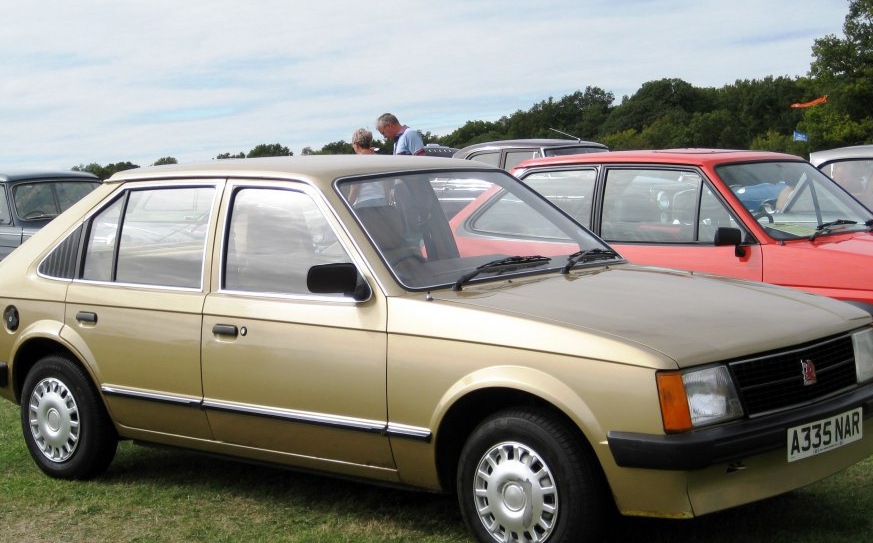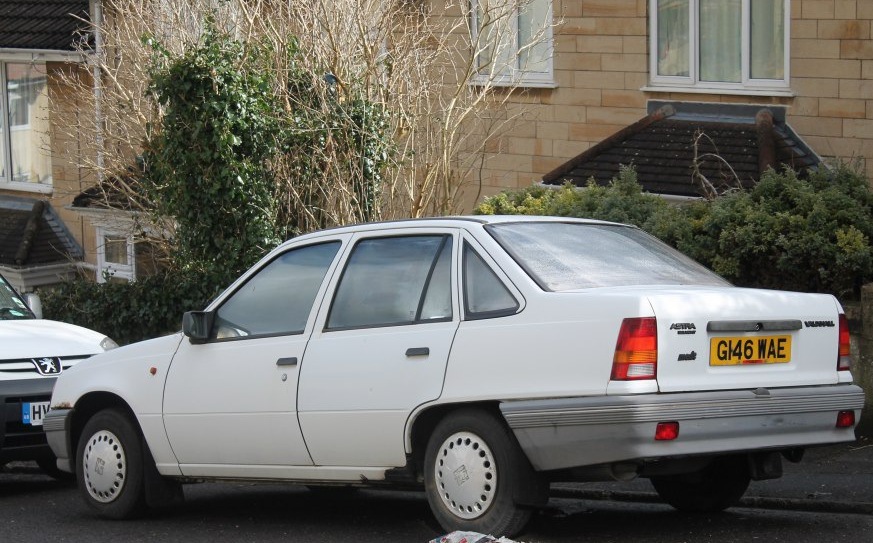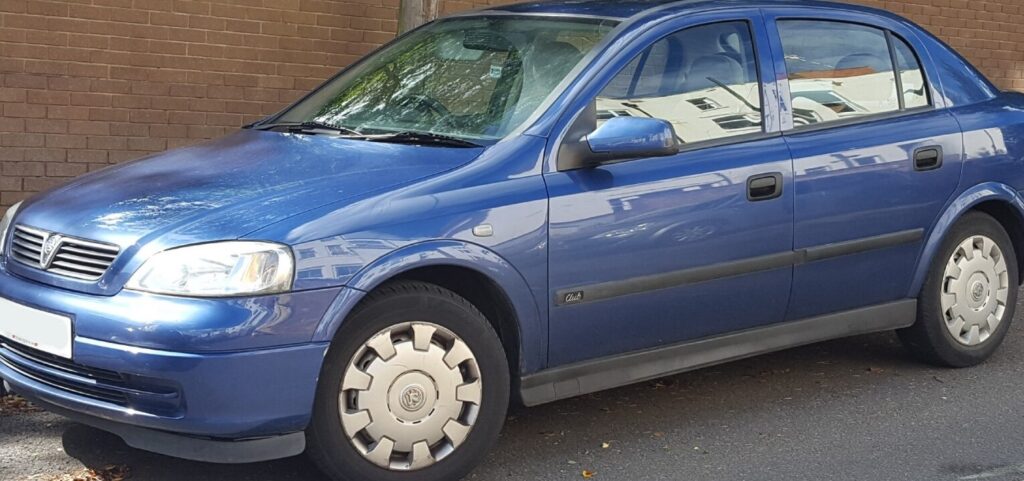
The Vauxhall Astra Mark IV, produced from 1998 to 2004, represented a significant step forward for the British automaker. Sharing its platform (the 1HX0/A3) with the Opel Astra, this generation aimed to offer a more refined and modern driving experience than its predecessor. Within the Astra Mark IV range, the 1.6 16V variant, producing 101 horsepower, occupied a crucial position as an entry-level to mid-range offering, appealing to buyers seeking a balance of affordability, practicality, and reasonable performance. This model was available in both 3-door and 5-door hatchback configurations, catering to diverse customer needs.
Technical Specifications
| Brand | Vauxhall |
| Model | Astra |
| Generation | Astra Mk IV CC |
| Type (Engine) | 1.6 16V (101 Hp) |
| Start of production | 1998 |
| End of production | 2004 |
| Powertrain Architecture | Internal Combustion engine |
| Body type | Hatchback |
| Seats | 5 |
| Doors | 3-5 |
| Fuel consumption (urban) | 9.5 l/100 km (24.8 US mpg) |
| Fuel consumption (extra urban) | 5.5 l/100 km (42.8 US mpg) |
| Fuel consumption (combined) | 7 l/100 km (33.6 US mpg) |
| Fuel Type | Petrol (Gasoline) |
| Acceleration 0 – 100 km/h | 11.5 sec |
| Acceleration 0 – 62 mph | 11.5 sec |
| Acceleration 0 – 60 mph | 10.9 sec |
| Maximum speed | 188 km/h (116.82 mph) |
| Weight-to-power ratio | 10.9 kg/Hp |
| Weight-to-torque ratio | 7.3 kg/Nm |
| Power | 101 Hp @ 6000 rpm |
| Torque | 150 Nm @ 3600 rpm (110.63 lb.-ft. @ 3600 rpm) |
| Engine layout | Front, Transverse |
| Engine Model/Code | X16XEL |
| Engine displacement | 1598 cm3 (97.52 cu. in.) |
| Number of cylinders | 4 |
| Engine configuration | Inline |
| Cylinder Bore | 79 mm (3.11 in.) |
| Piston Stroke | 81.5 mm (3.21 in.) |
| Compression ratio | 10.5:1 |
| Number of valves per cylinder | 4 |
| Engine oil capacity | 3.25 l (3.43 US qt) |
| Coolant capacity | 6.3 l (6.66 US qt) |
| Kerb Weight | 1100 kg (2425.08 lbs.) |
| Max. weight | 1630 kg (3593.53 lbs.) |
| Max load | 530 kg (1168.45 lbs.) |
| Trunk (boot) space – minimum | 370 l (13.07 cu. ft.) |
| Trunk (boot) space – maximum | 1180 l (41.67 cu. ft.) |
| Fuel tank capacity | 52 l (13.74 US gal) |
| Length | 4110 mm (161.81 in.) |
| Width | 1710 mm (67.32 in.) |
| Width including mirrors | 1967 mm (77.44 in.) |
| Height | 1425 mm (56.1 in.) |
| Wheelbase | 2606 mm (102.6 in.) |
| Minimum turning circle | 10 m (32.81 ft.) |
| Drivetrain Architecture | Front wheel drive |
| Number of gears | 5 |
| Gearbox type | Manual transmission |
| Front brakes | Ventilated discs |
| Rear brakes | Disc |
| Tires size | 195/60 R15 |
| Wheel rims size | 15 |
Powertrain & Engine Architecture
The heart of the Astra 1.6 16V was the X16XEL engine, a naturally aspirated, four-cylinder inline engine displacing 1.6 liters (1598 cc). This engine featured a cast iron block and an aluminum cylinder head, incorporating a dual overhead camshaft (DOHC) design with four valves per cylinder. Fuel delivery was managed by a Bosch Motronic multi-point fuel injection system, optimizing fuel efficiency and emissions. The X16XEL was known for its relatively simple and robust design, contributing to its overall reliability. The engine was paired with a five-speed manual transmission, providing a decent spread of gears for both urban and highway driving. While not a powerhouse, the engine delivered a respectable 101 horsepower at 6000 rpm and 150 Nm (110.63 lb-ft) of torque at 3600 rpm.
Driving Characteristics
The 1.6 16V Astra offered a comfortable and predictable driving experience. Acceleration from 0-60 mph took around 10.9 seconds, making it adequate for everyday commuting and general driving. Compared to the more powerful 1.8 or 2.0-liter variants, the 1.6 felt noticeably less responsive, particularly when overtaking or climbing hills. The five-speed manual transmission was well-matched to the engine’s characteristics, allowing drivers to keep the engine in its optimal power band. The gear ratios were spaced to prioritize fuel economy, rather than outright performance. The steering was light and precise, making it easy to maneuver in tight spaces. However, it lacked the feedback and engagement found in some of its rivals.
Equipment & Trim Levels
The 1.6 16V Astra typically came equipped with a reasonable level of standard features. These included central locking, power steering, electric front windows, and an adjustable steering column. Interior upholstery was typically cloth, with a relatively simple dashboard layout. Optional extras included air conditioning, alloy wheels, a CD player, and upgraded trim materials. Trim levels varied depending on the market, but generally, the 1.6 16V sat in the lower to mid-range of the Astra lineup, offering a good balance of features for the price.
Chassis & Braking
The Astra Mark IV utilized a MacPherson strut front suspension and a torsion beam rear suspension. This setup provided a comfortable ride quality, absorbing bumps and imperfections in the road surface effectively. The front brakes were ventilated discs, offering good stopping power, while the rear brakes were solid discs. The suspension was tuned for comfort rather than sporty handling, resulting in a slight degree of body roll during cornering. Stabilizer bars were fitted to both the front and rear axles to help reduce body roll and improve stability.
Market Reception & Comparison
The Astra 1.6 16V was generally well-received by automotive critics as a practical and affordable family car. It was praised for its comfortable ride, decent fuel economy (around 33.6 US mpg combined), and relatively low running costs. However, it was often criticized for its lack of outright performance compared to its more powerful siblings. The 1.8-liter version offered a noticeable improvement in acceleration and overall driving experience, while the diesel variants (like the 1.7 TDI) provided superior fuel economy. The 1.6 16V appealed to buyers who prioritized practicality and affordability over performance.
Legacy
The X16XEL engine, found in the Astra 1.6 16V, proved to be a reliable and durable unit. With proper maintenance, these engines can often reach high mileages without major issues. Today, the Astra Mark IV 1.6 16V remains a relatively affordable and accessible classic car. Parts availability is generally good, and the simple mechanical design makes it relatively easy to maintain and repair. While not a particularly sought-after model, it represents a solid and dependable choice for those seeking a classic European hatchback.