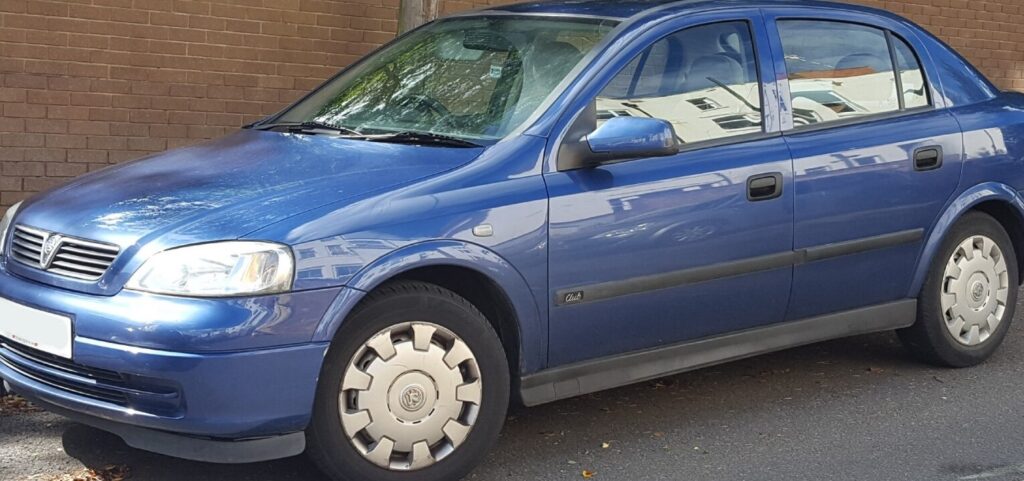
The Vauxhall Astra Mk IV CC 1.7 DTI 16V, produced between 2000 and 2004, represented an entry-level diesel offering within the fourth generation of the Astra compact hatchback. Positioned as a fuel-efficient and affordable option, it catered to buyers prioritizing economy over outright performance. This variant utilized the Isuzu-sourced 1.7-liter diesel engine, a common choice for European manufacturers seeking a reliable and cost-effective diesel powerplant. The “CC” designation signified the coupe/comfort body style, referring to the hatchback configuration. It was part of the 1HX0/A3 platform generation, sharing components with other General Motors and partner vehicles of the era.
Technical Specifications
| Brand | Vauxhall |
| Model | Astra |
| Generation | Astra Mk IV CC |
| Type (Engine) | 1.7 DTI 16V (75 Hp) |
| Start of production | 2000 |
| End of production | 2004 |
| Powertrain Architecture | Internal Combustion engine |
| Body type | Hatchback |
| Seats | 5 |
| Doors | 3-5 |
| Fuel consumption (urban) | 6.2 l/100 km (37.9 US mpg, 45.6 UK mpg, 16.1 km/l) |
| Fuel consumption (extra urban) | 4.1 l/100 km (57.4 US mpg, 68.9 UK mpg, 24.4 km/l) |
| Fuel Type | Diesel |
| Acceleration 0 – 100 km/h | 15.5 sec |
| Acceleration 0 – 62 mph | 15.5 sec |
| Acceleration 0 – 60 mph | 14.7 sec |
| Maximum speed | 165 km/h (102.53 mph) |
| Power | 75 Hp @ 4400 rpm |
| Power per litre | 44.5 Hp/l |
| Torque | 165 Nm @ 1800 rpm (121.7 lb.-ft. @ 1800 rpm) |
| Engine layout | Front, Transverse |
| Engine Model/Code | Y17DT |
| Engine displacement | 1686 cm3 (102.89 cu. in.) |
| Number of cylinders | 4 |
| Engine configuration | Inline |
| Cylinder Bore | 79 mm (3.11 in.) |
| Piston Stroke | 86 mm (3.39 in.) |
| Compression ratio | 18.4:1 |
| Number of valves per cylinder | 4 |
| Fuel injection system | Direct injection |
| Engine aspiration | Naturally aspirated |
| Engine oil capacity | 4.5 l (4.76 US qt | 3.96 UK qt) |
| Coolant capacity | 7.1 l (7.5 US qt | 6.25 UK qt) |
| Max. weight | 1600 kg (3527.4 lbs.) |
| Trunk (boot) space – minimum | 370 l (13.07 cu. ft.) |
| Trunk (boot) space – maximum | 1180 l (41.67 cu. ft.) |
| Fuel tank capacity | 52 l (13.74 US gal | 11.44 UK gal) |
| Length | 4110 mm (161.81 in.) |
| Width | 1710 mm (67.32 in.) |
| Width including mirrors | 1967 mm (77.44 in.) |
| Height | 1425 mm (56.1 in.) |
| Wheelbase | 2606 mm (102.6 in.) |
| Ride height (ground clearance) | 130 mm (5.12 in.) |
| Minimum turning circle | 10 m (32.81 ft.) |
| Drivetrain Architecture | The Internal combustion engine (ICE) drives the front wheels of the vehicle. |
| Drive wheel | Front wheel drive |
| Number of gears | 5 |
| Gearbox type | Manual transmission |
| Front brakes | Ventilated discs |
| Rear brakes | Drum |
| Tires size | 175/80 R14 |
| Wheel rims size | 14 |
Powertrain & Engine Architecture
The heart of the Astra Mk IV CC 1.7 DTI 16V is the Y17DT engine, a 1.7-liter inline-four diesel produced by Isuzu. This engine was a popular choice for Vauxhall/Opel and other European manufacturers due to its relatively simple design and robust nature. The ‘DTI’ designation signifies ‘Direct Turbo Injection’, although this engine is naturally aspirated. It utilizes a direct injection system, injecting fuel directly into the combustion chamber under high pressure. This improves combustion efficiency and reduces emissions compared to indirect injection systems. The engine features a single overhead camshaft (SOHC) operating four valves per cylinder (16V). The 5-speed manual transmission was the standard offering, providing a balance between fuel economy and usability. The transmission’s gear ratios were geared towards maximizing fuel efficiency rather than providing sporty acceleration.
Driving Characteristics
The 1.7 DTI 16V variant of the Astra Mk IV offered modest performance. With 75 horsepower and 165 Nm (121.7 lb-ft) of torque, acceleration was leisurely, taking around 15.5 seconds to reach 62 mph. The engine’s strength lay in its low-end torque, making it reasonably tractable for everyday driving. However, it lacked the punch of higher-powered Astra variants like the 1.8-liter petrol or the 2.0-liter diesel. The manual transmission, while functional, wasn’t particularly refined, and the gearshift could feel notchy. Compared to the more powerful models, the 1.7 DTI prioritized fuel economy, achieving around 45-57 mpg on a combined cycle. The suspension was tuned for comfort, providing a reasonably smooth ride, but handling was not as sharp as some of its competitors.
Equipment & Trim Levels
The 1.7 DTI 16V typically occupied the base trim level within the Astra Mk IV range. Standard equipment generally included central locking, power steering, and an adjustable steering column. Interior upholstery was typically cloth, and the dashboard featured a simple, functional design. Optional extras included air conditioning, electric windows, and an upgraded stereo system. Higher trim levels, such as the Design or Elegance, added features like alloy wheels, upgraded interior trim, and additional safety equipment. The base trim focused on providing essential features at an affordable price point.
Chassis & Braking
The Astra Mk IV CC 1.7 DTI 16V utilized a MacPherson strut front suspension and a torsion beam rear suspension. This setup provided a good balance between ride comfort and handling. The front brakes were ventilated discs, offering adequate stopping power, while the rear brakes were drums, a cost-saving measure common in entry-level models. Stabilizer bars were fitted to both the front and rear axles to reduce body roll during cornering. The relatively lightweight nature of the 1.7 DTI engine helped to keep the overall weight of the vehicle down, contributing to improved handling and fuel economy.
Market Reception & Comparison
The Astra Mk IV 1.7 DTI 16V was generally well-received as an economical and practical hatchback. Critics praised its fuel efficiency and low running costs, but noted its lack of performance. Compared to the petrol-powered Astra variants, the 1.7 DTI offered significantly better fuel economy but lacked the responsiveness and refinement of the petrol engines. Against competitors like the Ford Focus and Volkswagen Golf, the Astra 1.7 DTI offered a competitive price point and a decent level of equipment. However, some rivals offered more refined engines and a more engaging driving experience. The 1.7 DTI was primarily aimed at buyers who prioritized economy and practicality over performance and driving enjoyment.
Legacy
The Y17DT engine, while not known for being particularly exciting, proved to be a reliable and durable powerplant. Many examples of the Astra Mk IV 1.7 DTI 16V are still on the road today, testament to the engine’s longevity. However, age and mileage can lead to issues such as turbocharger wear (if equipped in other variants), injector problems, and general wear and tear on the engine components. In the used car market, the Astra Mk IV 1.7 DTI 16V remains an affordable option for those seeking a cheap and economical hatchback. Its simplicity and relatively low maintenance costs make it an attractive choice for first-time car buyers or those on a tight budget. While it may not offer the thrills of more powerful variants, it provides a dependable and fuel-efficient mode of transportation.