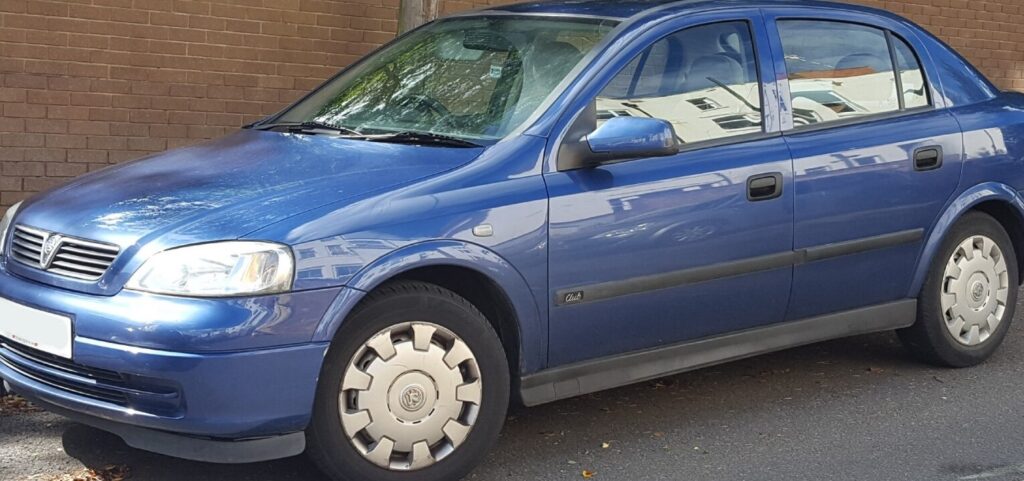
The Vauxhall Astra Mk IV, produced from 1998 to 2004, represented a significant step forward for the British marque, building upon the success of its predecessor. Within the Mk IV range, the 1.8 16V variant – specifically with the automatic transmission – occupied a middle-ground position, aiming to provide a balance of performance and convenience for buyers. This model, often referred to as the ‘CC’ (Coupe Cabriolet) although available as a hatchback, was part of the H-platform generation, shared with Opel, and represented a key offering in the competitive European compact car segment. It aimed to appeal to drivers seeking a more refined experience than the base models, without the higher price tag of the more powerful or sporty trims.
Technical Specifications
| Brand | Vauxhall |
| Model | Astra |
| Generation | Astra Mk IV CC |
| Type (Engine) | 1.8 16V (116 Hp) |
| Start of production | 1998 |
| End of production | 2004 |
| Powertrain Architecture | Internal Combustion engine |
| Body type | Hatchback |
| Seats | 5 |
| Doors | 3-5 |
| Fuel consumption (urban) | 10.8 l/100 km (21.8 US mpg, 26.2 UK mpg, 9.3 km/l) |
| Fuel consumption (extra urban) | 5.9 l/100 km (39.9 US mpg, 47.9 UK mpg, 16.9 km/l) |
| Fuel consumption (combined) | 7.9 l/100 km (29.8 US mpg, 35.8 UK mpg, 12.7 km/l) |
| Fuel Type | Petrol (Gasoline) |
| Acceleration 0 – 100 km/h | 10 sec |
| Acceleration 0 – 62 mph | 10 sec |
| Acceleration 0 – 60 mph | 9.5 sec |
| Maximum speed | 200 km/h (124.27 mph) |
| Weight-to-power ratio | 9.9 kg/Hp, 101.3 Hp/tonne |
| Weight-to-torque ratio | 6.7 kg/Nm, 148.5 Nm/tonne |
| Power | 116 Hp @ 5400 rpm |
| Power per litre | 64.6 Hp/l |
| Torque | 170 Nm @ 3400 rpm (125.39 lb.-ft. @ 3400 rpm) |
| Engine layout | Front, Transverse |
| Engine Model/Code | X18XE1 |
| Engine displacement | 1796 cm3 (109.6 cu. in.) |
| Number of cylinders | 4 |
| Engine configuration | Inline |
| Cylinder Bore | 80.5 mm (3.17 in.) |
| Piston Stroke | 88.2 mm (3.47 in.) |
| Compression ratio | 10.5:1 |
| Number of valves per cylinder | 4 |
| Engine oil capacity | 4.25 l (4.49 US qt | 3.74 UK qt) |
| Coolant capacity | 6.3 l (6.66 US qt | 5.54 UK qt) |
| Kerb Weight | 1145 kg (2524.29 lbs.) |
| Max. weight | 1665 kg (3670.7 lbs.) |
| Max load | 520 kg (1146.4 lbs.) |
| Trunk (boot) space – minimum | 370 l (13.07 cu. ft.) |
| Trunk (boot) space – maximum | 1180 l (41.67 cu. ft.) |
| Fuel tank capacity | 52 l (13.74 US gal | 11.44 UK gal) |
| Length | 4110 mm (161.81 in.) |
| Width | 1710 mm (67.32 in.) |
| Width including mirrors | 1967 mm (77.44 in.) |
| Height | 1425 mm (56.1 in.) |
| Wheelbase | 2606 mm (102.6 in.) |
| Ride height (ground clearance) | 130 mm (5.12 in.) |
| Minimum turning circle | 10 m (32.81 ft.) |
| Drivetrain Architecture | ICE, Front Wheel Drive |
| Drive wheel | Front wheel drive |
| Number of gears | 5 gears, automatic transmission |
| Front brakes | Ventilated discs |
| Rear brakes | Disc |
| Tires size | 195/60 R15 |
| Wheel rims size | 15 |
Powertrain & Engine Architecture
The heart of this Astra variant was the X18XE1 engine, an 1.8-liter inline-four cylinder petrol engine. This engine was a mainstay of the Opel/Vauxhall range for many years, known for its relative reliability and straightforward design. It featured a cast iron block and an aluminum cylinder head, equipped with dual overhead camshafts and four valves per cylinder – hence the ‘16V’ designation. Fuel delivery was handled by Bosch Motronic multi-point fuel injection, providing precise control over the air-fuel mixture. The X18XE1 produced 116 horsepower at 5400 rpm and 170 Nm (125 lb-ft) of torque at 3400 rpm. Paired with a four-speed automatic transmission, the engine’s power was delivered smoothly, prioritizing comfort over outright performance. This automatic transmission, while offering convenience, was not known for its sportiness or fuel efficiency compared to the available five-speed manual.
Driving Characteristics
The 1.8L automatic Astra Mk IV offered a comfortable and predictable driving experience. Acceleration from 0-60 mph took around 9.5 seconds, which was adequate for everyday driving but noticeably slower than the manual versions or the higher-output 2.0L models. The automatic transmission’s gear ratios were geared towards fuel economy and smooth cruising, rather than rapid acceleration. The engine felt reasonably responsive at lower speeds, making it suitable for urban environments, but lacked the punch needed for quick overtaking maneuvers. The steering was light and easy, contributing to the car’s overall ease of use. Compared to the manual transmission, the automatic version felt less engaging and offered less driver control.
Equipment & Trim Levels
The 1.8 16V automatic typically came equipped with a reasonable level of standard features. These included central locking, power steering, electric front windows, and an RDS stereo. Interior upholstery was usually cloth, with a relatively simple dashboard layout. Optional extras included air conditioning, alloy wheels, and a sunroof. The trim level often sat in the mid-range of the Astra Mk IV lineup, offering more comfort and convenience than the base models but lacking the sporty styling and features of the SR or GSi variants. The focus was on providing a well-rounded package for family buyers or those seeking a comfortable daily commuter.
Chassis & Braking
The Astra Mk IV utilized a MacPherson strut front suspension and a torsion beam rear suspension. This setup provided a good balance between ride comfort and handling. The 1.8L models typically featured ventilated disc brakes at the front and solid discs at the rear. Stabilizer bars were fitted to both the front and rear axles to reduce body roll during cornering. The suspension was tuned for comfort, resulting in a relatively soft ride, but it could feel somewhat understeered when pushed hard. The braking system was adequate for normal driving conditions, but lacked the stopping power of the more powerful models.
Market Reception & Comparison
The 1.8 16V automatic Astra Mk IV received mixed reviews. Critics praised its comfortable ride and ease of use, but criticized its lack of performance and the somewhat dated automatic transmission. Compared to the manual versions, the automatic offered lower fuel economy and slower acceleration. The 2.0L models provided a significant performance upgrade, while the 1.6L models were more affordable but offered less power. In terms of reliability, the X18XE1 engine was generally considered to be robust, but the automatic transmission could be prone to issues if not properly maintained. Fuel economy figures of around 29.8 US mpg combined were typical for the time, placing it in line with other cars in its class.
Legacy
Today, the Vauxhall Astra Mk IV 1.8 16V automatic is a relatively common sight on the used car market. Its simple mechanical design and generally reliable engine make it an attractive option for budget-conscious buyers. However, potential buyers should be aware of the potential for issues with the automatic transmission and the age-related wear and tear on suspension components. While not a particularly exciting car to drive, the 1.8L automatic Astra Mk IV remains a practical and affordable option for those seeking a comfortable and reliable compact car. Parts availability is generally good, and the car’s straightforward design makes it relatively easy to maintain and repair.