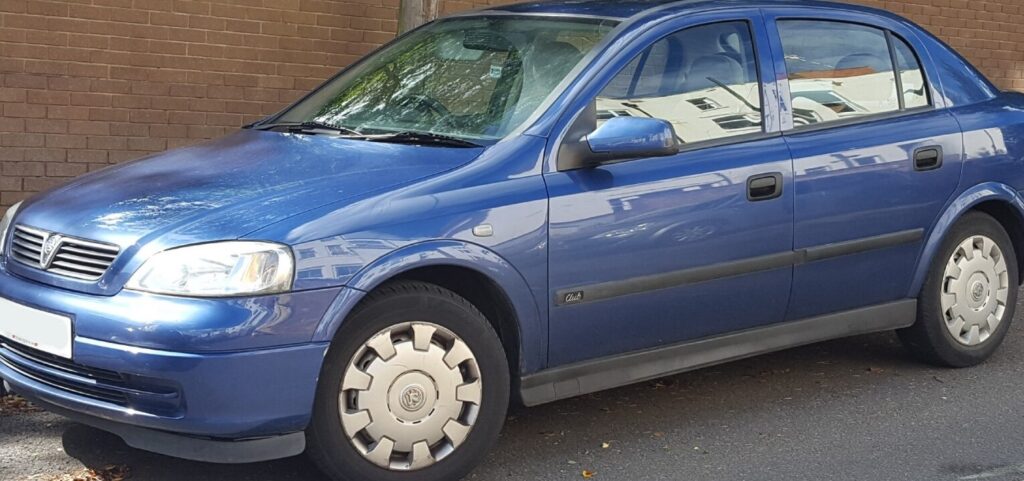
The Vauxhall Astra Mk IV, produced from 1998 to 2004, represented a significant step forward for the British marque, building upon the success of its predecessor. Within the Mk IV range, the 2.0 16V variant, generating 136 horsepower, occupied a mid-range position, offering a balance between performance and affordability. This model was a key player in the competitive C-segment hatchback market in Europe, appealing to buyers seeking a practical yet engaging driving experience. It was based on the GM262 platform, shared with other Opel/Vauxhall and Saab models.
Technical Specifications
| Brand | Vauxhall |
| Model | Astra |
| Generation | Astra Mk IV CC |
| Type (Engine) | 2.0 16V (136 Hp) |
| Start of production | 1998 |
| End of production | 2004 |
| Powertrain Architecture | Internal Combustion engine |
| Body type | Hatchback |
| Seats | 5 |
| Doors | 3-5 |
| Fuel consumption (urban) | 12 l/100 km (19.6 US mpg, 23.5 UK mpg, 8.3 km/l) |
| Fuel consumption (extra urban) | 6.6 l/100 km (35.6 US mpg, 42.8 UK mpg, 15.2 km/l) |
| Fuel consumption (combined) | 8.6 l/100 km (27.4 US mpg, 32.8 UK mpg, 11.6 km/l) |
| Fuel Type | Petrol (Gasoline) |
| Acceleration 0 – 100 km/h | 9 sec |
| Acceleration 0 – 62 mph | 9 sec |
| Acceleration 0 – 60 mph | 8.6 sec |
| Maximum speed | 208 km/h (129.25 mph) |
| Weight-to-power ratio | 8.3 kg/Hp, 119.8 Hp/tonne |
| Weight-to-torque ratio | 6 kg/Nm, 165.6 Nm/tonne |
| Power | 136 Hp @ 5600 rpm |
| Power per litre | 68.1 Hp/l |
| Torque | 188 Nm @ 3400 rpm (138.66 lb.-ft. @ 3400 rpm) |
| Engine layout | Front, Transverse |
| Engine Model/Code | X20XEV |
| Engine displacement | 1998 cm3 (121.93 cu. in.) |
| Number of cylinders | 4 |
| Engine configuration | Inline |
| Number of valves per cylinder | 4 |
| Fuel injection system | Multi-port manifold injection |
| Engine aspiration | Naturally aspirated engine |
| Engine oil capacity | 4.25 l (4.49 US qt, 3.74 UK qt) |
| Coolant capacity | 6.7 l (7.08 US qt, 5.9 UK qt) |
| Kerb Weight | 1135 kg (2502.25 lbs) |
| Max. weight | 1680 kg (3703.77 lbs) |
| Max load | 545 kg (1201.52 lbs) |
| Trunk (boot) space – minimum | 370 l (13.07 cu. ft.) |
| Trunk (boot) space – maximum | 1180 l (41.67 cu. ft.) |
| Fuel tank capacity | 52 l (13.74 US gal, 11.44 UK gal) |
| Permitted trailer load with brakes (12%) | 1300 kg (2866.01 lbs) |
| Permitted trailer load without brakes | 615 kg (1355.84 lbs) |
| Length | 4110 mm (161.81 in) |
| Width | 1710 mm (67.32 in) |
| Width including mirrors | 1967 mm (77.44 in) |
| Height | 1425 mm (56.1 in) |
| Wheelbase | 2606 mm (102.6 in) |
| Ride height (ground clearance) | 130 mm (5.12 in) |
| Minimum turning circle | 10 m (32.81 ft) |
| Drivetrain Architecture | Front wheel drive |
| Number of gears and type of gearbox | 5 gears, manual transmission |
| Front brakes | Ventilated discs |
| Rear brakes | Disc |
| Tires size | 195/60 R15 |
| Wheel rims size | 15 |
INTRODUCTION
The Vauxhall Astra Mk IV 2.0 16V, produced between 1998 and 2004, was a popular choice for drivers seeking a well-rounded and capable hatchback. Positioned above the 1.4 and 1.6-liter models in the lineup, the 2.0-liter offered a noticeable performance boost, making it appealing to those who valued a more spirited driving experience. It was available in both 3-door and 5-door body styles, catering to different lifestyle needs. The Mk IV Astra represented a significant improvement in refinement and build quality compared to its predecessor, and the 2.0 16V variant benefited from this overall enhancement.
Powertrain & Engine Architecture
At the heart of the Astra Mk IV 2.0 16V lies the X20XEV engine, a 1998cc inline-four cylinder powerplant. This engine is a naturally aspirated unit featuring multi-port fuel injection, delivering a respectable 136 horsepower at 5600 rpm and 188 Nm (138.66 lb-ft) of torque at 3400 rpm. The X20XEV is known for its relatively simple and robust design, contributing to its longevity. The engine utilizes a single overhead camshaft (SOHC) design with four valves per cylinder. The 5-speed manual transmission was the standard gearbox for this variant, providing precise gear changes and contributing to the car’s engaging driving dynamics. The transmission’s gear ratios were tuned to balance acceleration and fuel efficiency, with a relatively long fifth gear for comfortable cruising on motorways.
Driving Characteristics
The Astra Mk IV 2.0 16V offered a noticeable step up in performance compared to the lower-capacity engines. Acceleration from 0-60 mph took approximately 8.6 seconds, and it could achieve a top speed of around 129 mph. While not a sports car, the 2.0-liter engine provided ample power for everyday driving and overtaking maneuvers. The manual transmission allowed for greater driver control, and the well-weighted steering contributed to a confident feel behind the wheel. Compared to the 1.4 or 1.6-liter models, the 2.0 16V felt more relaxed at higher speeds and required less gear changing. It wasn’t as nimble as some of its rivals, but it offered a good balance of comfort and performance.
Equipment & Trim Levels
The Astra Mk IV 2.0 16V was typically offered in trim levels such as Expression, LS, and Elegance. Standard equipment generally included central locking, power steering, electric front windows, and an adjustable steering column. Higher trim levels added features such as alloy wheels, air conditioning, a CD player, and upgraded interior trim. Interior upholstery was typically cloth, with options for more premium materials on higher-spec models. The dashboard layout was functional and straightforward, with easy-to-read instruments. Optional extras included a sunroof, rear electric windows, and upgraded audio systems.
Chassis & Braking
The Astra Mk IV utilized a MacPherson strut front suspension and a torsion beam rear suspension. This setup provided a comfortable ride quality while maintaining reasonable handling characteristics. The front brakes were ventilated discs, offering good stopping power, while the rear brakes were solid discs. The 2.0 16V models typically featured a slightly thicker front stabilizer bar compared to the lower-spec variants, further improving handling stability. The car’s weight distribution was relatively balanced, contributing to its predictable handling.
Market Reception & Comparison
The Astra Mk IV 2.0 16V was generally well-received by automotive critics. It was praised for its comfortable ride, spacious interior, and respectable performance. However, some critics noted that the styling was somewhat conservative compared to some of its rivals. Compared to the 1.4 and 1.6-liter models, the 2.0 16V offered significantly better performance but at the cost of slightly lower fuel economy. The 2.0 16V was a more compelling alternative to rivals like the Ford Focus and Volkswagen Golf, offering a good balance of price, performance, and practicality. Reliability was generally good, although regular maintenance was essential to prevent issues with the engine’s timing chain.
Legacy
The Vauxhall Astra Mk IV 2.0 16V remains a popular choice among used car buyers, particularly those seeking an affordable and reliable hatchback. The X20XEV engine is known for its durability, and parts availability is generally good. While not a particularly rare or collectible model, well-maintained examples are increasingly sought after by enthusiasts. The Mk IV Astra represents a solid and dependable family car that offered a good driving experience for its time. Its simple mechanical design makes it relatively easy to maintain and repair, contributing to its enduring appeal in the used car market.