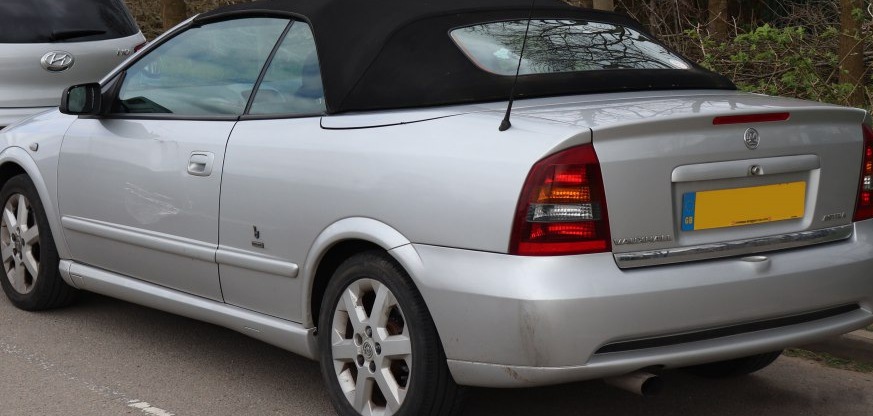
The Vauxhall Astra Mk IV Convertible 2.0 16V, produced between 2000 and 2004, represented the performance-oriented offering within the fourth generation Astra (G) convertible range. Built upon the Astra G platform (often referred to as the 1HX0 chassis code), this variant aimed to provide an open-air driving experience with a significant power upgrade compared to the base models. It was marketed primarily in Europe, offering a sporty alternative to more mainstream convertible options. The 2.0 16V model occupied the top performance tier of the convertible lineup, positioned above the lower-powered 1.6 and 1.8-liter naturally aspirated engines.
Technical Specifications
| Brand | Vauxhall |
| Model | Astra |
| Generation | Astra Mk IV Convertible |
| Type (Engine) | 2.0 16V (190 Hp) |
| Start of production | 2000 |
| End of production | 2004 |
| Powertrain Architecture | Internal Combustion engine |
| Body type | Cabriolet |
| Seats | 4 |
| Doors | 2 |
| Fuel consumption (urban) | 12.5 l/100 km (18.8 US mpg, 22.6 UK mpg, 8 km/l) |
| Fuel consumption (extra urban) | 6.8 l/100 km (34.6 US mpg, 41.5 UK mpg, 14.7 km/l) |
| Fuel consumption (combined) | 8.9 l/100 km (26.4 US mpg, 31.7 UK mpg, 11.2 km/l) |
| CO2 emissions | 214 g/km |
| Fuel Type | Petrol (Gasoline) |
| Acceleration 0 – 100 km/h | 8 sec |
| Acceleration 0 – 62 mph | 8 sec |
| Acceleration 0 – 60 mph | 7.6 sec |
| Maximum speed | 242 km/h (150.37 mph) |
| Power | 190 Hp @ 5400 rpm |
| Power per litre | 95.1 Hp/l |
| Torque | 250 Nm @ 1950 rpm (184.39 lb.-ft. @ 1950 rpm) |
| Engine layout | Front, Transverse |
| Engine Model/Code | Z20LET |
| Engine displacement | 1998 cm3 (121.93 cu. in.) |
| Number of cylinders | 4 |
| Engine configuration | Inline |
| Number of valves per cylinder | 4 |
| Fuel injection system | Multi-port manifold injection |
| Engine aspiration | Turbocharger |
| Engine oil capacity | 4.25 l (4.49 US qt, 3.74 UK qt) |
| Coolant capacity | 7.4 l (7.82 US qt, 6.51 UK qt) |
| Max. weight | 1835 kg (4045.48 lbs) |
| Trunk (boot) space – minimum | 330 l (11.65 cu. ft.) |
| Fuel tank capacity | 52 l (13.74 US gal, 11.44 UK gal) |
| Length | 4267 mm (167.99 in) |
| Width | 1709 mm (67.28 in) |
| Width including mirrors | 1989 mm (78.31 in) |
| Height | 1390 mm (54.72 in) |
| Wheelbase | 2606 mm (102.6 in) |
| Front track | 1474 mm (58.03 in) |
| Rear track | 1462 mm (57.56 in) |
| Ride height (ground clearance) | 130 mm (5.12 in) |
| Drag coefficient (Cd) | 0.28 |
| Minimum turning circle | 10 m (32.81 ft) |
| Drivetrain Architecture | Front wheel drive |
| Number of gears | 5 |
| Gearbox type | Manual transmission |
| Front brakes | Ventilated discs |
| Rear brakes | Disc |
| Tires size | 215/40 R17 |
| Wheel rims size | 17 |
Powertrain & Engine Architecture
The heart of the Astra Mk IV Convertible 2.0 16V is the Z20LET engine, a 1998cc, turbocharged inline-four cylinder powerplant. This engine is a member of the Ecotec family, known for its lightweight construction and efficient design. The Z20LET utilizes multi-port fuel injection and a single turbocharger, producing 190 horsepower at 5400 rpm and 250 Nm (184 lb-ft) of torque at a relatively low 1950 rpm. The turbocharger provides a significant boost in power compared to the naturally aspirated engines available in other Astra Convertible trims. The engine’s design emphasized responsiveness and a broad torque curve, making it suitable for both spirited driving and everyday usability. The engine is paired with a five-speed manual transmission, providing the driver with full control over the power delivery.
Driving Characteristics
The 2.0 16V Convertible offered a noticeably more engaging driving experience than its lower-powered siblings. The turbocharger provides a surge of power in the mid-range, resulting in brisk acceleration. The 0-60 mph time of around 7.6 seconds was respectable for a front-wheel-drive convertible of this era. While not a dedicated sports car, the Astra Convertible 2.0 16V provided a good balance between performance and comfort. The five-speed manual transmission allowed for precise gear selection, maximizing the engine’s power output. Compared to the 1.8-liter models, the 2.0 16V felt significantly more powerful and responsive, particularly during overtaking maneuvers. The chassis, while shared with other Astra Mk IV models, felt more composed when pushed due to the increased power and the slightly stiffer suspension setup often found on higher-spec trims.
Equipment & Trim Levels
The Astra Mk IV Convertible 2.0 16V typically came with a generous level of standard equipment. This included power windows, central locking, an upgraded stereo system, and alloy wheels. Interior upholstery was generally cloth, although leather options were available as an upgrade. Air conditioning was a common feature, and many examples were equipped with a wind deflector to reduce turbulence in the cabin when the roof was down. Optional extras included heated seats, a sunroof (in addition to the convertible top), and upgraded audio systems. The dashboard layout was typical of the Astra Mk IV, with a functional and straightforward design. Trim levels varied slightly depending on the market, but the 2.0 16V generally represented a well-equipped and desirable specification.
Chassis & Braking
The Astra Mk IV Convertible utilized a MacPherson strut front suspension and a torsion beam rear suspension. The suspension was tuned to provide a comfortable ride while maintaining reasonable handling characteristics. Braking duties were handled by ventilated disc brakes at the front and solid disc brakes at the rear. The braking system was adequate for the car’s performance, but it wasn’t particularly sporty. The steering was power-assisted and provided a reasonable level of feedback. The chassis was reinforced compared to the standard Astra hatchback to compensate for the lack of a fixed roof, improving torsional rigidity. Stabilizer bars were fitted front and rear to reduce body roll during cornering.
Market Reception & Comparison
The Astra Mk IV Convertible 2.0 16V was generally well-received by automotive critics. It was praised for its stylish design, enjoyable driving experience, and relatively affordable price. However, some critics noted that the interior quality wasn’t quite as refined as some of its competitors. Compared to other convertibles in its class, such as the Peugeot 306 Cabriolet and the Renault Megane Cabriolet, the Astra offered a good balance of performance, practicality, and value. Fuel economy was reasonable for a turbocharged engine, averaging around 26.4 US mpg in combined driving. Reliability was generally good, although turbocharger issues could occasionally arise with higher-mileage examples.
Legacy
The Astra Mk IV Convertible 2.0 16V remains a popular choice among enthusiasts today. The Z20LET engine is known for its tunability, and many owners have modified their cars to increase power output. The car’s relatively simple mechanical design makes it relatively easy to maintain. However, finding well-maintained examples can be challenging, as many have suffered from neglect or have been subjected to harsh use. Rust can also be an issue, particularly on older examples. Despite these potential drawbacks, the Astra Mk IV Convertible 2.0 16V offers a fun and affordable way to experience open-air motoring. Its combination of performance, style, and practicality has ensured its continued popularity in the used car market.