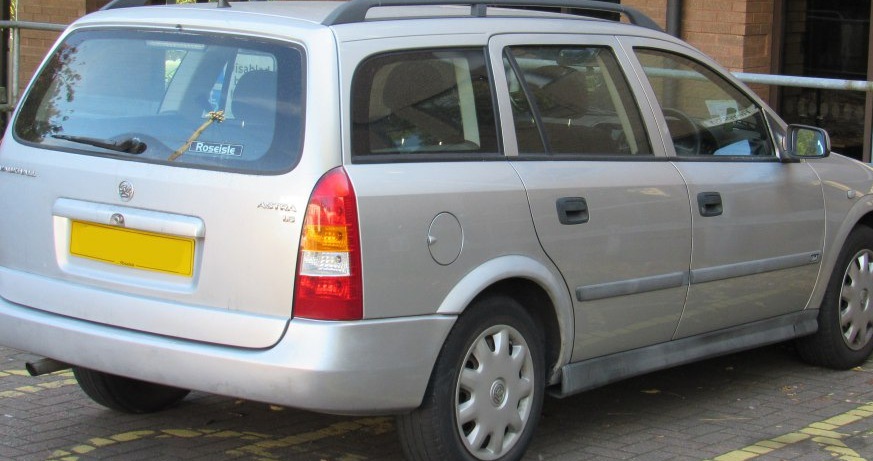
The Vauxhall Astra Mk IV Estate 1.2 16V, produced between 1998 and 2000, represented the entry point into the fourth-generation Astra range, specifically the practical estate (station wagon) body style. Positioned as an affordable and economical family vehicle, this variant aimed to provide spaciousness and utility without the higher costs associated with larger engines or more luxurious trim levels. It was part of the G platform series, internally designated as the 1HX0 for the estate version, and played a significant role in Vauxhall’s market share within the UK and broader European markets. This model offered a balance between practicality and running costs, appealing to buyers prioritizing fuel efficiency and cargo capacity.
Technical Specifications
| Brand | Vauxhall |
| Model | Astra |
| Generation | Astra Mk IV Estate |
| Type (Engine) | 1.2 16V (65 Hp) |
| Start of production | 1998 |
| End of production | 2000 |
| Powertrain Architecture | Internal Combustion engine |
| Body type | Station wagon (estate) |
| Seats | 5 |
| Doors | 5 |
| Fuel consumption (urban) | 8 l/100 km (29.4 US mpg, 35.3 UK mpg, 12.5 km/l) |
| Fuel consumption (extra urban) | 5.2 l/100 km (45.2 US mpg, 54.3 UK mpg, 19.2 km/l) |
| Fuel consumption (combined) | 6.2 l/100 km (37.9 US mpg, 45.6 UK mpg, 16.1 km/l) |
| Fuel Type | Petrol (Gasoline) |
| Weight-to-power ratio | 16.4 kg/Hp, 61.1 Hp/tonne |
| Weight-to-torque ratio | 16.6 kg/Nm, 60.2 Nm/tonne |
| Power | 65 Hp |
| Power per litre | 54.2 Hp/l |
| Torque | 64 Nm @ 5600 rpm (47.2 lb.-ft. @ 5600 rpm) |
| Engine layout | Front, Transverse |
| Engine Model/Code | X12XE |
| Engine displacement | 1199 cm3 (73.17 cu. in.) |
| Number of cylinders | 4 |
| Engine configuration | Inline |
| Fuel injection system | Multi-port manifold injection |
| Engine aspiration | Naturally aspirated engine |
| Engine oil capacity | 3.5 l (3.7 US qt | 3.08 UK qt) |
| Coolant capacity | 5.2 l (5.49 US qt | 4.58 UK qt) |
| Kerb Weight | 1063 kg (2343.51 lbs.) |
| Max. weight | 1640 kg (3615.58 lbs.) |
| Max load | 577 kg (1272.07 lbs.) |
| Trunk (boot) space – minimum | 481 l (16.99 cu. ft.) |
| Length | 4290 mm (168.9 in.) |
| Width | 1709 mm (67.28 in.) |
| Height | 1509 mm (59.41 in.) |
| Wheelbase | 2611 mm (102.8 in.) |
| Front track | 1481 mm (58.31 in.) |
| Rear track | 1481 mm (58.31 in.) |
| Ride height (ground clearance) | 140 mm (5.51 in.) |
| Drag coefficient (Cd) | 0.32 |
| Drivetrain Architecture | The Internal combustion engine (ICE) drives the front wheels of the vehicle. |
| Drive wheel | Front wheel drive |
| Number of gears and type of gearbox | 5 gears, automatic transmission |
| Front brakes | Ventilated discs |
| Rear brakes | Drum |
| Tires size | 185/65 R15 |
| Wheel rims size | 15 |
Powertrain & Engine Architecture
The heart of the Astra Mk IV Estate 1.2 16V is the X12XE engine, a 1.2-liter inline-four cylinder petrol engine. This engine utilizes a multi-port fuel injection system, delivering fuel directly into the intake ports, optimizing combustion efficiency. The ‘16V’ designation indicates the engine features four valves per cylinder, enhancing breathing and contributing to a relatively high power output for its displacement. The X12XE is a naturally aspirated engine, meaning it doesn’t employ a turbocharger or supercharger. The engine’s modest 65 horsepower and 64 Nm (47.2 lb-ft) of torque are delivered at 5600 rpm. Paired with a five-speed automatic transmission, the powertrain was designed for smooth, if not particularly brisk, acceleration. The automatic transmission, while offering convenience, was a three-speed unit, which impacted overall efficiency and responsiveness compared to the available five-speed manual gearbox.
Driving Characteristics
The 1.2 16V automatic configuration resulted in a driving experience focused on economy and ease of use rather than performance. Acceleration was leisurely, and overtaking required careful planning. The three-speed automatic transmission, while smooth, lacked the versatility of a manual or more modern automatic with additional gears. Gear ratios were optimized for fuel efficiency, meaning the engine often operated at higher RPMs during highway cruising. Compared to the 1.6-liter and 1.8-liter variants, the 1.2 felt noticeably underpowered, especially when fully loaded with passengers and cargo. However, the lighter engine weight contributed to balanced handling, and the suspension provided a comfortable ride, making it well-suited for everyday driving and urban commutes.
Equipment & Trim Levels
The 1.2 16V Estate typically came with a basic level of equipment, reflecting its position as the entry-level model. Standard features generally included central locking, power steering, and an adjustable steering column. Interior upholstery was typically cloth, and the dashboard featured a functional, if somewhat basic, design. Optional extras, such as air conditioning, electric windows, and an upgraded stereo system, were available, but added to the overall cost. Trim levels were relatively limited, with the focus being on providing a practical and affordable vehicle. Safety features were also basic, typically including driver and passenger airbags and anti-lock brakes (ABS) on some models.
Chassis & Braking
The Astra Mk IV Estate utilized a MacPherson strut front suspension and a torsion beam rear suspension. This setup provided a good balance between ride comfort and handling. The 1.2 16V variant typically featured ventilated disc brakes on the front wheels and drum brakes on the rear. This configuration was adequate for the vehicle’s weight and power output, but lacked the stopping power of the all-disc brake setups found on higher-spec models. Stabilizer bars were present, contributing to reduced body roll during cornering. The relatively lightweight nature of the 1.2 engine helped to maintain a balanced chassis, enhancing handling characteristics.
Market Reception & Comparison
The Astra Mk IV Estate 1.2 16V automatic received mixed reviews. Critics acknowledged its affordability and practicality but often criticized its lack of performance. Fuel economy was generally praised, making it an attractive option for budget-conscious buyers. Compared to the 1.6-liter and 1.8-liter variants, the 1.2 offered significantly lower running costs but at the expense of driving enjoyment. The 1.6-liter offered a better balance of performance and economy, while the 1.8-liter provided more power for those willing to sacrifice fuel efficiency. The 1.9 TDI diesel variant was also a popular alternative, offering exceptional fuel economy and strong torque, but with a higher initial purchase price.
Legacy
The X12XE engine, while not known for its outright performance, proved to be a relatively reliable unit. Common issues were generally minor, such as oil leaks and sensor failures. The automatic transmission, however, could be prone to wear and tear, particularly if not regularly serviced. Today, the Astra Mk IV Estate 1.2 16V is a relatively affordable classic car, appealing to those seeking a practical and economical vehicle. Parts availability is generally good, and the simple engine design makes it relatively easy to maintain. While not a collector’s item, it remains a popular choice for everyday transportation and a testament to Vauxhall’s commitment to providing affordable and reliable vehicles.