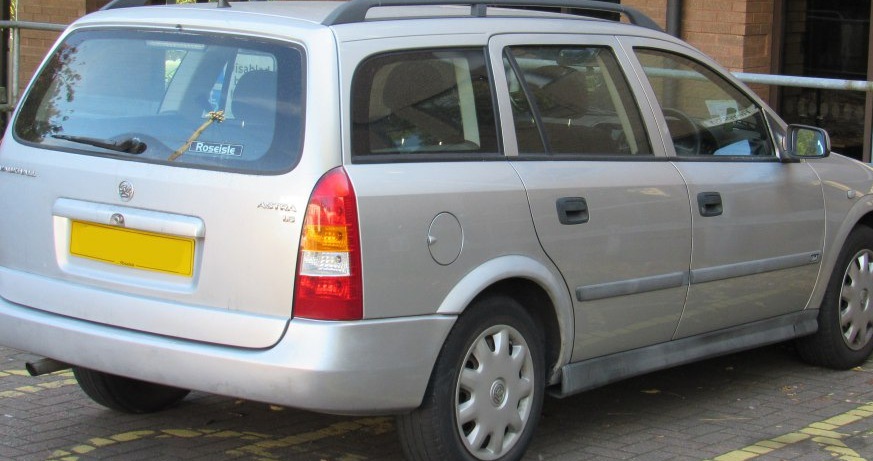
The Vauxhall Astra Mk IV Estate 1.7 TD, produced between 1998 and 2000, represented an economical and practical offering within the broader Mk IV Astra range (1998-2004), known internally as the G platform. This variant, powered by a turbocharged diesel engine, was specifically aimed at buyers prioritizing fuel efficiency and load-carrying capacity over outright performance. Positioned as the entry-level diesel option in the estate body style, it catered to families and individuals needing a versatile vehicle for both daily commuting and hauling goods. The Mk IV Astra was a significant model for Vauxhall, representing a substantial step forward in design, safety, and refinement compared to its predecessor.
Technical Specifications
| Brand | Vauxhall |
| Model | Astra |
| Generation | Astra Mk IV Estate |
| Type (Engine) | 1.7 TD (68 Hp) |
| Start of production | 1998 |
| End of production | 2000 |
| Powertrain Architecture | Internal Combustion engine |
| Body type | Station wagon (estate) |
| Seats | 5 |
| Doors | 5 |
| Fuel consumption (urban) | 7.8 l/100 km (30.2 US mpg, 36.2 UK mpg, 12.8 km/l) |
| Fuel consumption (extra urban) | 5.1 l/100 km (46.1 US mpg, 55.4 UK mpg, 19.6 km/l) |
| Fuel consumption (combined) | 6.1 l/100 km (38.6 US mpg, 46.3 UK mpg, 16.4 km/l) |
| CO2 emissions | 163 g/km |
| Fuel Type | Diesel |
| Acceleration 0 – 100 km/h | 17.5 sec |
| Acceleration 0 – 62 mph | 17.5 sec |
| Acceleration 0 – 60 mph | 16.6 sec |
| Maximum speed | 163 km/h (101.28 mph) |
| Weight-to-power ratio | 16.9 kg/Hp, 59.1 Hp/tonne |
| Weight-to-torque ratio | 8.7 kg/Nm, 114.8 Nm/tonne |
| Power | 68 Hp @ 4500 rpm |
| Power per litre | 40 Hp/l |
| Torque | 132 Nm @ 1800 rpm (97.36 lb.-ft. @ 1800 rpm) |
| Engine layout | Front, Transverse |
| Engine Model/Code | X17DTL |
| Engine displacement | 1700 cm3 (103.74 cu. in.) |
| Number of cylinders | 4 |
| Engine configuration | Inline |
| Fuel injection system | Precombustion chamber injection |
| Engine aspiration | Turbocharger |
| Engine oil capacity | 5.5 l (5.81 US qt | 4.84 UK qt) |
| Coolant capacity | 8.7 l (9.19 US qt | 7.65 UK qt) |
| Kerb Weight | 1150 kg (2535.32 lbs.) |
| Max. weight | 1750 kg (3858.09 lbs.) |
| Max load | 600 kg (1322.77 lbs.) |
| Trunk (boot) space – minimum | 481 l (16.99 cu. ft.) |
| Fuel tank capacity | 52 l (13.74 US gal | 11.44 UK gal) |
| Length | 4290 mm (168.9 in.) |
| Width | 1709 mm (67.28 in.) |
| Height | 1509 mm (59.41 in.) |
| Wheelbase | 2611 mm (102.8 in.) |
| Front track | 1481 mm (58.31 in.) |
| Ride height (ground clearance) | 140 mm (5.51 in.) |
| Drivetrain Architecture | Front wheel drive |
| Number of gears | 5 |
| Gearbox type | Manual transmission |
| Front brakes | Ventilated discs |
| Rear brakes | Drum |
| Tires size | 195/60 R15 |
| Wheel rims size | 15 |
Powertrain & Engine Architecture
The heart of the Astra Mk IV Estate 1.7 TD was the X17DTL engine, a 1.7-liter inline-four cylinder diesel. This engine utilized a precombustion chamber injection system, a common technology in European diesels of the era. This system involved injecting fuel into a small precombustion chamber within the cylinder head, where it partially ignited before being fully combusted in the main cylinder. This design aided in smoother combustion and reduced engine noise compared to direct injection systems of the time. A turbocharger was employed to boost power output, bringing the engine’s peak output to 68 horsepower at 4500 rpm and 132 Nm (97 lb-ft) of torque at 1800 rpm. The engine’s relatively low compression ratio and turbocharging contributed to its fuel efficiency. The transmission was a standard five-speed manual gearbox, chosen for its simplicity and cost-effectiveness.
Driving Characteristics
The 1.7 TD automatic variant offered a decidedly unhurried driving experience. Acceleration was slow, taking approximately 17.5 seconds to reach 62 mph (100 km/h). The focus was firmly on fuel economy rather than performance. The engine’s torque, while modest, was available from relatively low engine speeds, making it adequate for everyday driving and hauling loads. The five-speed manual transmission provided a reasonable spread of gears, allowing the driver to keep the engine within its optimal operating range. Compared to the more powerful petrol variants (like the 1.8 or 2.0-liter engines) or even the later 2.0-liter direct injection diesel, the 1.7 TD felt significantly less responsive. However, it offered a smoother and more relaxed driving experience, particularly on long journeys.
Equipment & Trim Levels
The 1.7 TD Estate typically came with a fairly basic level of equipment. Standard features generally included central locking, power steering, and an adjustable steering column. Interior upholstery was typically cloth, and the dashboard featured a functional, if somewhat utilitarian, design. Options available included air conditioning, electric windows, and an upgraded stereo system. Trim levels were relatively limited for this variant, with most examples being fairly consistent in their specification. The emphasis was on providing a practical and affordable vehicle, rather than luxury or extensive features.
Chassis & Braking
The Astra Mk IV Estate’s chassis featured independent suspension at the front, utilizing MacPherson struts, and a semi-independent torsion beam suspension at the rear. This setup provided a reasonable balance between ride comfort and handling. Braking was accomplished via ventilated discs on the front wheels and drum brakes on the rear. This configuration was typical for vehicles in this weight class and price range during the late 1990s. Anti-lock braking (ABS) was often an optional extra, and its presence varied depending on the specific vehicle. Stabilizer bars were fitted to both the front and rear axles to reduce body roll during cornering.
Market Reception & Comparison
The Astra Mk IV Estate 1.7 TD was generally well-received as a practical and economical workhorse. Critics praised its fuel efficiency and spacious interior, but noted its lack of performance. Compared to other diesel estate cars of the time, such as the Ford Focus Estate TDDi or the Peugeot 306 Estate HDi, the Astra offered a competitive level of fuel economy and practicality. However, the Focus and 306 often offered more refined engines and a slightly more modern interior. Within the Astra lineup, the 1.7 TD was positioned as the entry-level diesel option, appealing to buyers on a budget who prioritized fuel economy over performance. The more powerful 2.0-liter diesel variants offered significantly improved performance but came at a higher price.
Legacy
The X17DTL engine, while not known for being particularly high-tech, proved to be relatively reliable. With proper maintenance, these engines could accumulate high mileage. Today, the Astra Mk IV Estate 1.7 TD is a relatively affordable used car, appealing to those seeking a practical and economical vehicle for light duties. Parts availability is generally good, and the simple mechanical design makes it relatively easy to maintain. While not a collector’s item, it represents a solid and dependable example of late 1990s European automotive engineering. The 1.7 TD variant, in particular, is remembered for its exceptional fuel economy and its ability to provide affordable transportation for families and individuals alike.