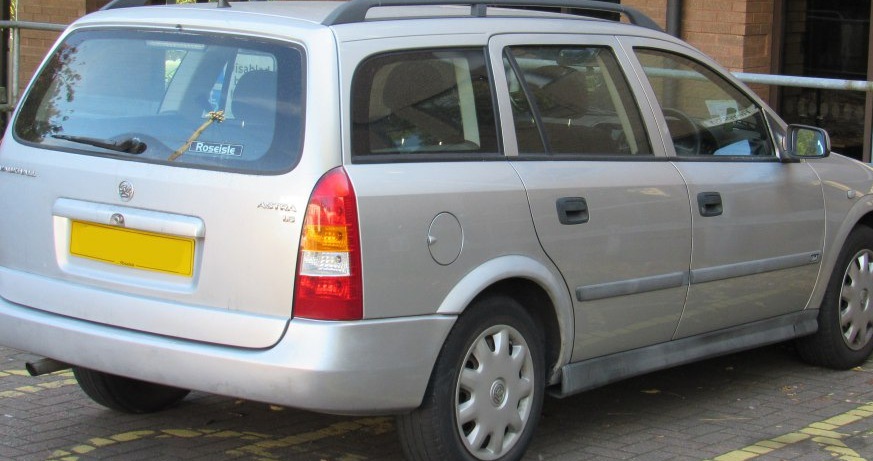
The Vauxhall Astra Mk IV Estate 1.8 16V, produced between 1998 and 2000, represented a practical and relatively affordable option within the fourth generation (Mk IV) Astra range. Positioned as a mid-range offering in the estate body style, it aimed to provide a balance between fuel economy, performance, and cargo capacity for families and individuals needing a versatile vehicle. This variant was built on the GM260 platform, also known as the 1HX0, shared with other Opel/Vauxhall and Saab models of the era. The estate (station wagon) body style was particularly popular in Europe, offering a compelling alternative to hatchbacks and saloons.
Technical Specifications
| Brand | Vauxhall |
| Model | Astra |
| Generation | Astra Mk IV Estate |
| Type (Engine) | 1.8 16V (116 Hp) |
| Start of production | 1998 |
| End of production | 2000 |
| Powertrain Architecture | Internal Combustion engine |
| Body type | Station wagon (estate) |
| Seats | 5 |
| Doors | 5 |
| Fuel consumption (urban) | 10.9 l/100 km (21.6 US mpg, 25.9 UK mpg, 9.2 km/l) |
| Fuel consumption (extra urban) | 6.1 l/100 km (38.6 US mpg, 46.3 UK mpg, 16.4 km/l) |
| Fuel consumption (combined) | 8 l/100 km (29.4 US mpg, 35.3 UK mpg, 12.5 km/l) |
| Fuel Type | Petrol (Gasoline) |
| Acceleration 0 – 100 km/h | 10.5 sec |
| Acceleration 0 – 62 mph | 10.5 sec |
| Acceleration 0 – 60 mph | 10 sec |
| Maximum speed | 195 km/h (121.17 mph) |
| Weight-to-power ratio | 10.3 kg/Hp, 96.7 Hp/tonne |
| Weight-to-torque ratio | 7.1 kg/Nm, 141.7 Nm/tonne |
| Power | 116 Hp @ 5400 rpm |
| Power per litre | 64.6 Hp/l |
| Torque | 170 Nm @ 3400 rpm (125.39 lb.-ft. @ 3400 rpm) |
| Engine layout | Front, Transverse |
| Engine Model/Code | X18XE1 |
| Engine displacement | 1796 cm3 (109.6 cu. in.) |
| Number of cylinders | 4 |
| Engine configuration | Inline |
| Cylinder Bore | 80.5 mm (3.17 in.) |
| Piston Stroke | 88.2 mm (3.47 in.) |
| Compression ratio | 10.5:1 |
| Number of valves per cylinder | 4 |
| Engine oil capacity | 4.25 l (4.49 US qt | 3.74 UK qt) |
| Coolant capacity | 6.3 l (6.66 US qt | 5.54 UK qt) |
| Kerb Weight | 1200 kg (2645.55 lbs.) |
| Max. weight | 1750 kg (3858.09 lbs.) |
| Max load | 550 kg (1212.54 lbs.) |
| Trunk (boot) space – minimum | 481 l (16.99 cu. ft.) |
| Fuel tank capacity | 52 l (13.74 US gal | 11.44 UK gal) |
| Length | 4290 mm (168.9 in.) |
| Width | 1709 mm (67.28 in.) |
| Height | 1509 mm (59.41 in.) |
| Wheelbase | 2611 mm (102.8 in.) |
| Drivetrain Architecture | The Internal combustion engine (ICE) drives the front wheels of the vehicle. |
| Drive wheel | Front wheel drive |
| Number of gears and type of gearbox | 5 gears, manual transmission |
| Front brakes | Ventilated discs |
| Rear brakes | Disc |
Powertrain & Engine Architecture
The heart of the Astra Mk IV Estate 1.8 16V was the X18XE1 engine, a 1.8-liter inline-four cylinder petrol engine. This engine was a mainstay of Vauxhall/Opel’s lineup during the 1990s and early 2000s. It featured a cast iron block and an aluminum cylinder head with dual overhead camshafts (DOHC) and four valves per cylinder – hence the “16V” designation. Fuel delivery was managed by Bosch Motronic MP5.1.1 engine management system, utilizing multi-point sequential fuel injection. The X18XE1 was known for its relatively simple design and robust construction, contributing to its generally good reliability. The engine produced 116 horsepower at 5400 rpm and 170 Nm (125 lb-ft) of torque at 3400 rpm. The five-speed manual transmission was the standard offering, providing a reasonably direct connection to the engine.
Driving Characteristics
The 1.8 16V engine, paired with the five-speed manual gearbox, offered a decent balance of performance and economy. Acceleration from 0-60 mph took around 10 seconds, which was adequate for everyday driving but didn’t offer particularly sporty performance. The engine felt responsive enough in the mid-range, making overtaking on the highway manageable. The gear ratios were well-spaced, allowing the engine to operate efficiently at cruising speeds. Compared to the lower-powered 1.4-liter versions, the 1.8 offered a noticeable improvement in both acceleration and overall drivability. However, it lacked the punch of the more expensive and performance-oriented Astra variants, such as those equipped with the 2.0-liter 16V or the turbocharged engines.
Equipment & Trim Levels
The Astra Mk IV Estate 1.8 16V typically came with a reasonable level of standard equipment. This included central locking, power steering, electric front windows, and an adjustable steering column. Interior upholstery was generally cloth, with a relatively simple dashboard layout. Optional extras included air conditioning, alloy wheels, a sunroof, and upgraded audio systems. Trim levels varied slightly depending on the market, but generally, the 1.8 16V estate occupied a mid-range position, offering more features than the base models but falling short of the luxury offered by the top-of-the-line trims.
Chassis & Braking
The Astra Mk IV Estate featured independent suspension at the front, typically utilizing MacPherson struts, and a semi-independent torsion beam suspension at the rear. The front brakes were ventilated discs, providing good stopping power, while the rear brakes were typically solid discs. Stabilizer bars were fitted to both the front and rear axles to reduce body roll during cornering. The suspension setup was tuned for comfort, providing a reasonably smooth ride, although it wasn’t particularly sporty. The chassis was relatively lightweight, contributing to the car’s overall agility.
Market Reception & Comparison
The Astra Mk IV Estate 1.8 16V was generally well-received by automotive critics as a practical and reliable family car. It offered a good amount of space for passengers and luggage, combined with reasonable fuel economy and a comfortable ride. Compared to other estate cars in its class, such as the Ford Mondeo Estate and the Volkswagen Passat Estate, the Astra offered a competitive price point and a good level of standard equipment. However, some critics noted that the interior design was somewhat dated and that the engine lacked the refinement of some of its rivals. Fuel economy was respectable for the time, averaging around 29-35 mpg in mixed driving conditions.
Legacy
The X18XE1 engine, found in the Astra Mk IV Estate 1.8 16V, has proven to be a durable and reliable unit. Many examples are still on the road today, testament to its robust construction. While not particularly high-performance, it’s a relatively easy engine to maintain and repair, making it a popular choice for classic car enthusiasts and budget-conscious drivers. In the used car market, these Astras are often sought after for their practicality, affordability, and relatively low running costs. However, potential buyers should be aware of common issues such as corrosion and wear and tear on suspension components.