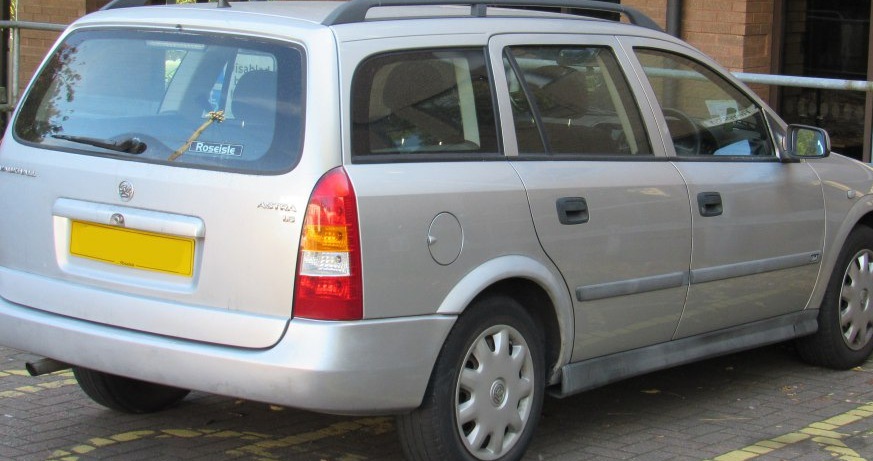
The Vauxhall Astra Mk IV Estate 2.0 16V, produced between 1998 and 2000, represented a practical and relatively sporty offering within the fourth generation of the Astra range (designated the G platform internally). Positioned as a mid-to-upper trim level within the estate body style, it catered to buyers seeking a blend of family-friendly space, reasonable performance, and a more refined driving experience than the base models. The Mk IV Astra was significant as it was the first Astra to be designed entirely under General Motors ownership following their acquisition of Vauxhall, and it shared its underpinnings with the Opel Astra F. This variant, with its 2.0-liter 16-valve engine, aimed to provide a more engaging drive compared to the smaller displacement engines available.
Technical Specifications
| Brand | Vauxhall |
| Model | Astra |
| Generation | Astra Mk IV Estate |
| Type (Engine) | 2.0 16V (136 Hp) |
| Start of production | 1998 |
| End of production | 2000 |
| Powertrain Architecture | Internal Combustion engine |
| Body type | Station wagon (estate) |
| Seats | 5 |
| Doors | 5 |
| Fuel consumption (urban) | 12.1 l/100 km (19.4 US mpg, 23.3 UK mpg, 8.3 km/l) |
| Fuel consumption (extra urban) | 6.8 l/100 km (34.6 US mpg, 41.5 UK mpg, 14.7 km/l) |
| Fuel consumption (combined) | 8.8 l/100 km (26.7 US mpg, 32.1 UK mpg, 11.4 km/l) |
| CO2 emissions | 212 g/km |
| Fuel Type | Petrol (Gasoline) |
| Acceleration 0 – 100 km/h | 9.5 sec |
| Acceleration 0 – 62 mph | 9.5 sec |
| Acceleration 0 – 60 mph | 9 sec |
| Maximum speed | 203 km/h (126.14 mph) |
| Weight-to-power ratio | 8.6 kg/Hp, 116.2 Hp/tonne |
| Weight-to-torque ratio | 6.2 kg/Nm, 160.7 Nm/tonne |
| Power | 136 Hp @ 5600 rpm |
| Power per litre | 68.1 Hp/l |
| Torque | 188 Nm @ 3400 rpm (138.66 lb.-ft. @ 3400 rpm) |
| Engine layout | Front, Transverse |
| Engine Model/Code | X20XEV |
| Engine displacement | 1998 cm3 (121.93 cu. in.) |
| Number of cylinders | 4 |
| Engine configuration | Inline |
| Cylinder Bore | 86 mm (3.39 in.) |
| Piston Stroke | 86 mm (3.39 in.) |
| Compression ratio | 8.8:1 |
| Number of valves per cylinder | 4 |
| Fuel injection system | Multi-port manifold injection |
| Engine aspiration | Naturally aspirated engine |
| Engine oil capacity | 4.25 l (4.49 US qt | 3.74 UK qt) |
| Coolant capacity | 6.7 l (7.08 US qt | 5.9 UK qt) |
| Kerb Weight | 1170 kg (2579.41 lbs.) |
| Max. weight | 1770 kg (3902.18 lbs.) |
| Max load | 600 kg (1322.77 lbs.) |
| Trunk (boot) space – minimum | 481 l (16.99 cu. ft.) |
| Fuel tank capacity | 52 l (13.74 US gal | 11.44 UK gal) |
| Length | 4290 mm (168.9 in.) |
| Width | 1709 mm (67.28 in.) |
| Height | 1509 mm (59.41 in.) |
| Wheelbase | 2611 mm (102.8 in.) |
| Front track | 1481 mm (58.31 in.) |
| Ride height (ground clearance) | 140 mm (5.51 in.) |
| Drag coefficient (Cd) | 0.32 |
| Drivetrain Architecture | Front wheel drive |
| Number of gears | 5 |
| Gearbox type | Manual transmission |
| Front brakes | Ventilated discs |
| Rear brakes | Disc |
| Tires size | 195/60 R15 |
| Wheel rims size | 15 |
Powertrain & Engine Architecture
The heart of this Astra Estate was the X20XEV engine, a 1998cc inline-four cylinder petrol engine. This engine was a member of Vauxhall/Opel’s ‘Ecotec’ family, known for its focus on efficiency and refinement. The X20XEV featured a cast iron block with an aluminum cylinder head, incorporating dual overhead camshafts (DOHC) and four valves per cylinder. Fuel delivery was handled by a Bosch Motronic multi-port fuel injection system, optimizing fuel atomization and combustion. The engine’s 8.8:1 compression ratio was a compromise between performance and the ability to run on readily available fuel grades. The five-speed manual transmission was a standard offering, providing a direct and engaging driving experience. The gearbox was known for its relatively light shift action, though not particularly sporty feel.
Driving Characteristics
The 136 horsepower and 188 Nm (138.66 lb-ft) of torque provided by the X20XEV engine delivered respectable, if not exhilarating, performance. Acceleration from 0-60 mph took around 9 seconds, and the car could reach a top speed of 126 mph. The engine felt responsive in the mid-range, making it suitable for everyday driving and overtaking maneuvers. Compared to the lower-powered 1.6L and 1.8L variants, the 2.0L offered a noticeable improvement in both acceleration and cruising ability. However, it wasn’t as sporty as the later, more powerful V6 models. The manual transmission allowed for good driver control, and the gear ratios were well-matched to the engine’s power delivery. The estate body style did add weight compared to the hatchback, slightly impacting acceleration and handling.
Equipment & Trim Levels
The 2.0 16V Estate typically came with a reasonable level of standard equipment. This included central locking, electric front windows, power steering, and an adjustable steering column. Interior upholstery was typically cloth, with options for upgraded materials. Air conditioning was often an optional extra, as were alloy wheels and a CD player. Trim levels varied slightly depending on the market, but generally, this variant sat in the mid-range of the Astra Estate lineup, offering a good balance of features and price. Safety features included driver and passenger airbags, and ABS brakes were often included as standard or an option.
Chassis & Braking
The Astra Mk IV Estate utilized a MacPherson strut front suspension and a torsion beam rear suspension. This setup provided a comfortable ride quality, although it wasn’t particularly sporty in terms of handling. The front brakes were ventilated discs, providing good stopping power, while the rear brakes were typically solid discs. The 195/60 R15 tires offered a good compromise between grip and ride comfort. Stabilizer bars were fitted to both the front and rear axles to reduce body roll during cornering.
Market Reception & Comparison
The Astra Mk IV Estate 2.0 16V was generally well-received by automotive critics. It was praised for its spacious interior, comfortable ride, and relatively refined engine. Fuel economy was considered reasonable for a car of its class, averaging around 26.7 US mpg in combined driving. Compared to other estate cars in its segment, such as the Ford Mondeo Estate and the Peugeot 306 Estate, the Astra offered a competitive package in terms of price, features, and performance. However, some critics noted that the interior styling was somewhat bland and that the handling wasn’t as engaging as some of its rivals.
Legacy
The X20XEV engine proved to be a relatively reliable unit, although it was known to be susceptible to oil leaks as it aged. Regular maintenance, including oil changes and timing belt replacements, was crucial to ensuring its longevity. Today, the Astra Mk IV Estate 2.0 16V is a relatively affordable classic car, appealing to those seeking a practical and reliable estate car with a touch of retro charm. Parts availability is generally good, and the car’s relatively simple mechanical design makes it relatively easy to maintain and repair. While not a particularly collectible model, it represents a solid and dependable offering from Vauxhall’s past.