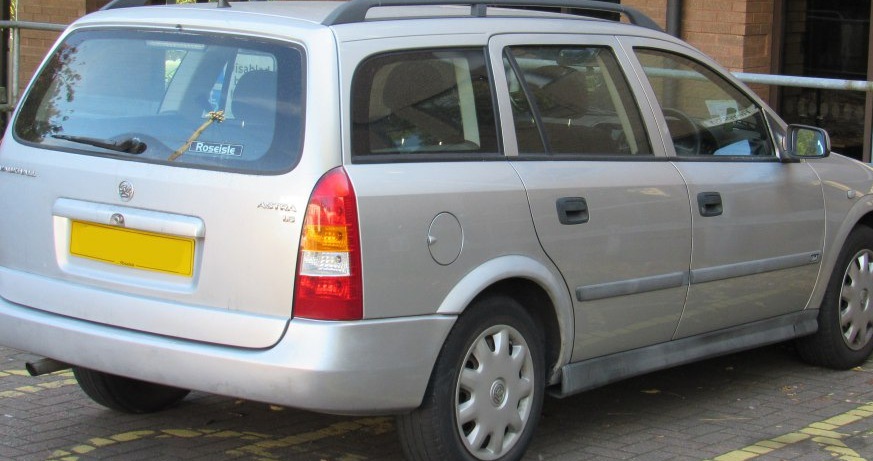
The Vauxhall Astra Mk IV Estate 2.0 DTI 16V, produced between 1999 and 2000, represented a practical and fuel-efficient option within the fourth generation (Mk IV) Astra range. Positioned as a mid-range offering in the estate body style, it catered to buyers seeking the versatility of a wagon with the economy of a diesel engine. This variant utilized the Y20DTH engine, a 2.0-liter direct injection turbocharged diesel, and was primarily sold in European markets, including the United Kingdom where it was marketed under the Vauxhall brand. It was part of the G platform, also known as the 1HX0/A3 platform, shared with other General Motors and partner vehicles.
Technical Specifications
| Brand | Vauxhall |
| Model | Astra |
| Generation | Astra Mk IV Estate |
| Type (Engine) | 2.0 DTI 16V (101 Hp) |
| Start of production | 1999 |
| End of production | 2000 |
| Powertrain Architecture | Internal Combustion engine |
| Body type | Station wagon (estate) |
| Seats | 5 |
| Doors | 5 |
| Fuel consumption (urban) | 7.7 l/100 km (30.5 US mpg, 36.7 UK mpg, 13 km/l) |
| Fuel consumption (extra urban) | 4.8 l/100 km (49 US mpg, 58.9 UK mpg, 20.8 km/l) |
| Fuel consumption (combined) | 5.9 l/100 km (39.9 US mpg, 47.9 UK mpg, 16.9 km/l) |
| Fuel Type | Diesel |
| Acceleration 0 – 100 km/h | 12.5 sec |
| Acceleration 0 – 62 mph | 12.5 sec |
| Acceleration 0 – 60 mph | 11.9 sec |
| Maximum speed | 187 km/h (116.2 mph) |
| Weight-to-power ratio | 13 kg/Hp, 77.1 Hp/tonne |
| Weight-to-torque ratio | 5.7 kg/Nm, 175.6 Nm/tonne |
| Power | 101 Hp @ 4000 rpm |
| Power per litre | 50.6 Hp/l |
| Torque | 230 Nm @ 1950 rpm (169.64 lb.-ft. @ 1950 rpm) |
| Engine layout | Front, Transverse |
| Engine Model/Code | Y20DTH |
| Engine displacement | 1995 cm3 (121.74 cu. in.) |
| Number of cylinders | 4 |
| Engine configuration | Inline |
| Cylinder Bore | 84 mm (3.31 in.) |
| Piston Stroke | 90 mm (3.54 in.) |
| Compression ratio | 18.5:1 |
| Number of valves per cylinder | 4 |
| Fuel injection system | Direct injection |
| Engine aspiration | Turbocharger |
| Engine oil capacity | 5.5 l (5.81 US qt | 4.84 UK qt) |
| Coolant capacity | 5.9 l (6.23 US qt | 5.19 UK qt) |
| Kerb Weight | 1310 kg (2888.06 lbs.) |
| Max. weight | 1860 kg (4100.6 lbs.) |
| Max load | 550 kg (1212.54 lbs.) |
| Trunk (boot) space – minimum | 481 l (16.99 cu. ft.) |
| Fuel tank capacity | 52 l (13.74 US gal | 11.44 UK gal) |
| Length | 4290 mm (168.9 in.) |
| Width | 1709 mm (67.28 in.) |
| Height | 1509 mm (59.41 in.) |
| Wheelbase | 2611 mm (102.8 in.) |
| Front track | 1481 mm (58.31 in.) |
| Ride height (ground clearance) | 140 mm (5.51 in.) |
| Drivetrain Architecture | Front wheel drive |
| Number of gears | 5 |
| Gearbox type | Manual transmission |
| Front brakes | Ventilated discs |
| Rear brakes | Disc |
| Tires size | 195/60 R15 |
| Wheel rims size | 15 |
Powertrain & Engine Architecture
The heart of the Astra Mk IV Estate 2.0 DTI 16V is the Y20DTH engine, a 1995cc inline-four cylinder diesel. This engine is characterized by its direct injection system, where fuel is injected directly into the combustion chamber under high pressure. This contrasts with older indirect injection systems, resulting in improved combustion efficiency and reduced emissions. The engine also features a sixteen-valve cylinder head (four valves per cylinder) and a turbocharger, which forces more air into the engine, boosting power output. The turbocharger is a key component in achieving the 101 horsepower and 230 Nm (169.64 lb-ft) of torque. The Y20DTH engine is known for its relatively robust construction, though early iterations of direct injection diesels could be susceptible to issues with the fuel injectors. The engine is transversely mounted in the front of the vehicle. The five-speed manual transmission was the standard offering for this variant, providing a balance between fuel economy and drivability.
Driving Characteristics
The 2.0 DTI 16V offered a noticeable step up in performance compared to the lower-powered 1.7 DTI version of the Astra Estate. While not a sports car by any means, the 101 hp engine provided adequate power for everyday driving and load-carrying. Acceleration from 0-60 mph took around 11.9 seconds, and top speed was approximately 116 mph. The turbocharger provided a noticeable boost in power at lower engine speeds, making overtaking maneuvers more manageable. The five-speed manual transmission allowed drivers to keep the engine in its optimal power band. Compared to the petrol-powered Astra variants, the diesel offered significantly better fuel economy, making it a popular choice for high-mileage drivers. However, the diesel engine was noticeably louder and produced more vibration than its petrol counterparts.
Equipment & Trim Levels
The 2.0 DTI 16V typically came equipped with a reasonable level of standard features. These included central locking, power steering, electric front windows, and an adjustable steering column. Interior upholstery was typically cloth, and the dashboard featured a functional, if somewhat utilitarian, design. Optional extras included air conditioning, alloy wheels, and a CD player. Trim levels varied slightly depending on the market, but generally, this variant sat in the mid-range of the Astra Estate lineup, offering a good balance of features and affordability.
Chassis & Braking
The Astra Mk IV Estate featured independent suspension at the front, typically utilizing MacPherson struts, and a semi-independent torsion beam suspension at the rear. The front brakes were ventilated discs, providing good stopping power, while the rear brakes were solid discs. The suspension setup was tuned for comfort rather than outright handling, providing a reasonably smooth ride. The 2.0 DTI 16V, being a heavier variant due to the diesel engine, often featured a slightly stiffer rear suspension setup compared to the lower-powered models to manage the increased weight.
Market Reception & Comparison
The Astra Mk IV Estate 2.0 DTI 16V was generally well-received by automotive critics as a practical and economical family car. It was praised for its fuel efficiency, spacious interior, and load-carrying capacity. However, some critics noted the engine’s noise and vibration levels. Compared to the petrol-powered Astra Estates, the 2.0 DTI 16V offered significantly better fuel economy, but at the expense of performance and refinement. Compared to other diesel estates in its class, such as the Ford Focus Estate TDCi, the Astra offered a competitive package in terms of price, features, and fuel economy.
Legacy
The Y20DTH engine, while generally reliable, is now showing its age. Common issues on higher mileage examples include wear in the turbocharger, fuel injector problems, and potential issues with the diesel particulate filter (DPF) if fitted (depending on market and year). Today, the Astra Mk IV Estate 2.0 DTI 16V represents an affordable and practical classic car. Its fuel efficiency and relatively simple mechanical design make it a popular choice for those seeking a reliable and economical estate car. Parts availability is generally good, although some specific components may be becoming increasingly difficult to find. The vehicle’s enduring popularity is a testament to its practicality and the robust nature of its diesel powertrain.