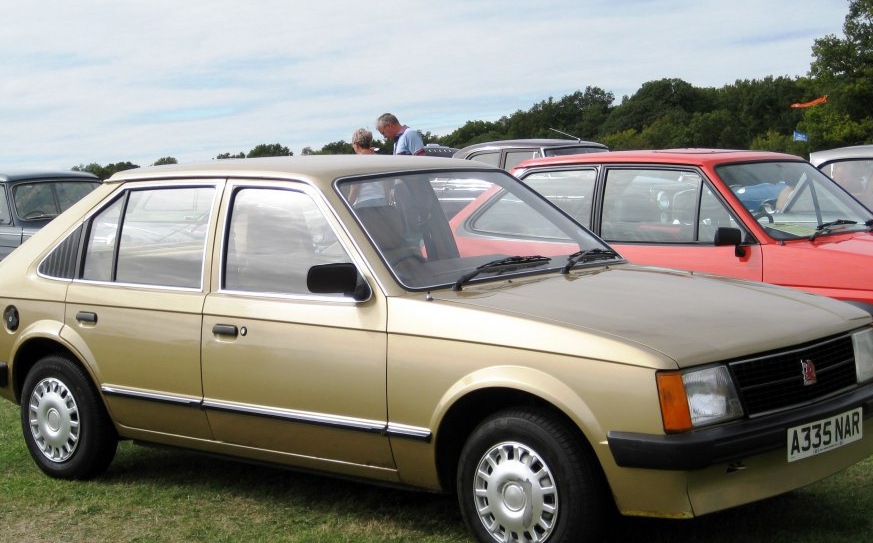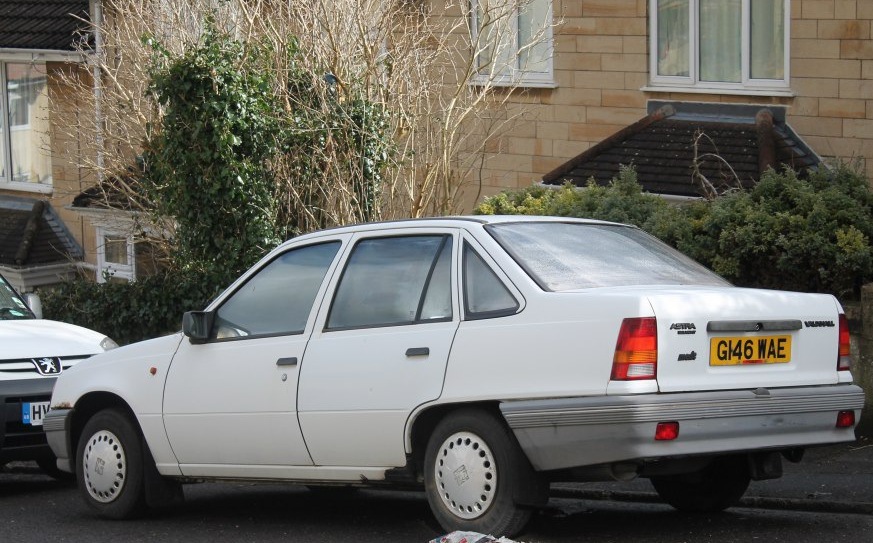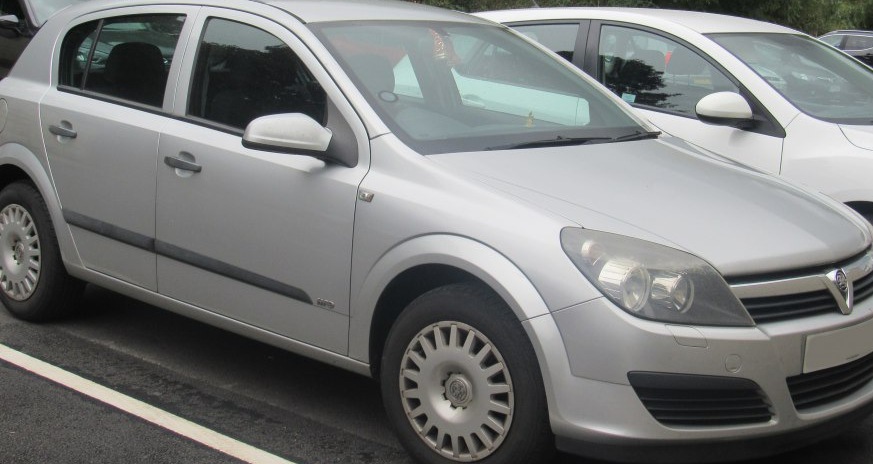
The Vauxhall Astra Mark V, produced between 2004 and 2009, represented a significant step forward for the British marque, building upon the success of its predecessor. Within the Mark V range, the 1.4-liter (90 hp) variant, typically paired with a five-speed manual transmission, served as the entry point into the Astra lineup. This model aimed to provide affordable and practical transportation for a broad customer base, prioritizing fuel efficiency and ease of use over outright performance. It was positioned below the more powerful 1.6, 1.8, and diesel variants, and also below the high-performance OPC (VXR) models. The Astra Mark V, based on the GM Delta platform, was also sold under the Opel brand across continental Europe.
Technical Specifications
| Brand | Vauxhall |
| Model | Astra |
| Generation | Astra Mk V |
| Type (Engine) | 1.4 (90 Hp) |
| Start of production | 2004 |
| End of production | 2009 |
| Powertrain Architecture | Internal Combustion engine |
| Body type | Hatchback |
| Seats | 5 |
| Doors | 5 |
| Fuel consumption (urban) | 8.2 l/100 km (28.7 US mpg) |
| Fuel consumption (extra urban) | 5.2 l/100 km (45.2 US mpg) |
| Fuel consumption (combined) | 6.3 l/100 km (37.3 US mpg) |
| CO2 emissions | 151 g/km |
| Fuel Type | Petrol (Gasoline) |
| Acceleration 0 – 100 km/h | 12.8 sec |
| Acceleration 0 – 62 mph | 12.8 sec |
| Acceleration 0 – 60 mph | 12.2 sec |
| Maximum speed | 179 km/h (111.23 mph) |
| Weight-to-power ratio | 12.8 kg/Hp |
| Weight-to-torque ratio | 9.2 kg/Nm |
| Power | 90 Hp @ 5600 rpm |
| Torque | 125 Nm @ 4000 rpm (92.2 lb.-ft. @ 4000 rpm) |
| Engine layout | Front, Transverse |
| Engine Model/Code | Z14XEP |
| Engine displacement | 1364 cm3 (83.24 cu. in.) |
| Number of cylinders | 4 |
| Engine configuration | Inline |
| Cylinder Bore | 73.4 mm (2.89 in.) |
| Piston Stroke | 80.6 mm (3.17 in.) |
| Compression ratio | 10.5:1 |
| Number of valves per cylinder | 4 |
| Fuel injection system | Multi-port manifold injection |
| Engine aspiration | Naturally aspirated |
| Engine oil capacity | 3.5 l (3.7 US qt | 3.08 UK qt) |
| Coolant capacity | 5.6 l (5.92 US qt | 4.93 UK qt) |
| Kerb Weight | 1155 kg (2546.34 lbs.) |
| Max. weight | 1705 kg (3758.88 lbs.) |
| Max load | 550 kg (1212.54 lbs.) |
| Trunk (boot) space – minimum | 350 l (12.36 cu. ft.) |
| Trunk (boot) space – maximum | 1270 l (44.85 cu. ft.) |
| Fuel tank capacity | 52 l (13.74 US gal | 11.44 UK gal) |
| Length | 4249 mm (167.28 in.) |
| Width | 1753 mm (69.02 in.) |
| Width including mirrors | 2033 mm (80.04 in.) |
| Height | 1467 mm (57.76 in.) |
| Wheelbase | 2614 mm (102.91 in.) |
| Front track | 1488 mm (58.58 in.) |
| Rear track | 1488 mm (58.58 in.) |
| Ride height (ground clearance) | 140 mm (5.51 in.) |
| Drag coefficient (Cd) | 0.32 |
| Drivetrain | Front wheel drive |
| Number of gears | 5 |
| Gearbox type | Manual transmission |
| Front brakes | Ventilated discs |
| Rear brakes | Drum |
| Tires size | 195/65 R15 |
| Wheel rims size | 15 |
Powertrain & Engine Architecture
The heart of this Astra variant is the Z14XEP engine, a 1.4-liter inline-four cylinder petrol engine. This engine belongs to the Vauxhall/Opel ‘Family 1’ engine family, known for its relatively simple design and durability. The Z14XEP utilizes a multi-port fuel injection system, delivering fuel directly into the intake ports, and a single overhead camshaft (SOHC) operating four valves per cylinder. This configuration provides a reasonable balance between power output and fuel efficiency. The engine produces 90 horsepower at 5600 rpm and 125 Nm (92.2 lb-ft) of torque at 4000 rpm. The five-speed manual transmission was the standard offering, providing a fairly conventional gear ratio spread designed for everyday driving. The transmission itself is a robust unit, though not particularly sporty in its feel.
Driving Characteristics
The 1.4-liter Astra, with its 90 hp output, wasn’t designed for exhilarating performance. Acceleration from 0-60 mph took around 12.2 seconds, and top speed was limited to 111.23 mph. However, it offered adequate power for typical urban and highway driving. The engine felt relatively responsive at lower RPMs, making it suitable for city commutes. The five-speed manual transmission allowed drivers to keep the engine in its optimal power band, but frequent downshifts were often necessary when overtaking or climbing hills. Compared to the 1.6 or 1.8-liter versions, the 1.4 felt noticeably less powerful, but it also offered better fuel economy. The gear ratios were spaced to prioritize fuel efficiency rather than outright acceleration.
Equipment & Trim Levels
The 1.4-liter Astra typically came with a basic level of equipment, reflecting its position as the entry-level model. Standard features generally included central locking, power steering, an adjustable steering column, and front airbags. Interior upholstery was typically cloth, and the dashboard featured a simple, functional design. Optional extras included air conditioning, alloy wheels, and an upgraded audio system. Trim levels varied slightly depending on the market, but generally followed a progressive structure, with higher trims adding more comfort and convenience features. The base trim was often referred to as ‘Life’ or ‘Expression’.
Chassis & Braking
The Astra Mark V utilized a MacPherson strut front suspension and a torsion beam rear suspension. This setup provided a comfortable ride quality, although it wasn’t particularly sporty in handling. The front brakes were ventilated discs, offering adequate stopping power, while the rear brakes were drums, a cost-saving measure common in entry-level models. The 1.4-liter variant, being lighter than its higher-powered siblings, didn’t require the larger brakes found on those models. Stabilizer bars were fitted to both the front and rear axles to reduce body roll during cornering.
Market Reception & Comparison
The 1.4-liter Astra was generally well-received as an affordable and practical family car. Critics praised its fuel efficiency and comfortable ride, but noted its lack of outright performance. Compared to rivals like the Ford Focus and Volkswagen Golf, the Astra offered a competitive package in terms of price and features. The 1.6-liter Astra offered a noticeable performance upgrade, but at a higher price point. The 1.9-liter diesel variants provided even better fuel economy, but were more expensive to purchase and maintain. The 1.4-liter model appealed to buyers who prioritized economy and practicality over driving excitement.
Legacy
The Z14XEP engine, while not known for being particularly exciting, proved to be a reliable unit when properly maintained. Common issues included occasional oil leaks and sensor failures, but these were generally not major concerns. Today, the 1.4-liter Astra Mark V represents an affordable entry point into classic modern motoring. Parts availability is generally good, and the relatively simple engine design makes it relatively easy to repair. While not a collector’s item, it remains a popular choice for budget-conscious buyers looking for a dependable and economical hatchback.