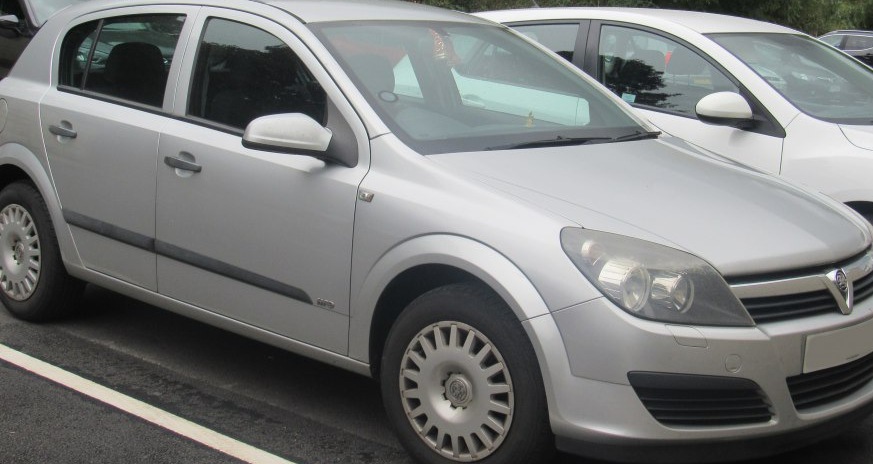
The Vauxhall Astra Mark V, produced from 2004 to 2009, represented a significant step forward for the Astra line, building upon the success of its predecessor. Within the Mark V range, the 1.6-liter (105 horsepower) variant occupied an important position as an entry-level offering, aimed at buyers prioritizing affordability and fuel efficiency. This model, typically a five-door hatchback, was a common sight on European roads and played a key role in maintaining the Astra’s popularity in the competitive C-segment. It was based on the GM Delta platform, shared with other vehicles like the Opel Astra and Chevrolet Astra.
Technical Specifications
| Brand | Vauxhall |
| Model | Astra |
| Generation | Astra Mk V |
| Type (Engine) | 1.6 (105 Hp) |
| Start of production | 2004 |
| End of production | 2009 |
| Powertrain Architecture | Internal Combustion engine |
| Body type | Hatchback |
| Seats | 5 |
| Doors | 5 |
| Fuel consumption (urban) | 8.6 l/100 km (27.4 US mpg) |
| Fuel consumption (extra urban) | 5.4 l/100 km (43.6 US mpg) |
| Fuel consumption (combined) | 6.6 l/100 km (35.6 US mpg) |
| CO2 emissions | 158 g/km |
| Fuel Type | Petrol (Gasoline) |
| Acceleration 0 – 100 km/h | 11.4 sec |
| Acceleration 0 – 62 mph | 11.4 sec |
| Acceleration 0 – 60 mph | 10.8 sec |
| Maximum speed | 185 km/h (114.95 mph) |
| Weight-to-power ratio | 11.3 kg/Hp |
| Weight-to-torque ratio | 7.9 kg/Nm |
| Power | 105 Hp @ 6000 rpm |
| Torque | 150 Nm @ 3900 rpm (110.63 lb.-ft. @ 3900 rpm) |
| Engine layout | Front, Transverse |
| Engine Model/Code | Z16XEP, Z16XE1 |
| Engine displacement | 1598 cm3 (97.52 cu. in.) |
| Number of cylinders | 4 |
| Engine configuration | Inline |
| Cylinder Bore | 79 mm (3.11 in.) |
| Piston Stroke | 81.5 mm (3.21 in.) |
| Compression ratio | 10.5:1 |
| Number of valves per cylinder | 4 |
| Fuel injection system | Multi-port manifold injection |
| Engine aspiration | Naturally aspirated |
| Engine oil capacity | 4 l (4.23 US qt | 3.52 UK qt) |
| Coolant capacity | 6.1 l (6.45 US qt | 5.37 UK qt) |
| Kerb Weight | 1190 kg (2623.5 lbs.) |
| Max. weight | 1740 kg (3836.04 lbs.) |
| Max load | 550 kg (1212.54 lbs.) |
| Trunk (boot) space – minimum | 350 l (12.36 cu. ft.) |
| Trunk (boot) space – maximum | 1270 l (44.85 cu. ft.) |
| Fuel tank capacity | 52 l (13.74 US gal | 11.44 UK gal) |
| Length | 4249 mm (167.28 in.) |
| Width | 1753 mm (69.02 in.) |
| Width including mirrors | 2033 mm (80.04 in.) |
| Height | 1467 mm (57.76 in.) |
| Wheelbase | 2614 mm (102.91 in.) |
| Front track | 1488 mm (58.58 in.) |
| Rear track | 1488 mm (58.58 in.) |
| Ride height (ground clearance) | 140 mm (5.51 in.) |
| Drag coefficient (Cd) | 0.32 |
| Drivetrain Architecture | Front wheel drive |
| Number of gears | 5 |
| Gearbox type | Manual transmission |
| Front brakes | Ventilated discs |
| Rear brakes | Drum |
| Tires size | 195/65 R15 |
| Wheel rims size | 15 |
Powertrain & Engine Architecture
The heart of this Astra variant was the 1.6-liter, naturally aspirated inline-four cylinder engine, designated either Z16XEP or Z16XE1 depending on specific production dates and market. This engine was a member of Vauxhall/Opel’s ‘Family 1’ engine family, known for its relatively simple design and durability. It featured a multi-port fuel injection system, delivering fuel directly into the intake ports, and a dual overhead camshaft (DOHC) valvetrain with four valves per cylinder. This configuration helped to optimize breathing and contribute to the engine’s 105 horsepower output at 6000 rpm and 150 Nm (110.63 lb-ft) of torque at 3900 rpm. The engine was transversely mounted in the front of the vehicle, driving the front wheels. The standard transmission was a five-speed manual gearbox, offering a balance between fuel economy and driver engagement. While an automatic transmission was available, it was less common with this engine.
Driving Characteristics
The 1.6-liter Astra Mk V with the five-speed manual transmission provided adequate, though not exhilarating, performance. Acceleration from 0-60 mph took around 10.8 seconds, and top speed was approximately 115 mph. The engine felt relatively responsive in the mid-range, making it suitable for everyday driving. However, it required frequent downshifts when overtaking or climbing hills. Compared to the more powerful 1.8-liter or turbocharged variants, the 1.6 felt noticeably slower. The manual gearbox offered precise shifts, and the clutch was relatively light. The gear ratios were tuned for fuel efficiency rather than outright performance. The suspension provided a comfortable ride, but handling was not as sharp as some of its rivals.
Equipment & Trim Levels
The 1.6-liter Astra typically came with a fairly basic level of equipment, positioning it as the entry point to the Mark V range. Standard features generally included power steering, central locking, electric front windows, and an AM/FM radio. Higher trim levels, such as Life, Design, and Sport, added features like air conditioning, alloy wheels, a CD player, and upgraded interior trim. Interior upholstery was typically cloth, and the dashboard featured a functional, if somewhat utilitarian, design. Optional extras included a sunroof, parking sensors, and upgraded audio systems.
Chassis & Braking
The Astra Mk V utilized a MacPherson strut front suspension and a torsion beam rear suspension. This setup provided a good balance between ride comfort and handling. The front brakes were ventilated discs, offering good stopping power, while the rear brakes were drums, a cost-saving measure common in entry-level models. The 1.6-liter variant typically featured smaller diameter wheels and tires (195/65 R15) compared to higher-spec models. The steering was hydraulically assisted, providing a reasonable level of feedback.
Market Reception & Comparison
The 1.6-liter Astra Mk V was generally well-received as an affordable and practical family car. Critics praised its fuel efficiency and comfortable ride, but noted its lack of outright performance. Compared to rivals like the Ford Focus and Volkswagen Golf, the Astra offered a competitive price point but lacked some of the refinement and driving dynamics of those models. The 1.8-liter Astra offered significantly more power and a more engaging driving experience, but at a higher price. The diesel variants (1.7 CDTi and 1.9 CDTi) provided even better fuel economy but were more expensive to purchase and maintain.
Legacy
The 1.6-liter Astra Mk V has proven to be a relatively reliable vehicle, with the Z16XEP/Z16XE1 engine generally considered durable. Common issues include oil leaks and occasional problems with the cooling system. In the used car market, these Astras are often sought after as affordable and practical transportation. While not a performance icon, the 1.6-liter variant remains a popular choice for budget-conscious buyers looking for a dependable and economical hatchback. Parts availability is generally good, and maintenance costs are relatively low, contributing to its continued appeal.