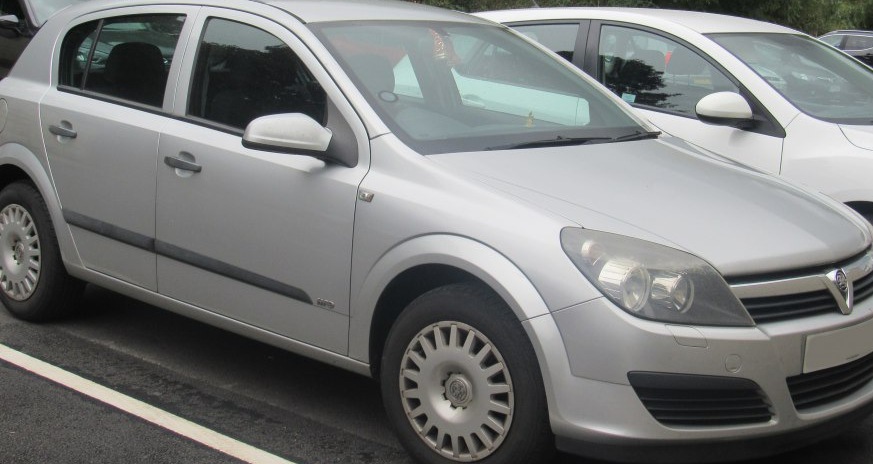
The Vauxhall Astra Mark V, produced from 2004 to 2009, represented a significant step forward for the British marque, building upon the success of its predecessor. Within the Mark V range, the 1.6-liter (105 horsepower) automatic variant occupied an important position as an entry-level offering, aimed at buyers prioritizing affordability and ease of use over outright performance. This model, typically a five-door hatchback, was a common sight on UK and European roads, offering a practical and relatively economical transportation solution. It was built on the GM Delta platform, shared with other vehicles like the Opel Astra and Chevrolet Astra.
Technical Specifications
| Brand | Vauxhall |
| Model | Astra |
| Generation | Astra Mk V |
| Type (Engine) | 1.6 (105 Hp) Automatic |
| Start of production | 2004 |
| End of production | 2009 |
| Powertrain Architecture | Internal Combustion engine |
| Body type | Hatchback |
| Seats | 5 |
| Doors | 5 |
| Fuel consumption (urban) | 8.4 l/100 km (28 US mpg, 33.6 UK mpg, 11.9 km/l) |
| Fuel consumption (extra urban) | 5.4 l/100 km (43.6 US mpg, 52.3 UK mpg, 18.5 km/l) |
| Fuel consumption (combined) | 6.5 l/100 km (36.2 US mpg, 43.5 UK mpg, 15.4 km/l) |
| CO2 emissions | 156 g/km |
| Fuel Type | Petrol (Gasoline) |
| Acceleration 0 – 100 km/h | 13.3 sec |
| Acceleration 0 – 62 mph | 13.3 sec |
| Acceleration 0 – 60 mph | 12.6 sec |
| Maximum speed | 185 km/h (114.95 mph) |
| Weight-to-power ratio | 11.4 kg/Hp, 87.9 Hp/tonne |
| Weight-to-torque ratio | 8 kg/Nm, 125.5 Nm/tonne |
| Power | 105 Hp @ 6000 rpm |
| Power per litre | 65.7 Hp/l |
| Torque | 150 Nm @ 3900 rpm (110.63 lb.-ft. @ 3900 rpm) |
| Engine layout | Front, Transverse |
| Engine Model/Code | Z16XEP, Z16XE1 |
| Engine displacement | 1598 cm3 (97.52 cu. in.) |
| Number of cylinders | 4 |
| Engine configuration | Inline |
| Cylinder Bore | 79 mm (3.11 in.) |
| Piston Stroke | 81.5 mm (3.21 in.) |
| Compression ratio | 10.5:1 |
| Number of valves per cylinder | 4 |
| Fuel injection system | Multi-port manifold injection |
| Engine aspiration | Naturally aspirated engine |
| Engine oil capacity | 4 l (4.23 US qt | 3.52 UK qt) |
| Coolant | 6.1 l (6.45 US qt | 5.37 UK qt) |
| Kerb Weight | 1195 kg (2634.52 lbs.) |
| Max. weight | 1740 kg (3836.04 lbs.) |
| Max load | 545 kg (1201.52 lbs.) |
| Trunk (boot) space – minimum | 350 l (12.36 cu. ft.) |
| Trunk (boot) space – maximum | 1270 l (44.85 cu. ft.) |
| Fuel tank capacity | 52 l (13.74 US gal | 11.44 UK gal) |
| Length | 4249 mm (167.28 in.) |
| Width | 1753 mm (69.02 in.) |
| Width including mirrors | 2033 mm (80.04 in.) |
| Height | 1467 mm (57.76 in.) |
| Wheelbase | 2614 mm (102.91 in.) |
| Front track | 1488 mm (58.58 in.) |
| Rear (Back) track | 1488 mm (58.58 in.) |
| Ride height (ground clearance) | 140 mm (5.51 in.) |
| Drag coefficient (Cd) | 0.32 |
| Drivetrain Architecture | The Internal combustion engine (ICE) drives the front wheels of the vehicle. |
| Drive wheel | Front wheel drive |
| Number of gears and type of gearbox | 5 gears, automatic transmission |
| Front brakes | Ventilated discs |
| Rear brakes | Drum |
| Tires size | 195/65 R15 |
| Wheel rims size | 15 |
Powertrain & Engine Architecture
The heart of this Astra variant was the 1.6-liter (1598 cc) inline-four cylinder petrol engine, typically identified by the engine codes Z16XEP or Z16XE1. This engine belonged to Vauxhall/Opel’s ‘Ecotec’ family, known for its relatively lightweight construction and focus on fuel efficiency. It featured a naturally aspirated configuration with multi-port fuel injection and a single overhead camshaft (SOHC) operating four valves per cylinder. The engine produced 105 horsepower at 6000 rpm and 150 Nm (110.63 lb-ft) of torque at 3900 rpm. The automatic transmission was a conventional five-speed unit, offering smooth, if not particularly sporty, gear changes. This transmission was chosen to provide ease of driving, particularly in urban environments.
Driving Characteristics
The 1.6-liter automatic Astra offered a comfortable, but not exhilarating, driving experience. Acceleration was modest, taking around 13.3 seconds to reach 62 mph (100 km/h). The automatic transmission, while convenient, did sap some power compared to the available five-speed manual gearbox. Gear ratios were tuned for fuel economy rather than performance, resulting in a somewhat leisurely pace. The engine felt strained when attempting brisk acceleration or overtaking maneuvers. However, for everyday commuting and general driving, the powertrain proved adequate and reliable. The focus was on providing a smooth and predictable ride.
Equipment & Trim Levels
The 1.6-liter automatic Astra typically came equipped with a reasonable level of standard features. These generally included central locking, electric front windows, a basic audio system, and driver and passenger airbags. Trim levels varied, but common options included air conditioning, alloy wheels, and upgraded interior trim. The interior was functional and reasonably well-built, though materials were generally of a lower quality than those found in higher-spec Astra models. The dashboard layout was straightforward and easy to use.
Chassis & Braking
The Astra Mark V featured a MacPherson strut front suspension and a torsion beam rear suspension. The 1.6-liter models typically used smaller diameter rear drum brakes, contributing to cost savings. Front brakes were ventilated discs. The suspension setup provided a comfortable ride, but handling was not particularly sharp. Stabilizer bars were fitted to both the front and rear axles to reduce body roll, but the overall driving experience was geared towards comfort rather than sporty handling. The steering was light and easy to use, making it well-suited for urban driving.
Market Reception & Comparison
The 1.6-liter automatic Astra was generally well-received as an affordable and practical family car. Critics noted its fuel efficiency and ease of driving, but also pointed out its lack of performance. Compared to the more powerful 1.8-liter or diesel variants, the 1.6-liter automatic felt noticeably slower. However, it offered a lower purchase price and potentially lower running costs. The 1.9 CDTi diesel models were popular for their superior fuel economy and torque, while the 1.8-liter offered a more engaging driving experience. The 1.6 automatic appealed to buyers who prioritized comfort and convenience over performance.
Legacy
The 1.6-liter automatic Astra Mark V has proven to be a relatively reliable vehicle in the used car market. The Ecotec engine is generally durable, and the automatic transmission, while not known for its sophistication, is typically dependable. Common issues include oil leaks and occasional sensor failures. However, parts are readily available and relatively inexpensive. Today, these Astras represent an affordable entry point into used car ownership, offering a practical and economical transportation solution for those seeking a no-frills hatchback.