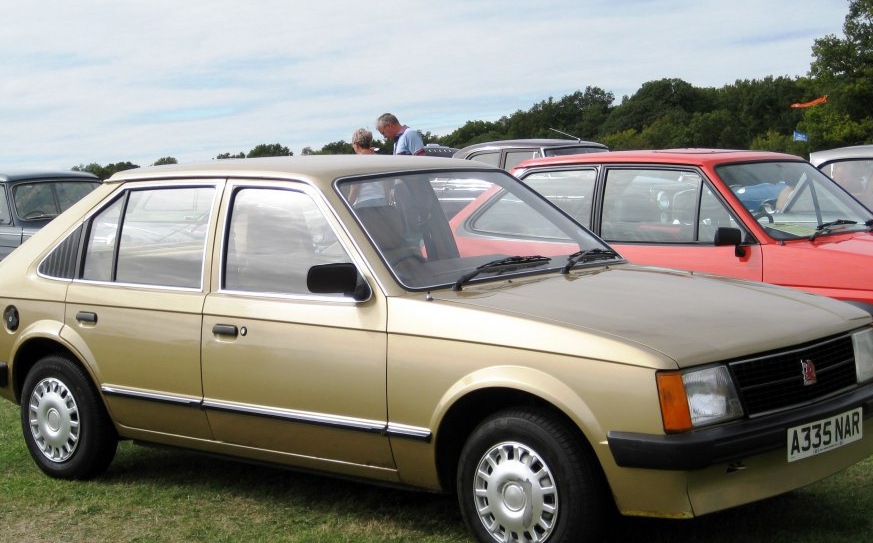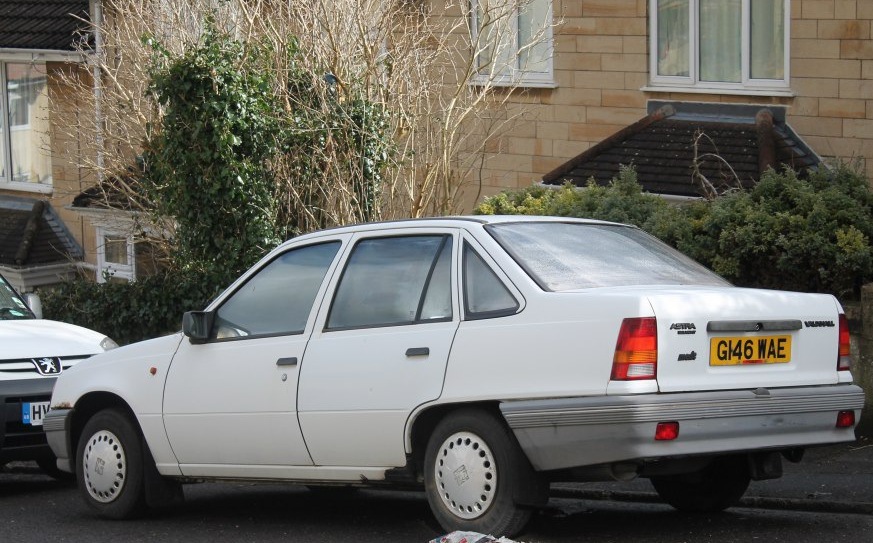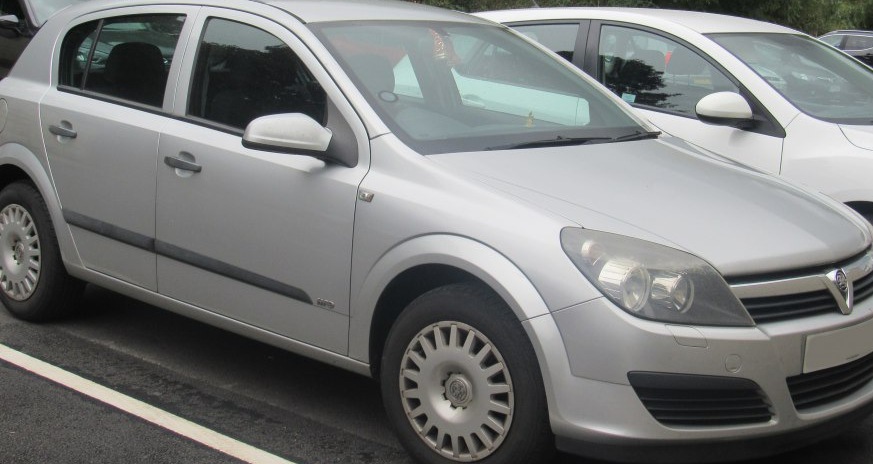
The Vauxhall Astra Mk V CC 1.6 (180 hp) was a performance-oriented variant of the fifth-generation Astra, produced between 2004 and 2009. Positioned as a sporty offering within the Astra range, it aimed to provide a more engaging driving experience than the standard models. This five-door hatchback, built on the GM Delta platform, was a key model for Vauxhall in the UK market, competing with rivals like the Ford Focus and Volkswagen Golf. The “CC” designation, while not consistently applied across all markets, generally signified a more comprehensively equipped or sport-focused trim level.
Technical Specifications
| Brand | Vauxhall |
| Model | Astra |
| Generation | Astra Mk V CC |
| Type (Engine) | 1.6 (180 Hp) |
| Start of production | 2004 |
| End of production | 2009 |
| Powertrain Architecture | Internal Combustion engine |
| Body type | Hatchback |
| Seats | 5 |
| Doors | 5 |
| Fuel consumption (urban) | 10.3 l/100 km (22.8 US mpg, 27.4 UK mpg, 9.7 km/l) |
| Fuel consumption (extra urban) | 6.2 l/100 km (37.9 US mpg, 45.6 UK mpg, 16.1 km/l) |
| Fuel consumption (combined) | 7.7 l/100 km (30.5 US mpg, 36.7 UK mpg, 13 km/l) |
| CO2 emissions | 185 g/km |
| Fuel Type | Petrol (Gasoline) |
| Acceleration 0 – 100 km/h | 7.8 sec |
| Acceleration 0 – 62 mph | 7.8 sec |
| Acceleration 0 – 60 mph | 7.4 sec |
| Maximum speed | 220 km/h (136.7 mph) |
| Weight-to-power ratio | 7.3 kg/Hp, 136.2 Hp/tonne |
| Weight-to-torque ratio | 5.8 kg/Nm, 173.2 Nm/tonne |
| Power | 180 Hp @ 5500 rpm |
| Power per litre | 112.6 Hp/l |
| Torque | 229 Nm @ 1980 rpm (168.9 lb.-ft. @ 1980 rpm) |
| Engine layout | Front, Transverse |
| Engine displacement | 1598 cm3 (97.52 cu. in.) |
| Number of cylinders | 4 |
| Engine configuration | Inline |
| Cylinder Bore | 79 mm (3.11 in.) |
| Piston Stroke | 81.5 mm (3.21 in.) |
| Compression ratio | 10.5:1 |
| Number of valves per cylinder | 4 |
| Fuel injection system | Multi-port manifold injection |
| Engine aspiration | Turbocharger, Intercooler |
| Engine oil capacity | 4.5 l (4.76 US qt | 3.96 UK qt) |
| Coolant | 5.9 l (6.23 US qt | 5.19 UK qt) |
| Kerb Weight | 1322 kg (2914.51 lbs.) |
| Max. weight | 1990 kg (4387.2 lbs.) |
| Max load | 668 kg (1472.69 lbs.) |
| Trunk (boot) space – minimum | 350 l (12.36 cu. ft.) |
| Trunk (boot) space – maximum | 1270 l (44.85 cu. ft.) |
| Fuel tank capacity | 52 l (13.74 US gal | 11.44 UK gal) |
| Length | 4249 mm (167.28 in.) |
| Width | 1753 mm (69.02 in.) |
| Width including mirrors | 2033 mm (80.04 in.) |
| Height | 1467 mm (57.76 in.) |
| Wheelbase | 2614 mm (102.91 in.) |
| Front track | 1488 mm (58.58 in.) |
| Rear (Back) track | 1488 mm (58.58 in.) |
| Ride height (ground clearance) | 140 mm (5.51 in.) |
| Drag coefficient (Cd) | 0.32 |
| Drive wheel | Front wheel drive |
| Number of gears and type of gearbox | 6 gears, manual transmission |
| Front brakes | Ventilated discs |
| Rear brakes | Disc |
| Tires size | 215/45 R17 |
| Wheel rims size | 17 |
Powertrain & Engine Architecture
The heart of the Astra Mk V CC 1.6 was the A16XER engine, a 1.6-liter turbocharged inline-four cylinder petrol engine. This engine was part of Vauxhall/Opel’s ‘Ecotec’ family, known for its focus on efficiency and refinement. The A16XER featured a single overhead camshaft (SOHC) design with four valves per cylinder. Crucially, it employed a low-inertia turbocharger and an intercooler to boost power output to 180 horsepower. Fuel delivery was managed by a multi-point fuel injection system. The engine’s torque peak of 229 Nm (168.9 lb-ft) was readily available from 1980 rpm, providing good mid-range punch. The standard transmission was a Getrag M32 six-speed manual gearbox, chosen to handle the engine’s output and enhance the driving experience. While an automatic transmission was offered on some Astra Mk V models, it was not typically paired with the 180 hp 1.6-liter engine.
Driving Characteristics
The 180 hp Astra Mk V CC with the six-speed manual transmission offered a noticeably more spirited driving experience than the lower-powered variants. Acceleration from 0-60 mph took around 7.4 to 7.8 seconds, making it competitive within its class. The turbocharger provided a surge of power, but it wasn’t overly aggressive, resulting in a relatively linear power delivery. The six-speed gearbox allowed for efficient cruising on the highway while providing close ratios for maximizing performance during spirited driving. Compared to the naturally aspirated 1.4-liter or 1.8-liter models, the 1.6 Turbo offered significantly improved responsiveness and overtaking capability. However, it didn’t possess the outright performance of the later Astra VXR (OPC) models with their more powerful engines.
Equipment & Trim Levels
The Astra Mk V CC 1.6 (180 hp) typically came with a generous level of standard equipment. This included air conditioning, alloy wheels (usually 17-inch), a CD stereo system, electric front windows, and remote central locking. Higher trim levels, such as the SRi, added features like sport seats, a leather-wrapped steering wheel, and upgraded interior trim. Optional extras included a sunroof, parking sensors, and a more advanced audio system. The interior design was functional and modern for its time, although material quality was generally average for a car in this price segment.
Chassis & Braking
The Astra Mk V CC featured independent suspension at the front (MacPherson strut) and a semi-independent torsion beam suspension at the rear. The suspension setup was tuned to provide a balance between comfort and handling. The 1.6 Turbo models often benefited from slightly stiffer springs and dampers compared to the base models. Braking was handled by ventilated disc brakes at the front and solid discs at the rear. Anti-lock Braking System (ABS) was standard. The steering was hydraulically assisted and provided reasonable feedback, although it wasn’t particularly sporty.
Market Reception & Comparison
The Astra Mk V CC 1.6 (180 hp) was generally well-received by automotive critics. It was praised for its strong performance, good fuel economy (around 30.5 US mpg combined), and relatively affordable price. However, some reviewers noted that the interior quality could be improved. Compared to the 1.4-liter and 1.8-liter Astra models, the 1.6 Turbo offered a significant performance upgrade without a substantial increase in fuel consumption. It provided a compelling alternative to rivals like the Ford Focus 1.6 Ti-VCT and the Volkswagen Golf 1.4 TSI.
Legacy
The A16XER engine, while generally reliable, is known to have some potential issues, including occasional turbocharger failures and oil consumption in higher mileage examples. Regular maintenance, including oil changes and turbocharger inspections, is crucial for ensuring longevity. Today, the Astra Mk V CC 1.6 (180 hp) represents an affordable and relatively sporty used car option. Its combination of performance, fuel economy, and practicality makes it a popular choice for enthusiasts and everyday drivers alike. Parts availability is generally good, and the car’s relatively simple mechanical design makes it relatively easy to maintain and repair.