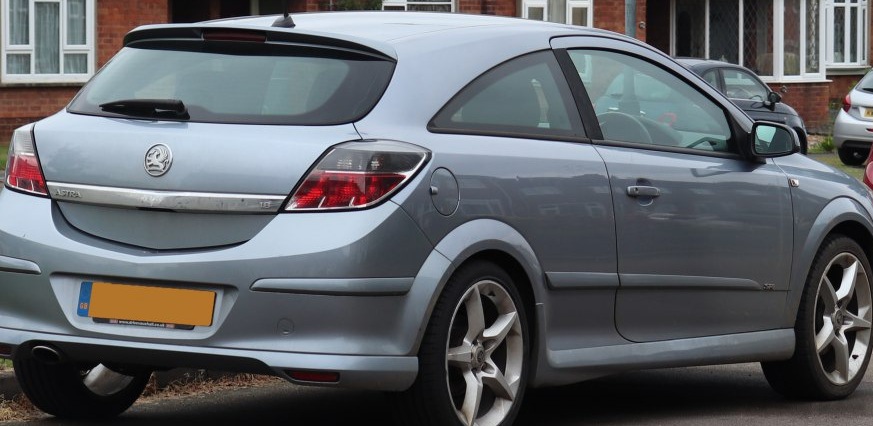
The Vauxhall Astra Mk V CC Sport Hatch 1.4i 16V, produced between 2005 and 2010, represented an entry-level offering within the broader Astra Mk V (H) range. Positioned as a more affordable and fuel-efficient option, this variant catered to buyers prioritizing practicality and lower running costs over outright performance. The “CC” designation signified the coupe-cabriolet styling, though this model was strictly a three-door hatchback. It was built upon the GM Delta platform, shared with other vehicles like the Opel Astra, Chevrolet Cruze, and Saab 9-3, making it a common sight on European roads. This particular 1.4-liter engine and five-speed manual transmission combination aimed for a balance between acceptable performance and economy, appealing to a wide demographic, particularly younger drivers and those seeking a cost-effective daily commuter.
Technical Specifications
| Brand | Vauxhall |
| Model | Astra |
| Generation | Astra Mk V CC Sport Hatch |
| Type (Engine) | 1.4i 16V (90 Hp) |
| Start of production | 2005 |
| End of production | 2010 |
| Powertrain Architecture | Internal Combustion engine |
| Body type | Hatchback |
| Seats | 5 |
| Doors | 3 |
| Fuel consumption (urban) | 8.2 l/100 km (28.7 US mpg, 34.4 UK mpg, 12.2 km/l) |
| Fuel consumption (extra urban) | 5.2 l/100 km (45.2 US mpg, 54.3 UK mpg, 19.2 km/l) |
| Fuel consumption (combined) | 6.3 l/100 km (37.3 US mpg, 44.8 UK mpg, 15.9 km/l) |
| CO2 emissions | 146 g/km |
| Fuel Type | Petrol (Gasoline) |
| Acceleration 0 – 100 km/h | 12.7 sec |
| Acceleration 0 – 62 mph | 12.7 sec |
| Acceleration 0 – 60 mph | 12.1 sec |
| Maximum speed | 178 km/h (110.6 mph) |
| Weight-to-power ratio | 13.1 kg/Hp, 76.3 Hp/tonne |
| Weight-to-torque ratio | 9.4 kg/Nm, 105.9 Nm/tonne |
| Power | 90 Hp @ 5600 rpm |
| Power per litre | 66 Hp/l |
| Torque | 125 Nm @ 4000 rpm (92.2 lb.-ft. @ 4000 rpm) |
| Engine layout | Front, Transverse |
| Engine Model/Code | Z14XEP |
| Engine displacement | 1364 cm3 (83.24 cu. in.) |
| Number of cylinders | 4 |
| Engine configuration | Inline |
| Cylinder Bore | 73.4 mm (2.89 in.) |
| Piston Stroke | 80.6 mm (3.17 in.) |
| Compression ratio | 10.5:1 |
| Number of valves per cylinder | 4 |
| Fuel injection system | Multi-port manifold injection |
| Engine aspiration | Naturally aspirated engine |
| Valvetrain | DOHC |
| Engine oil capacity | 3.5 l (3.7 US qt | 3.08 UK qt) |
| Coolant | 5.6 l (5.92 US qt | 4.93 UK qt) |
| Kerb Weight | 1180 kg (2601.45 lbs.) |
| Max. weight | 1705 kg (3758.88 lbs.) |
| Max load | 525 kg (1157.43 lbs.) |
| Trunk (boot) space – minimum | 312 l (11.02 cu. ft.) |
| Fuel tank capacity | 52 l (13.74 US gal | 11.44 UK gal) |
| Permitted trailer load with brakes (12%) | 1000 kg (2204.62 lbs.) |
| Permitted trailer load without brakes | 605 kg (1333.8 lbs.) |
| Length | 4290 mm (168.9 in.) |
| Width | 1753 mm (69.02 in.) |
| Width including mirrors | 2033 mm (80.04 in.) |
| Height | 1415 mm (55.71 in.) |
| Wheelbase | 2614 mm (102.91 in.) |
| Front track | 1488 mm (58.58 in.) |
| Rear (Back) track | 1488 mm (58.58 in.) |
| Front overhang | 910 mm (35.83 in.) |
| Rear overhang | 766 mm (30.16 in.) |
| Ride height (ground clearance) | 130 mm (5.12 in.) |
| Drag coefficient (Cd) | 0.28 |
| Minimum turning circle (turning diameter) | 10 m (32.81 ft.) |
| Drivetrain Architecture | The Internal combustion engine (ICE) drives the front wheels of the vehicle. |
| Drive wheel | Front wheel drive |
| Number of gears and type of gearbox | 5 gears, manual transmission |
| Front suspension | Spring Strut |
| Rear suspension | Spring Strut |
| Front brakes | Ventilated discs |
| Rear brakes | Disc |
| Assisting systems | ABS (Anti-lock braking system) |
| Steering type | Steering rack and pinion |
| Tires size | 205/55 R16 |
| Wheel rims size | 6.5J x 16 |
Powertrain & Engine Architecture
The heart of this Astra variant was the Z14XEP engine, a 1.4-liter inline-four cylinder petrol engine. This engine belonged to the Vauxhall/Opel Family 1 series, known for its relatively simple design and focus on fuel efficiency. It featured a dual overhead camshaft (DOHC) valvetrain with four valves per cylinder, contributing to improved breathing and power delivery. Fuel was delivered via a multi-port fuel injection system, a common setup for engines of this era. The Z14XEP produced 90 horsepower at 5600 rpm and 125 Nm (92.2 lb-ft) of torque at 4000 rpm. The engine was transversely mounted, driving the front wheels. The transmission was a standard five-speed manual gearbox, chosen for its affordability and efficiency. While not particularly powerful, the engine was known for its reliability and relatively low maintenance costs.
Driving Characteristics
The 1.4i 16V Astra offered modest performance. Acceleration from 0-60 mph took around 12.1 seconds, and top speed was limited to 110.6 mph. The engine felt somewhat strained when pushed hard, particularly when fully loaded or tackling inclines. The five-speed gearbox was well-matched to the engine’s characteristics, with relatively short gearing to keep the engine in its power band. Compared to the more powerful 1.8-liter or even the diesel variants, this model lacked the punch for quick overtaking maneuvers. However, its lighter weight and efficient engine contributed to respectable fuel economy, making it a practical choice for everyday driving. The steering was light and precise, making it easy to maneuver in urban environments.
Equipment & Trim Levels
The Astra Mk V CC Sport Hatch 1.4i 16V typically came with a reasonable level of standard equipment. This included central locking, power steering, electric front windows, and an ABS anti-lock braking system. Interior upholstery was typically cloth, with a functional, if somewhat basic, dashboard layout. Optional extras included air conditioning, alloy wheels, a CD player, and upgraded trim levels with more luxurious interior appointments. The “Sport” designation indicated a slightly more aggressive styling package, often including a rear spoiler and sportier seat fabrics.
Chassis & Braking
The Astra Mk V utilized a MacPherson strut suspension setup at the front and a torsion beam suspension at the rear. This configuration provided a reasonable balance between ride comfort and handling. The front brakes were ventilated discs, offering good stopping power, while the rear brakes were solid discs. The chassis was relatively lightweight, contributing to the car’s agility. Stabilizer bars were fitted to both the front and rear axles to reduce body roll during cornering.
Market Reception & Comparison
The 1.4i 16V Astra was generally well-received as an affordable and practical hatchback. Critics praised its fuel efficiency and low running costs, but noted its lack of outright performance. Compared to the 1.8-liter models, it offered significantly less power, but at a lower purchase price and with better fuel economy. The diesel variants provided superior torque and fuel efficiency, but were typically more expensive to buy and maintain. The Astra competed with other popular hatchbacks in the C-segment, such as the Ford Focus, Volkswagen Golf, and Peugeot 308.
Legacy
The Z14XEP engine, while not known for its high performance, proved to be a reliable unit when properly maintained. Astra Mk V 1.4i models are now readily available on the used car market at affordable prices. Common issues include oil leaks and occasional sensor failures, but these are generally inexpensive to repair. The car’s simplicity and relatively low running costs continue to make it an attractive option for budget-conscious buyers seeking a practical and dependable hatchback. Its enduring presence on roads throughout Europe is a testament to its overall durability and practicality.