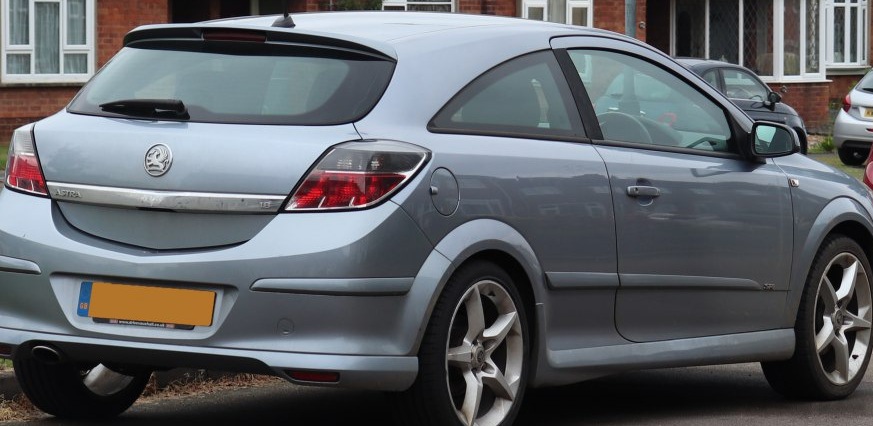
The Vauxhall Astra Mk V CC Sport Hatch 1.4i 16V (90 hp) Easytronic, produced between 2005 and 2010, represented an entry-level offering within the broader Astra Mk V range. Positioned as a more affordable and fuel-efficient option, it catered to buyers prioritizing practicality and lower running costs over outright performance. This three-door hatchback variant was a common sight on UK and European roads, serving as a popular choice for first-time drivers and those seeking a compact, economical vehicle. It was built on the GM Delta platform, also known as the 1HX0/A3 platform, shared with other Opel/Vauxhall and Chevrolet models.
Technical Specifications
| Brand | Vauxhall |
| Model | Astra |
| Generation | Astra Mk V CC Sport Hatch |
| Type (Engine) | 1.4i 16V (90 Hp) Easytronic |
| Start of production | 2005 |
| End of production | 2010 |
| Powertrain Architecture | Internal Combustion engine |
| Body type | Hatchback |
| Seats | 5 |
| Doors | 3 |
| Fuel consumption (urban) | 7.7 l/100 km (30.5 US mpg, 36.7 UK mpg, 13 km/l) |
| Fuel consumption (extra urban) | 4.9 l/100 km (48 US mpg, 57.6 UK mpg, 20.4 km/l) |
| Fuel consumption (combined) | 5.9 l/100 km (39.9 US mpg, 47.9 UK mpg, 16.9 km/l) |
| CO2 emissions | 142 g/km |
| Fuel Type | Petrol (Gasoline) |
| Acceleration 0 – 100 km/h | 12.7 sec |
| Acceleration 0 – 62 mph | 12.7 sec |
| Acceleration 0 – 60 mph | 12.1 sec |
| Maximum speed | 178 km/h (110.6 mph) |
| Emission standard | Euro 4 |
| Weight-to-power ratio | 12.7 kg/Hp, 78.6 Hp/tonne |
| Weight-to-torque ratio | 9.2 kg/Nm, 109.2 Nm/tonne |
| Power | 90 Hp @ 5600 rpm |
| Power per litre | 66 Hp/l |
| Torque | 125 Nm @ 4000 rpm (92.2 lb.-ft. @ 4000 rpm) |
| Maximum engine speed | 6200 rpm |
| Engine layout | Front, Transverse |
| Engine Model/Code | Z14XEP |
| Engine displacement | 1364 cm3 (83.24 cu. in.) |
| Number of cylinders | 4 |
| Engine configuration | Inline |
| Cylinder Bore | 73.4 mm (2.89 in.) |
| Piston Stroke | 80.6 mm (3.17 in.) |
| Compression ratio | 10.5:1 |
| Number of valves per cylinder | 4 |
| Fuel injection system | Multi-port manifold injection |
| Engine aspiration | Naturally aspirated engine |
| Valvetrain | DOHC |
| Engine oil capacity | 3.5 l (3.7 US qt | 3.08 UK qt) |
| Coolant | 5.6 l (5.92 US qt | 4.93 UK qt) |
| Kerb Weight | 1145-1165 kg (2524.29 – 2568.39 lbs.) |
| Max. weight | 1705 kg (3758.88 lbs.) |
| Max load | 540-560 kg (1190.5 – 1234.59 lbs.) |
| Trunk (boot) space – minimum | 312 l (11.02 cu. ft.) |
| Fuel tank capacity | 52 l (13.74 US gal | 11.44 UK gal) |
| Permitted trailer load with brakes (12%) | 1000 kg (2204.62 lbs.) |
| Permitted trailer load without brakes | 605 kg (1333.8 lbs.) |
| Length | 4290 mm (168.9 in.) |
| Width | 1753 mm (69.02 in.) |
| Width including mirrors | 2032 mm (80 in.) |
| Height | 1435 mm (56.5 in.) |
| Wheelbase | 2614 mm (102.91 in.) |
| Front track | 1488 mm (58.58 in.) |
| Rear (Back) track | 1488 mm (58.58 in.) |
| Front overhang | 910 mm (35.83 in.) |
| Rear overhang | 766 mm (30.16 in.) |
| Ride height (ground clearance) | 130 mm (5.12 in.) |
| Drag coefficient (Cd) | 0.28 |
| Minimum turning circle (turning diameter) | 11.2 m (36.75 ft.) |
| Drivetrain Architecture | The Internal combustion engine (ICE) drives the front wheels of the vehicle. |
| Drive wheel | Front wheel drive |
| Number of gears and type of gearbox | 5 gears, automatic transmission Easytronic |
| Front suspension | Independent, type McPherson with coil spring and anti-roll bar |
| Rear suspension | Coil spring, Torsion |
| Front brakes | Ventilated discs |
| Rear brakes | Disc |
| Assisting systems | ABS (Anti-lock braking system) |
| Steering type | Steering rack and pinion |
| Power steering | Electric Steering |
| Tires size | 205/55 R16 |
| Wheel rims size | 6.5J x 16 |
Powertrain & Engine Architecture
The heart of this Astra variant is the Z14XEP engine, a 1.4-liter inline-four cylinder petrol engine. This engine belongs to the Vauxhall/Opel Family 1 series, known for its relatively simple design and affordability. It features a multi-port fuel injection system and a double overhead camshaft (DOHC) valvetrain, operating with four valves per cylinder. The engine produces 90 horsepower at 5600 rpm and 125 Nm (92.2 lb-ft) of torque at 4000 rpm. Paired with this engine is the Easytronic 5-speed automatic transmission. This isn’t a traditional torque-converter automatic; instead, it’s a heavily automated manual transmission. It uses actuators to shift gears, offering a degree of fuel efficiency but often exhibiting slower and less smooth shifts compared to conventional automatics.
Driving Characteristics
The 1.4i Easytronic Astra Mk V offered modest performance. Acceleration from 0-60 mph took around 12.1 seconds, and the top speed was 110.6 mph. The Easytronic transmission, while aiming for efficiency, often felt sluggish, particularly during quick acceleration or overtaking maneuvers. Gear changes weren’t always seamless, and the system could sometimes ‘hunt’ for the right gear. Compared to the more powerful 1.8-liter or diesel variants, this model lacked punch. However, it provided adequate power for urban driving and cruising on motorways, prioritizing fuel economy over spirited performance. The gear ratios were optimized for fuel efficiency rather than rapid acceleration.
Equipment & Trim Levels
The Sport Hatch trim level, even in its base 1.4i Easytronic form, included features like alloy wheels, air conditioning, a CD player, and electric front windows. Safety features included ABS brakes and driver/passenger airbags. Optional extras available included upgraded audio systems, parking sensors, and metallic paint finishes. Interior upholstery was typically cloth, with a relatively basic dashboard layout. The Sport trim did offer slightly more aggressive styling cues compared to the lower-spec models, such as a sportier front bumper and side skirts.
Chassis & Braking
The Astra Mk V utilized an independent McPherson strut suspension setup at the front, providing reasonable handling and ride comfort. The rear suspension employed a torsion beam setup, a cost-effective solution that prioritized space efficiency. Braking consisted of ventilated discs at the front and solid discs at the rear. ABS was standard, enhancing braking performance and stability. The chassis was tuned for comfort rather than outright sportiness, reflecting the car’s intended role as a practical and affordable hatchback.
Market Reception & Comparison
The Astra Mk V 1.4i Easytronic was generally well-received as a sensible and economical choice. Critics praised its fuel efficiency and affordability, but often criticized the Easytronic transmission for its slow and jerky shifts. Compared to the 1.8-liter versions, it offered significantly less power and performance, but at a lower purchase price and with better fuel economy. The diesel variants (like the 1.9 CDTi) provided superior torque and fuel efficiency, but came with a higher initial cost and potentially higher maintenance expenses. The 1.4i Easytronic appealed to buyers who prioritized low running costs and ease of use over driving excitement.
Legacy
The Z14XEP engine, while not known for being particularly robust, proved generally reliable with regular maintenance. The Easytronic transmission, however, has a reputation for being prone to issues, including actuator failures and software glitches. Today, these Astras are relatively inexpensive to purchase on the used car market. They represent a budget-friendly option for those seeking a small, practical hatchback. However, potential buyers should be aware of the potential issues with the Easytronic transmission and factor in the cost of potential repairs. Parts availability is generally good, and the car’s relatively simple mechanical design makes it accessible for DIY repairs.