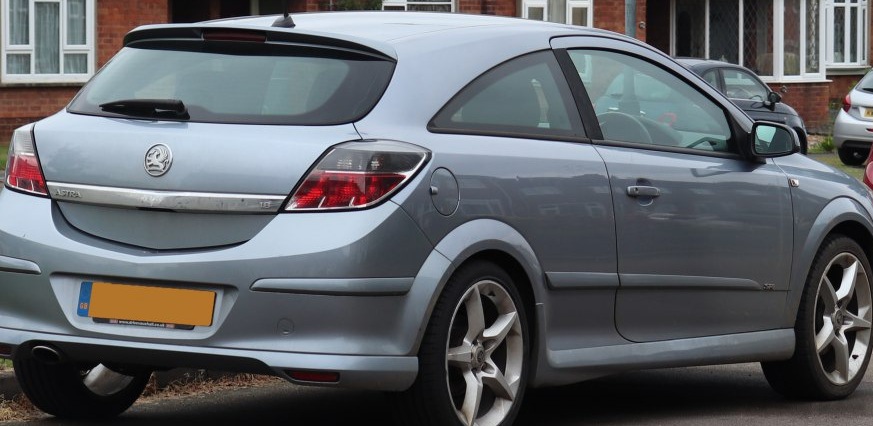
The Vauxhall Astra Mk V CC Sport Hatch 1.6i 16V, produced between 2005 and 2010, represented a key entry point into the Astra Mk V range, a generation known as the ‘H’ platform within General Motors. This three-door hatchback variant aimed to offer a more sporty and affordable alternative to the five-door model, targeting younger buyers or those prioritizing style over practicality. Positioned as a mid-range trim, it bridged the gap between the base models and the more powerful, performance-oriented versions like the SRi. The ‘CC’ designation signified the coupe-like styling of the three-door body.
Technical Specifications
| Brand | Vauxhall |
| Model | Astra |
| Generation | Astra Mk V CC Sport Hatch |
| Type (Engine) | 1.6i 16V (105 Hp) |
| Start of production | 2005 |
| End of production | 2010 |
| Powertrain Architecture | Internal Combustion engine |
| Body type | Hatchback |
| Seats | 5 |
| Doors | 3 |
| Fuel consumption (urban) | 8.6 l/100 km (27.4 US mpg, 32.8 UK mpg, 11.6 km/l) |
| Fuel consumption (extra urban) | 5.4 l/100 km (43.6 US mpg, 52.3 UK mpg, 18.5 km/l) |
| Fuel consumption (combined) | 6.6 l/100 km (35.6 US mpg, 42.8 UK mpg, 15.2 km/l) |
| CO2 emissions | 158 g/km |
| Fuel Type | Petrol (Gasoline) |
| Acceleration 0 – 100 km/h | 11.4 sec |
| Acceleration 0 – 62 mph | 11.4 sec |
| Acceleration 0 – 60 mph | 10.8 sec |
| Maximum speed | 187 km/h (116.2 mph) |
| Weight-to-power ratio | 11.6 kg/Hp, 86.4 Hp/tonne |
| Weight-to-torque ratio | 8.1 kg/Nm, 123.5 Nm/tonne |
| Power | 105 Hp @ 6000 rpm |
| Power per litre | 65.7 Hp/l |
| Torque | 150 Nm @ 3900 rpm (110.63 lb.-ft. @ 3900 rpm) |
| Engine layout | Front, Transverse |
| Engine Model/Code | Z16XEP, Z16XE1 |
| Engine displacement | 1598 cm3 (97.52 cu. in.) |
| Number of cylinders | 4 |
| Engine configuration | Inline |
| Cylinder Bore | 79 mm (3.11 in.) |
| Piston Stroke | 81.5 mm (3.21 in.) |
| Compression ratio | 10.5:1 |
| Number of valves per cylinder | 4 |
| Fuel injection system | Multi-port manifold injection |
| Engine aspiration | Naturally aspirated engine |
| Valvetrain | DOHC |
| Engine oil capacity | 4 l (4.23 US qt | 3.52 UK qt) |
| Coolant | 6.1 l (6.45 US qt | 5.37 UK qt) |
| Kerb Weight | 1215 kg (2678.62 lbs.) |
| Max. weight | 1740 kg (3836.04 lbs.) |
| Max load | 525 kg (1157.43 lbs.) |
| Trunk (boot) space – minimum | 312 l (11.02 cu. ft.) |
| Fuel tank capacity | 52 l (13.74 US gal | 11.44 UK gal) |
| Length | 4290 mm (168.9 in.) |
| Width | 1753 mm (69.02 in.) |
| Width including mirrors | 2033 mm (80.04 in.) |
| Height | 1415 mm (55.71 in.) |
| Wheelbase | 2614 mm (102.91 in.) |
| Front track | 1488 mm (58.58 in.) |
| Rear (Back) track | 1488 mm (58.58 in.) |
| Front overhang | 910 mm (35.83 in.) |
| Rear overhang | 766 mm (30.16 in.) |
| Ride height (ground clearance) | 130 mm (5.12 in.) |
| Drag coefficient (Cd) | 0.28 |
| Minimum turning circle | 10 m (32.81 ft.) |
| Drivetrain Architecture | ICE, Front wheel drive |
| Drive wheel | Front wheel drive |
| Number of gears | 5 |
| Gearbox type | Manual transmission |
| Front brakes | Ventilated discs |
| Rear brakes | Disc |
| Assisting systems | ABS (Anti-lock braking system) |
| Steering type | Steering rack and pinion |
| Tires size | 205/55 R16 |
| Wheel rims size | 6.5J x 16 |
Powertrain & Engine Architecture
The heart of the Astra Mk V 1.6i 16V was the Z16XEP (or occasionally the Z16XE1) engine, a 1.6-liter inline-four cylinder petrol engine. This engine was a mainstay of the Opel/Vauxhall range during the mid-2000s, known for its relative simplicity and affordability. It featured a dual overhead camshaft (DOHC) valvetrain with four valves per cylinder, contributing to its respectable power output for its displacement. Fuel delivery was handled by a multi-port fuel injection system, providing adequate atomization for efficient combustion. The engine produced 105 horsepower at 6000 rpm and 150 Nm (110.63 lb-ft) of torque at 3900 rpm. The engine was transversely mounted, driving the front wheels. The standard transmission was a five-speed manual gearbox, although a four-speed automatic transmission was also offered as an option, albeit less common.
Driving Characteristics
The 1.6i 16V with the five-speed manual transmission offered a reasonably engaging driving experience. While not particularly quick – 0-60 mph took around 10.8 seconds – it provided sufficient power for everyday driving and overtaking maneuvers. The gear ratios were well-spaced, allowing the engine to remain within its optimal power band. The automatic transmission, while offering convenience, noticeably dulled performance, extending the 0-60 mph time to around 11.4 seconds. The automatic also tended to hunt for gears on inclines, and lacked the responsiveness of the manual. Compared to the more powerful 1.8-liter or the diesel variants, the 1.6i felt noticeably less potent, but it offered a lighter, more nimble feel, particularly in the corners.
Equipment & Trim Levels
The Sport Hatch trim level included features such as alloy wheels, sports seats, and air conditioning as standard. Interior upholstery was typically cloth, with a sporty design. Optional extras included a CD player with MP3 compatibility, electric windows, and upgraded audio systems. The dashboard layout was functional and straightforward, prioritizing usability over luxury. The three-door configuration meant slightly less rear passenger access compared to the five-door model, but it also contributed to a more coupe-like aesthetic.
Chassis & Braking
The Astra Mk V utilized a MacPherson strut front suspension and a torsion beam rear suspension. This setup provided a good balance between ride comfort and handling. The front brakes were ventilated discs, offering adequate stopping power, while the rear brakes were solid discs. Anti-lock Braking System (ABS) was standard, enhancing safety. The steering was rack and pinion, providing precise and responsive control. The suspension was tuned for a slightly firmer ride than the base models, reflecting the ‘Sport’ designation.
Market Reception & Comparison
The Astra Mk V 1.6i 16V Sport Hatch was generally well-received by automotive critics as a practical and affordable option. It was praised for its fuel efficiency – averaging around 35.6 US mpg in combined driving – and its relatively low running costs. However, it was often criticized for its lack of outright performance compared to its rivals and higher-spec Astra variants. The 1.8-liter models offered significantly more power, while the 1.9 CDTi diesel provided superior fuel economy and torque. The 1.6i appealed to buyers who prioritized value and practicality over performance.
Legacy
The Z16XEP engine, while not known for being particularly groundbreaking, proved to be a reliable unit when properly maintained. Common issues included occasional oil leaks and sensor failures, but these were generally not major concerns. Today, the Astra Mk V 1.6i 16V can be found on the used car market at very affordable prices. It represents a solid, dependable, and economical choice for those seeking a practical and stylish hatchback. Its simplicity makes it relatively easy and inexpensive to repair, contributing to its continued appeal among budget-conscious buyers.